
Strong Rates Boost Revenues and Cash Flow at Scorpio Tankers
Source: zacks.com
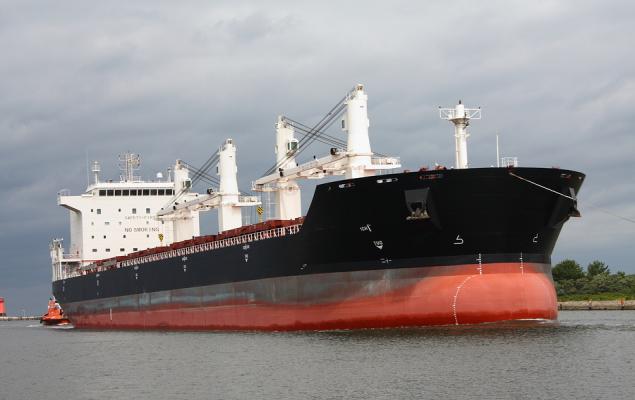
Scorpio Tankers reported Q2 EPS of $4.68, beating the $4.51 consensus estimate and rising 231.9% year over year as TCE revenue increased 75.9% to $391.8 million. Vessel revenue rose 77.5% to $408.7 million, 2.9% above consensus, while adjusted EBITDA reached $300.5 million and adjusted net income totaled $243.7 million. STNG repurchased $155 million of stock during the quarter, retained $445 million in buyback authorization and reported more than $1.9 billion in cash, though 12 newbuildings and roughly $978 million of remaining commitments create future capital needs amid freight-rate cyclicality.
Analysis
STNG’s equity sensitivity is now principally a product-tanker rate beta plus capital-allocation optionality story, not an earnings-surprise story. Incremental cash flow can be rapidly retired through repurchases when spot rates remain above cash breakeven, creating per-share NAV accretion; this favors STNG over more diversified INSW if refined-product dislocation persists. The offset is that a large committed fleet-renewal program shifts part of the upside from near-term distributable cash flow into execution and residual-value risk.
Over the next 1-3 months, the key datapoints are MR/LR2 spot and one-year charter rates, refinery utilization, and any normalization of Red Sea routing. A decline in tonne-miles from route normalization or weaker diesel/gasoline demand would compress rates faster than sell-side estimates typically adjust, while delivery slippage or higher scrap rates would preserve the tight fleet backdrop. INSW is a cleaner relative short only if crude-tanker rates lag product rates; its mixed fleet otherwise makes it an imperfect hedge.
The contrarian view is that the market may be underpricing the value of a disciplined buyback floor but overpricing the durability of peak-cycle cash generation. Newbuild deliveries across the product-tanker market, rather than STNG’s own orderbook alone, determine the 6-18 month multiple: if orderbook growth materially exceeds scrapping, equity holders will demand a higher FCF yield despite a modernized fleet. Do not extrapolate the quarterly run rate without independently confirming forward charter coverage, daily spot exposure, and total industry delivery schedules.
AllMind Terminal
AI-powered research, real-time alerts, and portfolio analytics for institutional investors.
Request TrialMarket Sentiment
Overall Sentiment
moderately positive
Sentiment Score
0.62
Ticker Sentiment
Key Decisions for Investors
- Maintain a tactical long STNG for the next 1-3 months only while MR/LR2 benchmark rates remain above prior-quarter realized levels; use the company’s recent buyback average near $77.72 as a risk-reference level rather than chasing a gap-up. Target a 15-20% upside from sustained elevated rates and continued share retirement; exit on a material rate reset or buyback suspension.
- Express product-tanker outperformance via long STNG / short INSW in equal dollar amounts only after confirming product-tanker spot rates are outperforming VLCC/Suezmax benchmarks for at least 2-3 weeks. The thesis is fleet-purity and greater per-share cash-flow leverage; stop out if crude-tanker rates reaccelerate or INSW’s relative charter coverage proves superior.
- Set an alert ahead of the next STNG fleet-update/earnings release for forward charter coverage, total capex commitments, and industry MR/LR2 delivery forecasts. A recommendation to add size requires evidence that newbuilding funding does not displace repurchases and that net fleet supply remains constrained through 2027.
- Avoid using GSL as a hedge or read-through: containership charter economics are driven by a different demand and vessel-supply cycle. If seeking broad shipping beta reduction, reduce gross STNG exposure rather than pairing it against GSL.
More News
- The hottest trade of the year so far isn't AI. It's tanker stocks
- Stock Market News for Sep 30, 2026
- Asian stocks dip, bonds in focus after torrid September
- RAM supply set to worsen, says Micron, as CEO celebrates ‘much higher’ prices
- Tencent leases 100,000 chips from Oracle for $7 bln- FT
- Asia stocks rise on chipmaker gains, soft U.S. inflation; Nikkei outperforms