
Micron: Debunking The Bear Case Behind Yesterday's Selloff
Source: seekingalpha.com
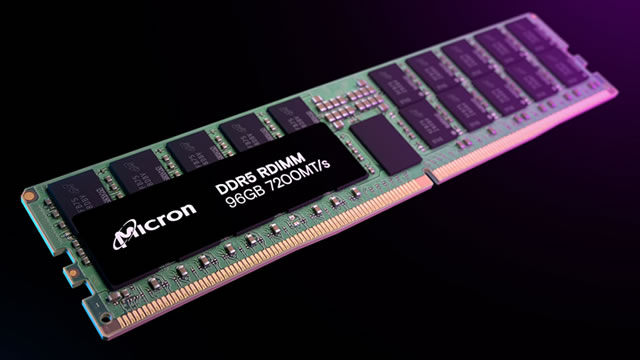
Global semiconductor sales implied a 9.8% month-over-month decline in July, including a 16.3% drop in memory revenue, but rising DRAM and NAND ASPs alongside lower shipments point to tightening supply rather than weakening end demand. The supply constraints reinforce Micron's growth and earnings outlook. Nvidia's Rubin Ultra specification changes indicate higher accelerator output, supporting aggregate HBM bit-demand growth despite lower memory content per chip.
Analysis
The key equity implication is not unit-demand direction but the duration of memory pricing power: constrained shipment availability alongside rising ASPs shifts MU's earnings sensitivity sharply toward mix and price. Because DRAM/NAND production is capital intensive and supply additions arrive with long lead times, a further tightening phase can expand gross margin faster than consensus revenue estimates imply over the next 1-3 quarters. The more investable confirmation is sequential contract-price realization and MU's bit-supply guidance, rather than a single month of industry sales data.
NVDA's platform evolution modestly redistributes memory content per accelerator, but does not necessarily reduce total HBM demand if system output and rack-scale deployment rise faster than per-chip content falls. This favors the HBM supply chain—MU most directly, with SK Hynix exposure via Korea ETFs less pure—while creating a second-order risk for server OEMs and hyperscalers if scarce memory raises system BOM costs or delays deliveries. The relevant 6-18 month constraint is advanced packaging and qualified HBM capacity, not commodity NAND.
Consensus may be too quick to treat the sales decline as either a clean demand warning or unequivocal bullish proof of shortages. A genuine demand slowdown can coexist with temporarily rising prices when inventory is held tightly; the thesis fails if end-demand indicators weaken while customer inventory days rise, causing contract pricing to roll over. Near term, MU is likely more exposed to expectation risk than NVDA: a strong price environment is increasingly embedded in estimates, so upside requires guidance magnitude—not merely confirmation of tight supply—to exceed elevated assumptions.
AllMind Terminal
AI-powered research, real-time alerts, and portfolio analytics for institutional investors.
Request TrialMarket Sentiment
Overall Sentiment
moderately positive
Sentiment Score
0.42
Ticker Sentiment
Key Decisions for Investors
- Maintain/add MU on pullbacks ahead of the next earnings and guidance cycle, targeting a 1-3 month catalyst window. Underwrite the position to sustained DRAM/HBM price realization and gross-margin upside; reduce if management signals bit shipments are constrained by weakening orders rather than available supply, or if pricing guidance turns sequentially negative.
- Express relative memory tightness through long MU / short SOXX in equal beta-adjusted dollar amounts over 1-3 months. MU offers more direct operating leverage to memory ASPs than the diversified semiconductor index; invalidate if broad AI-capex revisions drive NVDA-led index strength while MU's HBM qualification or volume ramp slips.
- Do not add incremental NVDA solely on the memory-demand read-through. Treat Rubin-related HBM demand as a 6-18 month support factor, but require evidence that system volumes offset lower memory per accelerator; monitor hyperscaler capex guidance and NVDA supply commentary before converting this into a standalone long.
- Set a watch alert for quarterly DRAM and NAND contract-price data, MU inventory days, and capex announcements from Samsung and SK Hynix. A synchronized price decline or aggressive supply-capex response would compress the duration premium currently implicit in MU's multiple.
More News
- Will AI expose the rickety infrastructure of the internet?
- 3 AI Stocks That Can Beat the Nasdaq Composite in 2027
- Block’s new voice model sounds eerily human
- As AI Labs Burn Cash, the Real Question Is Which Suppliers Get Paid
- 3 Stocks to Buy as the AI Trade Sputters
- LG’s brilliant C6 OLED TV is already $400 off ahead of Black Friday