
Pusan National University Develops Adaptive Multi-Expert Framework for Dynamic 3D Reconstruction
Source: PR Newswire
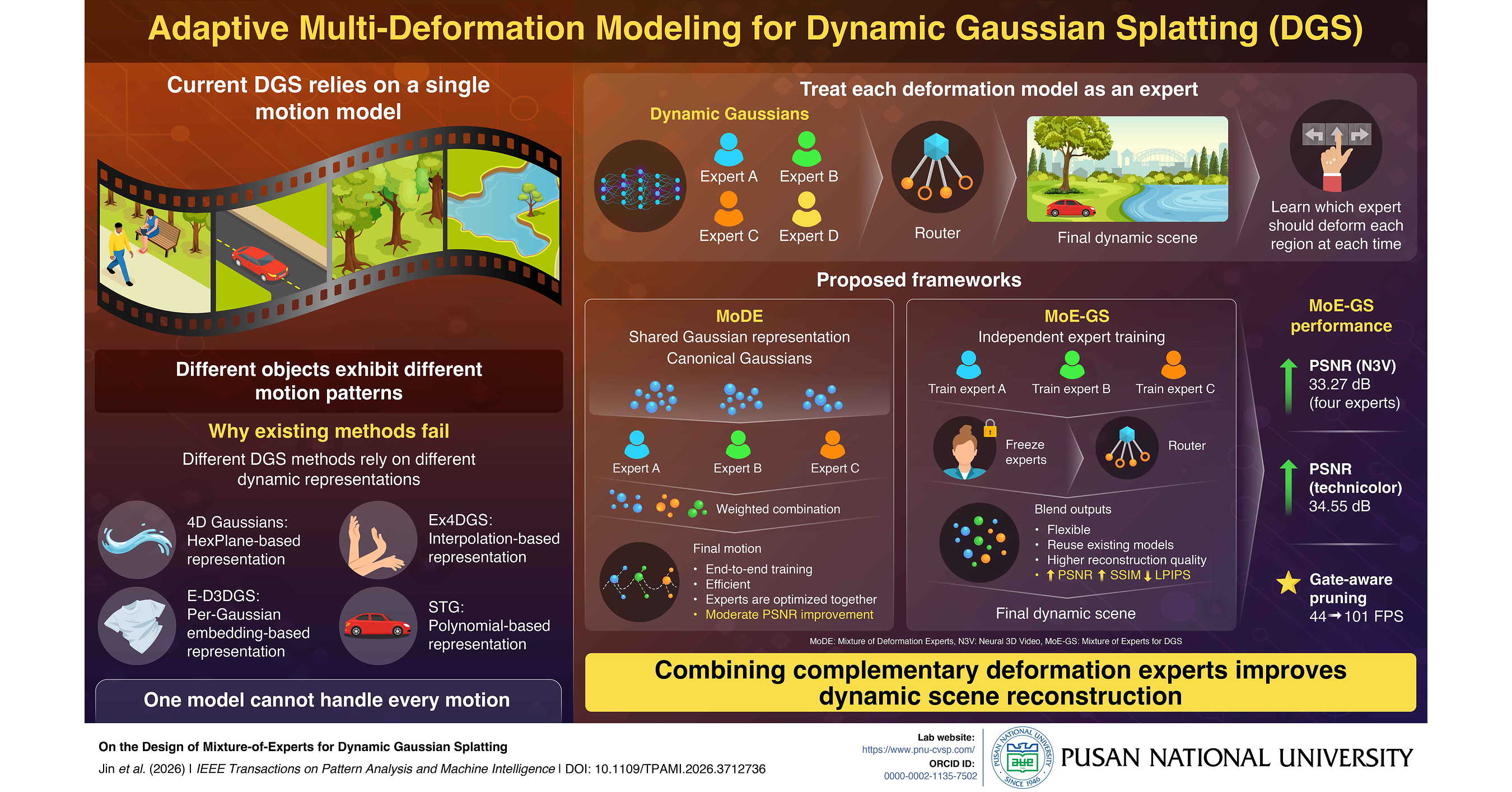
Pusan National University researchers introduced two Mixture-of-Experts frameworks—MoE-GS and MoDE—to improve dynamic 3D reconstruction by adaptively combining multiple dynamic representations when no single method generalizes well across diverse motion. The approach uses learned expert routing (MoE-GS) or joint deformation optimization (MoDE) to better capture heterogeneous motions, aiming to trade off flexibility, performance, and efficiency. The development is positioned to strengthen downstream AI use cases like robotics, digital twins, autonomous systems, and spatial computing, but the news is primarily research-focused with limited near-term market impact.
Analysis
This is not a near-term revenue event for any public company, but it is directionally supportive for the compute layer of the AI stack. A mixture-of-experts approach to dynamic 3D reconstruction implies that real-world “physical AI” gets more capable only by spending more on training, routing, memory, and inference orchestration — a setup that favors GPU, networking, and cloud vendors over lightweight software startups. In other words, the prize goes to the picks-and-shovels names that monetize complexity, not the application layer that hoped model simplification would compress costs.
The second-order winner set is broader than obvious robotics names. Autonomous driving, industrial digital twins, and spatial computing all depend on scene understanding; if heterogeneous motion modeling becomes the default, it raises the quality bar for autonomy stacks and increases the value of proprietary data pipelines. That tends to help platform incumbents with distribution and compute budgets — NVDA, MSFT, AMZN, GOOGL — while making it harder for smaller point-solution vendors to differentiate on model architecture alone.
The main risk is timing: academic validation can be a 12-24 month commercial lag, and these methods may be too computationally heavy to matter in edge deployments without further optimization. Near term, the market could also overread this as a breakthrough for robotics/app names when the immediate implication is actually higher infrastructure intensity. The contrarian view is that the real signal is not better 3D reconstruction, but that single-model approaches are hitting diminishing returns; that usually means the next leg of capex shifts toward model orchestration and inference scale, not cheaper AI.
What would falsify the bullish infrastructure read is evidence that routing/ensemble overhead materially reduces deployment efficiency or that alternative representations outperform MoE in real-time edge settings. If that happens, the beneficiaries shift back toward low-latency ASIC/edge compute rather than cloud-scale GPU demand.
AllMind Terminal
AI-powered research, real-time alerts, and portfolio analytics for institutional investors.
Request TrialMarket Sentiment
Overall Sentiment
mildly positive
Sentiment Score
0.15
Key Decisions for Investors
- Maintain/scale a tactical long NVDA vs. a basket of application-layer AI names over the next 3-6 months; the thesis is that physical-AI progress increases compute intensity faster than it creates app-layer monetization. Falsify if hyperscaler capex guidance rolls over or GPU supply loosens meaningfully.
- Express a medium-term long on AMZN or MSFT over 6-18 months as cloud workload mix skews toward heavier 3D/world-model inference. Best entry is on any post-earnings pullback; risk/reward improves if AI capex commentary stays firm while margins hold.
- Avoid chasing small-cap robotics/spatial-computing names on this headline alone; use them as watchlist candidates only if they later show productization and design-win evidence. The paper is supportive, but not yet a commercial catalyst.
- If looking for a pair, long semis/infrastructure (NVDA, ANET) against a basket of lower-quality AI app names that need cheap inference to scale. The spread should widen if model complexity keeps rising and pricing power remains with infrastructure suppliers.
More News
- Musk says Terrafab chip factory could outperform rivals despite challenges
- CBO chief warns it’s ‘probably not plausible’ that a strong economy alone can steady U.S. debt as 5%-6% growth is needed—more than Bessent’s 3% view
- Nvidia GPUs are everywhere. Here are the ways companies are accessing them
- Stocks saw new highs and big declines: How the volatile AI trade moved last week's market
- Will Warner Bros. kill Skydance — or will David Ellison kill Warner Bros?
- Cerebras Is About as Big as Nvidia's Data Center Business Was Nearly a Decade Ago. The Similarities Mostly End There.
From AllMind Research
- Anthropic IPO Preview: Valuation, Timing, and What to Watch
- Shein After the IPO: Venue, Valuation, and What Must Be Proved
- What AI Research Tools Should a Small Hedge Fund Buy First?
- Capital IQ Alternatives for Research and Deal Work
- Research Workflows, Report Format Selection, and Interactive Synthesis