
Why Intel Stock Popped on Monday
Source: fool.com
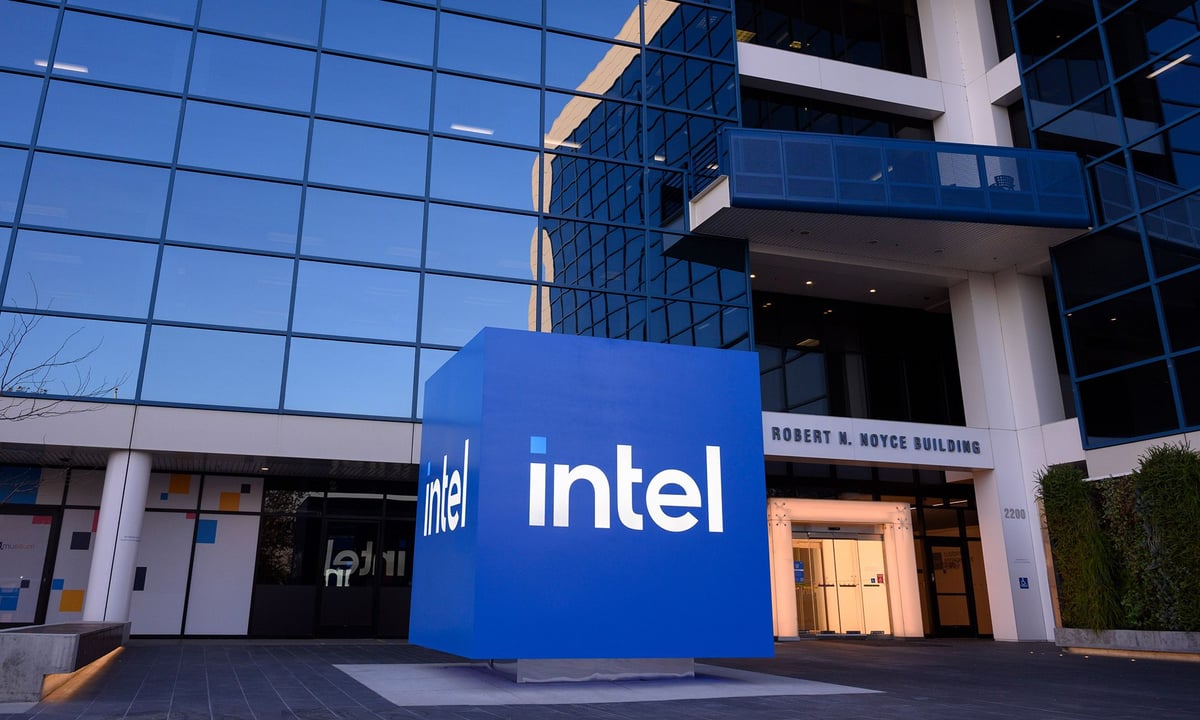
Intel shares rose 4.6% after JPMorgan analyst Harlan Sur upgraded the stock from underweight to neutral, citing an improved risk-reward profile after a 36% decline from its June peak and a nearly 22% drop since October began. Sur noted Intel’s server CPU share fell from 77% to 53% and PC CPU share from 81% to 68%, while its foundry business has about $1 billion in annualized sales to external customers versus TSMC’s $150 billion. He sees progress in foundries and AI data-center CPU manufacturing, but the article says Intel’s market-share losses and foundry challenges remain significant.
Analysis
The upgrade is a positioning catalyst, not evidence that Intel’s competitive trajectory has turned. A less-bearish rating can support a near-term relief rally, but the fundamental hurdle is higher: better yields and packaging matter only if they translate into competitive products, share stabilization, and cash returns on manufacturing investment. AI infrastructure demand is not automatically an Intel tailwind; accelerator spending may accrue elsewhere, while server CPU demand and Intel’s ability to win designs remain the relevant checks.
For the foundry thesis, internal production improvements do not establish a viable external foundry franchise. Track independently verifiable external customer commitments, utilization, and segment economics—not just yield claims. TSMC remains the scale benchmark, but its larger business does not by itself make its shares an attractive hedge or guarantee Intel losses accrue to TSMC.
Near term (days), analyst-driven flows can extend the bounce. Over 1–3 months, earnings and product disclosures should test share, yield, and cash-flow claims. Over 6–18 months, the key question is whether Intel can fund the manufacturing roadmap while returning to durable profitability. Contrarian point: the downgrade consensus may already reflect substantial execution risk, so a genuine operating inflection could drive sharp upside; conversely, a forecast return to profitability is not enough if it depends on adjustments or comes with weak cash conversion.
AllMind Terminal
AI-powered research, real-time alerts, and portfolio analytics for institutional investors.
Request TrialMarket Sentiment
Overall Sentiment
mixed
Sentiment Score
0.15
Ticker Sentiment
Key Decisions for Investors
- Do not chase the rating-driven move. Keep Intel underweight pending evidence of operating improvement; treat the analyst’s price target as an opinion, not a downside floor.
- Relative-value watch: consider a beta-adjusted long TSMC / short Intel pair only for portfolios able to bear Taiwan geopolitical risk. Size below normal until Intel’s next disclosures clarify execution; the thesis is weakening if Intel stabilizes CPU share and demonstrates credible external foundry commitments with improving economics.
- Use the next earnings and product updates as the 1–3 month decision point. Verify server and PC share trends, yield/manufacturability metrics, external foundry customer wins, and whether projected profitability is GAAP-based and supported by cash flow.
- Falsify the cautious view if Intel reports sustained share stabilization alongside measurable yield gains and improving cash generation; reassess the short if those indicators improve. Renew downside risk if share losses persist, foundry progress remains internal, or profitability guidance slips.
More News
- BlackRock, GIC among investors chasing Indian telecom major Jio's IPO as anchor bids top $26 billion
- AI stocks bounce back after bruising selloff, CoreWeave gets Goldman upgrade
- Tenstorrent hits $6.2B valuation to scale open-weight AI chips
- Markets Brace for Inflation, Tech Earnings
- JPMorgan's 2027 Long-Term Capital Market Assumptions
- Wall St futures climb as AI stocks rebound; oil, yields fall