
Threat of a Fed Rate Hike Is Changing the Leadership in Markets, Slimmon Says
Source: youtube.com
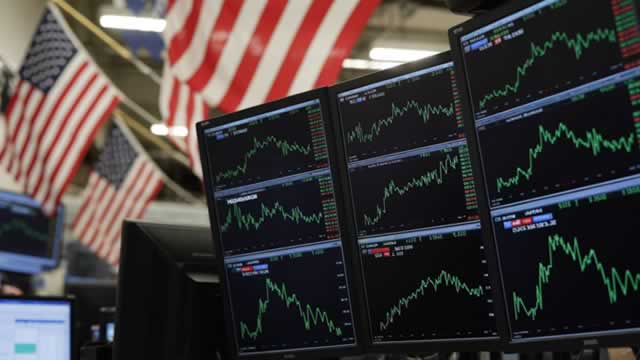
Morgan Stanley’s Andrew Slimmon said he is “happy” with Fed Chair Kevin Warsh’s Jackson Hole remarks and views his messaging as consistent, but he warned that the risk of a rate hike is already changing stock market leadership. The implication is a cautious, rates-sensitive rotation away from certain equity exposures rather than a broad-based easing.
Analysis
The market implication is not a clean "banks up, growth down" binary; it is a duration shock. If rate-cut expectations are pushed out, the first-order winner is any segment with lower multiple sensitivity and a cleaner near-term cash yield, while the first-order loser is the part of equity leadership most dependent on discount-rate compression. That tends to favor financials and defensives on a relative basis, but the trade is uneven because higher rates can also slow capital markets activity and reduce risk appetite, which matters for fee-heavy franchises.
For MS specifically, the debate is about mix. A steeper or simply higher rate backdrop can help net interest income and support relative positioning in wealth management, but it can also suppress AUM-linked fees, transaction activity, and advisory pipelines if equity volatility rises. In other words, the stock can benefit from factor rotation even while the underlying operating environment becomes more mixed. The biggest second-order beneficiaries are not necessarily the largest banks, but the managers of broad equity exposure that get forced to de-risk: QQQ, ARKK, and crowded mega-cap growth baskets.
The key risk is that the current move is only a narrative trade unless it is confirmed by inflation prints and the next Fed communication. If rates reprice higher for 1-3 months, the leadership change can broaden into a durable style rotation; if the market quickly refocuses on slowing growth, the initial financials bid should fade and defensive duration will reassert. The contrarian point is that higher rates do not automatically translate into better bank earnings; for MS, the more important variable is equity market breadth, not the policy rate itself.
AllMind Terminal
AI-powered research, real-time alerts, and portfolio analytics for institutional investors.
Request TrialMarket Sentiment
Overall Sentiment
mildly negative
Sentiment Score
-0.20
Ticker Sentiment
Key Decisions for Investors
- Long XLF / short QQQ for a 1-3 month factor-rotation trade; structure as a relative-value position because the thesis is discount-rate compression rather than absolute equity direction. Falsify if 10Y yields fall back below the pre-speech range or if mega-cap growth leadership immediately reasserts.
- Use MS as a partial beneficiary, but not the purest expression: prefer a modest long MS versus a high-duration asset manager or broad market beta only if equity breadth weakens. If MS underperforms XLF on a relative basis after the next inflation print, the market is signaling that higher rates are hurting risk assets more than helping NII.
- Short QQQ or buy put spreads on IWM/QQQ into the next macro catalyst if the market is still pricing aggressive easing; the best payoff comes from a small premium outlay with 1-2 month tenor. Cover if real yields reverse lower or if breadth expands beyond financials/defensives.
- Watch for confirmation in bank earnings and capital markets commentary over the next quarter: if MS management flags weaker advisory/transaction activity, the 'higher rates help financials' narrative is too simplistic. That would argue for fading rallies in fee-sensitive financials rather than chasing them.
- If the hawkish tone persists for several weeks, rotate toward value and quality balance sheets rather than rate-sensitive cyclicals; the trade is in avoiding multiple compression, not in betting on a straight-line rise in financial sector profits.
More News
- Take Five: Bangkok blues
- JPMorgan Chase, Goldman and other big banks report earnings this week. What to expect
- Here are the 6 big things we're watching in the stock market this week
- Big Banks Face Test as Earnings Season Begins
- Stock futures are little changed with big banks set to kick off earnings season: Live updates
- Big Banks Prepare for Earnings Season