
HPQ's AI PC Demand Rises: Can it Offset Declining PC Shipments?
Source: zacks.com
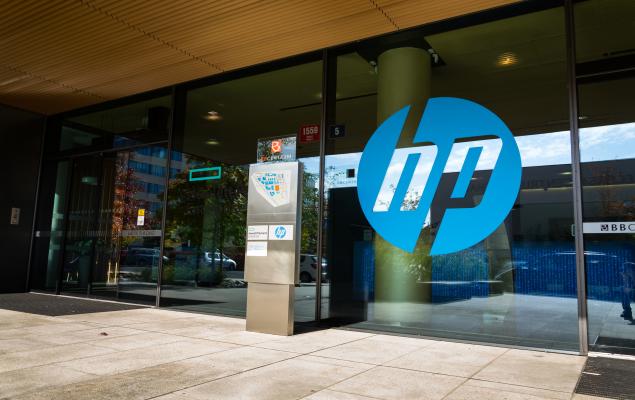
HP’s fiscal Q3 2026 revenue rose 12.5% year over year to $15.7B, while Personal Systems revenue climbed 18.5% to a record $11.8B; however, Personal Systems unit shipments fell 16%. Management expects AI PCs to reach 50% of shipments by fiscal 2026 year-end, and HP’s fiscal 2026 revenue consensus implies 3.5% growth, unchanged over the past 30 days. HP shares are up 40.1% year to date, while the article cites competition from Dell and Lenovo and rising component costs as challenges.
Analysis
The key signal is price/mix resilience against a shrinking unit base—not proof that AI PCs are creating a durable new demand pool. If premium mix and pricing are doing the work, revenue can hold up while lower volume and component inflation pressure operating leverage; any normalization in pricing would expose the shipment decline quickly. The 50% AI-PC shipment goal is a product-mix target, not evidence of incremental units, higher customer willingness to pay, or recurring AI revenue. Edge-AI benefits may support replacement decisions over 6–18 months, but enterprise software availability and measurable productivity gains remain the gating factors.
Near term, HPQ’s strong YTD share performance alongside unchanged FY26 revenue estimates leaves less room for a merely mix-driven beat. Dell Technologies and Lenovo compete for the same premium refresh budgets, while component-cost increases could affect OEM margins across the group; the article provides no cost or margin data to quantify the exposure. The contrarian angle is that declining shipments could represent demand deferral rather than successful premiumization, with channel inventory and realized pricing the decisive checks. A broad PC-sector short is not supported by this evidence alone.
AllMind Terminal
AI-powered research, real-time alerts, and portfolio analytics for institutional investors.
Request TrialMarket Sentiment
Overall Sentiment
mildly positive
Sentiment Score
0.30
Ticker Sentiment
Key Decisions for Investors
- Do not chase HPQ on the AI-PC shipment target alone. Before adding exposure, verify subsequent Personal Systems gross margin, realized average selling prices, and whether AI-PC mix is translating into incremental units or revenue.
- For the next 1–3 months, treat HPQ as a catalyst watch rather than a fresh long: unchanged FY26 revenue estimates despite strong reported segment growth raise the bar for estimate revisions. Reassess if guidance or consensus estimates move up on sustained demand, not mix alone.
- Monitor HPQ and Dell Technologies for relative pricing and commercial shipment trends. Consider a relative-value position only if comparable disclosures show HPQ gaining share without sacrificing margin; current article data do not establish a defensible pair trade.
- Falsifiers: improving unit shipments with stable or expanding segment margins would weaken the demand-deferral thesis; continued unit declines alongside lower pricing or margin guidance would strengthen it. Check channel inventory and component-cost commentary at the next results.
More News
- Super Micro climbs after upbeat forecast shows robust AI demand
- Why are Dell and HPE stocks rising in premarket trading on Wednesday?
- Nvidia's grand plan for speeding up datacenter deployments: AI trailer parks
- Stocks making the biggest moves midday: SpaceX, Meta Platforms, Super Micro Computer, Roivant Sciences & more
- Our top 10 things to watch in the stock market Wednesday
- Stock Market Today, Oct. 21: Super Micro Computer Raises Full-Year Revenue Guidance on Strong AI Demand
From AllMind Research
- Anthropic IPO Preview: Valuation, Timing, and What to Watch
- Shein After the IPO: Venue, Valuation, and What Must Be Proved
- What AI Research Tools Should a Small Hedge Fund Buy First?
- Capital IQ Alternatives for Research and Deal Work
- Research Workflows, Report Format Selection, and Interactive Synthesis