
Lawmakers Spend Millions on Taxpayer-funded Ads, Drawing Scrutiny
Source: Bloomberg
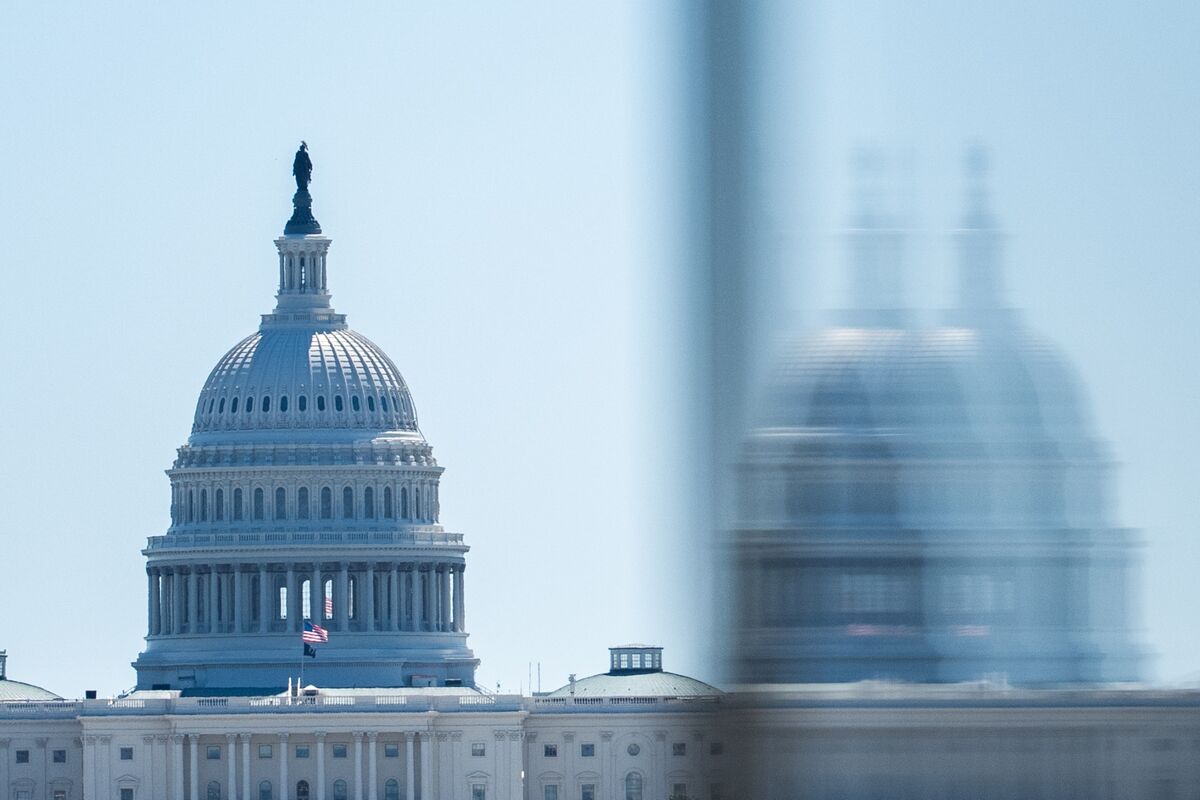
U.S. lawmakers are facing renewed scrutiny over millions of dollars in taxpayer-funded advertising during an election year. The report signals potential political and budget-accountability concerns, but provides no specific spending figures, policy actions, or material implications for financial markets.
Analysis
This is unlikely to create a standalone equity catalyst: federal communications budgets are too fragmented and immaterial to the revenue base of scaled advertising, media, or government-services companies. The investable implication is instead procedural—heightened oversight can delay agency discretionary spending late in the fiscal year, modestly pressuring small federal contractors with concentrated public-sector marketing, outreach, or communications exposure. Broad agency-service peers and diversified ad platforms should absorb any effect without estimate revisions.
The more relevant market transmission is political: scrutiny of discretionary taxpayer spending can become a bargaining chip in appropriations negotiations, raising the probability of narrowly targeted rescissions or procurement pauses rather than broad fiscal tightening. Over the next 1-3 months, monitor continuing-resolution language, agency obligation rates, and any inspector-general or congressional inquiry; absent explicit dollar amounts or named programs, there is no basis for a directional trade. Over 6-18 months, a sustained shift toward measurable digital outreach could marginally favor data-driven ad platforms over traditional media, but that would require budget reallocation rather than simple spending cuts.
Contrarian view: election-year attention may make the rhetoric louder than the fiscal consequence. Politicians have incentives to publicize oversight, while agencies retain statutory communications obligations and can often reclassify or defer—not eliminate—outreach spending. A broader risk-off conclusion for government contractors would be overextended unless scrutiny spreads into major procurement categories or coincides with a government-funding impasse.
AllMind Terminal
AI-powered research, real-time alerts, and portfolio analytics for institutional investors.
Request TrialMarket Sentiment
Overall Sentiment
mildly negative
Sentiment Score
-0.15
Key Decisions for Investors
- No new directional position based on this item; expected earnings sensitivity for diversified media and advertising names is de minimis without disclosed program-level spending reductions.
- Maintain existing election-advertising exposure in NXST, TGNA, or GTN only on the core political-ad cycle thesis; do not treat potential federal outreach cuts as a hedge, since political-ad demand is economically distinct from agency communications budgets.
- Set an alert for appropriations or oversight actions specifying agency, contract vehicle, and dollar amount. Consider a tactical short only in a small, federally concentrated communications contractor if a suspension or rescission implies a material revenue hit and management confirms backlog risk.
- Watch federal obligation data through the next funding deadline: a broad slowdown in discretionary obligations would be a modest negative read-through for government-services contractors, but would need confirmation before reducing diversified exposure such as CACI or BAH.
More News
- US to send third aircraft carrier towards Iran: US official to Al Jazeera
- Dollar at 17-month high as global bond rout hits euro
- Trump says US may ask Europe to release diesel reserves
- Trump launches midterms campaign blitz amid record low approval ratings
- Can Trump Oust Powell From the Fed Board? What to Know
- ‘They’ll be hit very hard’: Trump sends roughly 9,000 troops and a third aircraft carrier to the Middle East after warning strikes on Iran