
SpyGlass Pharma Celebrates Grand Opening of New Irvine Headquarters, Positioning Itself for First Product Launch and Custom R&D Space
Source: PR Newswire
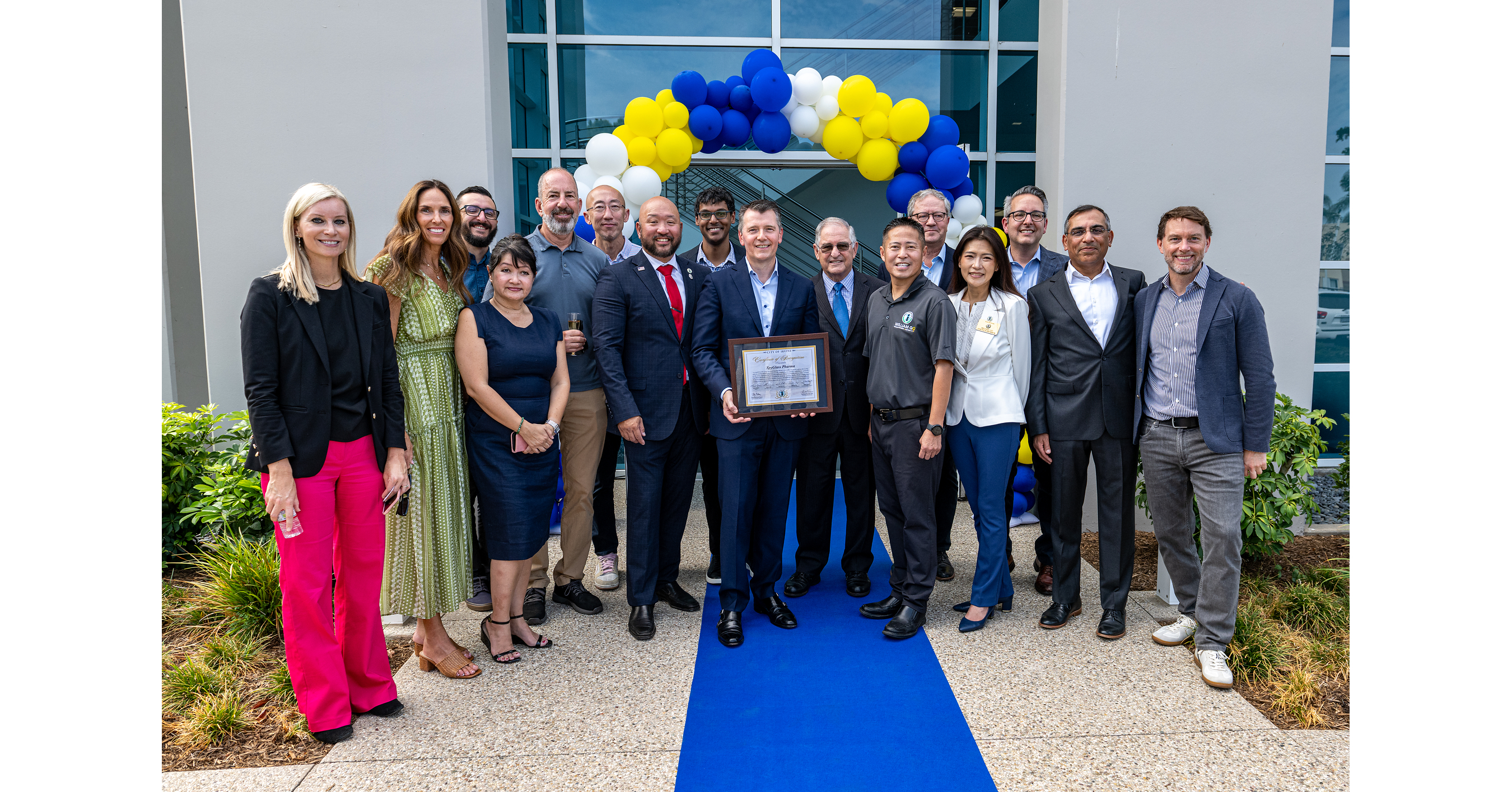
SpyGlass Pharma opened a new 33,000-square-foot headquarters in Irvine, positioning the company to scale commercialization of its sustained drug-delivery platform and advance its ophthalmology pipeline. The move follows an IPO in Feb 2026 that raised $172.5M gross proceeds, alongside a 33% workforce increase to 85+ employees. While not a financial results update, the expansion and Phase 3 trial progress are supportive of growth prospects.
Analysis
This reads less like a revenue event than a capital-allocation signal: SGP is moving from "development story" to "pre-commercial industrialization," which usually means higher fixed costs, more hiring, and a faster cash burn trajectory before any product cash flow arrives. The market should care more about whether the company can finance the next 12-18 months without a dilutive raise than about the building itself; in small-cap biotech, office expansion often precedes the need for more capital, not durable de-risking.
The real second-order winner is the local execution stack — specialist recruiters, cleanroom/build-out vendors, and ophthalmology-focused CRO/CDMO capacity — while the broader listed opportunity is in adjacent eye-care names that stand to benefit if sustained drug delivery gains traction versus chronic drop therapy. That said, the competitive risk is asymmetric: if the platform works, it pressures incumbent glaucoma and retinal-maintenance regimens by improving adherence; if it stalls, SGP owns the manufacturing/regulatory complexity and the margin burden. Names like ALC, GKOS, BLCO, and the XBI basket matter more as sentiment barometers than as direct read-throughs.
Contrarian view: the headline may be overinterpreted as commercialization de-risking, but office expansion is not evidence of clinical success or reimbursement readiness. The key falsifiers over the next 1-3 months are any delay in Phase 3 cadence, a financing announcement, or silence on partnering/manufacturing scale-up. If those stay clean for 6-18 months, the story shifts from "biotech option" to a real ophthalmology franchise; until then, the setup is mostly binary event risk, not a trend trade.
AllMind Terminal
AI-powered research, real-time alerts, and portfolio analytics for institutional investors.
Request TrialMarket Sentiment
Overall Sentiment
moderately positive
Sentiment Score
0.35
Key Decisions for Investors
- Do not initiate a fresh long in SGP solely on the headquarters news; treat this as a watch item until the next clinical or financing catalyst confirms that the added overhead is being funded by de-risking rather than dilution.
- If SGP trades up on the PR, fade strength rather than chase; the risk/reward is poor for a non-economic event unless accompanied by updated enrollment, endpoint timing, or a partnership announcement.
- For a cleaner relative-value expression, consider a small long SGP / short XBI pair only after confirming the stock can hold post-event gains for 3-5 sessions; the thesis is idiosyncratic execution alpha, not sector beta.
- Monitor ALC, GKOS, and BLCO over the next 1-3 months as sentiment proxies for ophthalmology innovation; if the market starts pricing in sustained-delivery disruption, these names may see the first multiple compression, but only if SGP produces hard data.
- Set a financing alert on SGP: any secondary, convertible issuance, or structured financing before first product launch would materially weaken the thesis and would be a signal to exit any long exposure.
More News
- Musk says Terrafab chip factory could outperform rivals despite challenges
- Nvidia GPUs are everywhere. Here are the ways companies are accessing them
- Stocks saw new highs and big declines: How the volatile AI trade moved last week's market
- Will Warner Bros. kill Skydance — or will David Ellison kill Warner Bros?
- The world needs Ukraine’s grain. Its farmers are running out of reasons to plant
- Cerebras Is About as Big as Nvidia's Data Center Business Was Nearly a Decade Ago. The Similarities Mostly End There.