
Top 2026 Application Lifecycle & Release Management Platforms Named Champions in Info-Tech Research Group Report
Source: PR Newswire
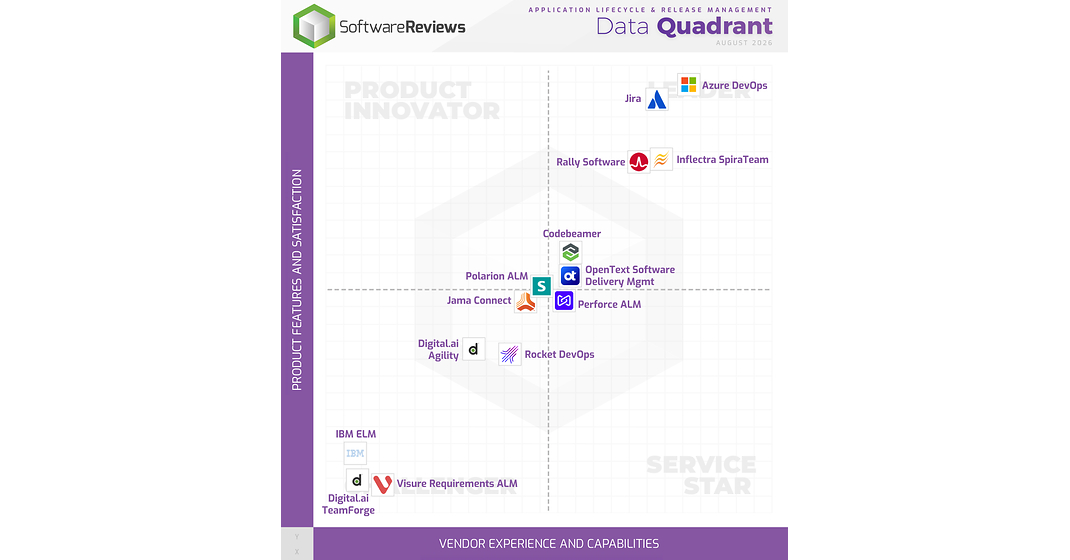
Info-Tech Research Group's 2026 Application Lifecycle & Release Management Data Quadrant named Azure DevOps (8.9 Composite Score), Jira (8.8), Inflectra SpiraTeam (8.7), and Rally Software (8.6) as Champions based on verified end-user feedback. The rankings highlight strengths in agile work management, issue tracking, implementation ease, and managed artifact repositories as enterprises prioritize faster software delivery with governance and release control. The announcement is a favorable vendor-validation event but is unlikely to materially affect public-market valuations.
Analysis
This is not independently material enough to alter revenue estimates for the public vendors exposed to the category. Peer-review recognition can modestly assist enterprise sales conversations, but it is a weak leading indicator because the report does not disclose review counts, customer mix, renewal rates, win rates, or incremental contract value. Treat any related equity move as sentiment-driven rather than a fundamental repricing.
The more relevant competitive read is that Azure DevOps and Jira remain embedded workflow incumbents, while point solutions face a growing bundling disadvantage. Microsoft can monetize Azure DevOps primarily through Azure consumption, GitHub, security, and enterprise agreements; Atlassian can cross-sell Jira into Jira Service Management, Confluence, and Rovo. In contrast, private vendors Inflectra and Broadcom-owned Rally may constrain pricing for niche ALM capabilities but do not create a clear listed-equity read-through.
Over 6-18 months, AI-assisted coding and agentic software delivery could reduce standalone planning and release-management seat growth while increasing the value of platforms that own the system-of-record for developer workflow and governance. That favors MSFT's ecosystem economics more than TEAM's per-seat collaboration model if AI lowers required user counts or customers consolidate tooling. The contrarian point is that developer-tool budget pressure may matter more than product satisfaction rankings: CIO consolidation programs can favor Microsoft even where Jira retains stronger team-level preference.
AllMind Terminal
AI-powered research, real-time alerts, and portfolio analytics for institutional investors.
Request TrialMarket Sentiment
Overall Sentiment
mildly positive
Sentiment Score
0.20
Key Decisions for Investors
- No standalone trade on this release; do not chase MSFT or TEAM on a low-impact vendor-award signal. Reassess only if subsequent earnings show acceleration in Azure DevOps/GitHub attach or Atlassian enterprise-cloud net revenue retention.
- Maintain a 6-12 month relative-value watch: long MSFT / short TEAM only if TEAM's cloud net revenue retention declines below management's guided range while Microsoft reports sustained Azure growth and expanding GitHub/AI monetization. The thesis is workflow-suite bundling, not this ranking.
- For TEAM, monitor enterprise seat growth, paid-seat expansion, cloud migration cadence, and Rovo attach over the next two earnings cycles. A material reacceleration in paid seats or AI upsell would falsify the consolidation-driven bear case.
- Use IGV as the liquid sector hedge for any developer-tools exposure; a broad software multiple expansion from falling rates can overwhelm vendor-specific competitive deterioration over the next 1-3 months.
More News
- Here’s the ‘core economic flaw’ in the AI bull case as stock and bond trades unravel, according to a top economist
- Biotech stocks are surging. How investors can play the new drug innovation boom
- Braskem creditors, shareholders near deal on $11bn debt restructuring
- Instacart reportedly discussed selling itself with DoorDash and Uber
- Nvidia's role as AI financier faces first big test as neoclouds take market hit
- Trump set to announce plan by Audi to build a U.S. factory in Georgia, source says
From AllMind Research
- Anthropic IPO Preview: Valuation, Timing, and What to Watch
- Shein After the IPO: Venue, Valuation, and What Must Be Proved
- What AI Research Tools Should a Small Hedge Fund Buy First?
- AlphaSense Pricing: What Public Contract Data Shows in 2026
- Eli Lilly Q4 2025 Earnings: Revenue Surges 43% as Mounjaro and Zepbound Dominate the GLP-1 Market