
Come Talk To ME, Featuring AI-Recreated Voice, Selected for Twin Cities Film Fest
Source: PR Newswire
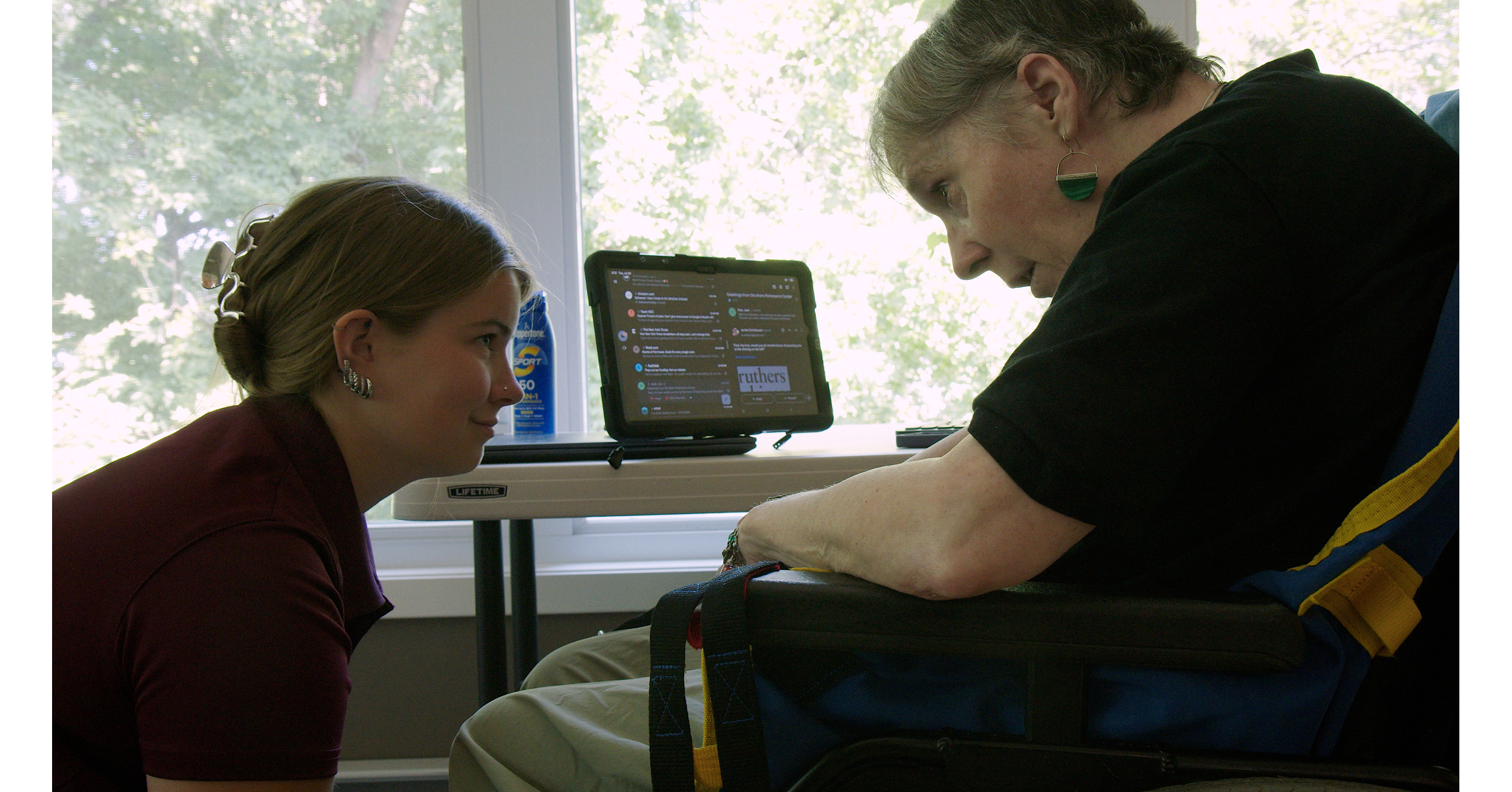
The documentary “Come Talk To ME” highlights Parkinson’s disease and uses an AI-recreated voice (“JHC2K”) generated from Jackie Hunt Christensen’s speech from ~two years after diagnosis (1998). The film aims to raise awareness of how Parkinson’s affects communication and relationship dynamics, especially for care partners, and is scheduled to screen at 12 pm on Oct. 24 at the Twin Cities Film Fest. While not a financial market catalyst, the article presents a constructive, innovation-driven application of AI in healthcare storytelling and education.
Analysis
This is more of a sentiment/awareness event than a directly monetizable equity catalyst. The only investable read-through is that consented voice cloning is moving from novelty toward a socially acceptable accessibility tool, which helps the larger AI stack with enterprise trust and compliance rather than headline model performance. That is modestly constructive for platform vendors with governance controls and accessibility distribution, but the near-term financial impact is too small to matter.
The second-order winners are likely adjacent: assistive communication and care-coordination software, telehealth workflows, and any speech-tech vendor that can prove provenance and consent. The losers are low-friction voice-clone apps and ad hoc synthetic-media tools, because the public conversation here emphasizes dignity, permissions, and clinical utility rather than entertainment. Over 6-18 months, this kind of use case can incrementally expand willingness to pay for personalized AI in healthcare, but it is not a quarter-to-quarter revenue driver.
The key risk is over-interpreting a compelling human story as proof of commercial demand. A real catalyst would be a follow-on from a large platform, payer, or health-system deploying voice-banking or AI speech restoration at scale; absent that, this fades into background noise. If regulators tighten synthetic-voice rules or platform policies after any deepfake-related event, compliance costs could rise and slow adoption of adjacent products rather than accelerate it.
AllMind Terminal
AI-powered research, real-time alerts, and portfolio analytics for institutional investors.
Request TrialMarket Sentiment
Overall Sentiment
mildly positive
Sentiment Score
0.12
Key Decisions for Investors
- No direct equity trade on MUEL/PPRG; the linkage to listed fundamentals is too weak and should not be forced into a position.
- Keep MSFT, AAPL, and GOOG on a watchlist for accessibility-speech monetization; treat any incremental product announcement as a 6-18 month optionality trade, not a near-term earnings driver.
- Watch TDOC and GEHC for evidence of voice-enabled care workflows or patient-engagement partnerships; only get constructive if adoption shows up in guided ARR or utilization metrics.
- Avoid long exposure to lower-quality synthetic-media names on this headline alone; the article reinforces consent/provenance risk, which is a valuation headwind for undifferentiated voice-AI vendors.
- If a larger platform announces a compliant voice-restoration product, consider a small long basket in accessibility/healthcare AI vs. a broad software index on a 1-3 month horizon; the edge would come from multiple expansion, not immediate revenue.
More News
- Putin reportedly suggests summit with Trump and Xi to decide fate of Ukraine
- China's CXMT sees shares drop over 6% as investors look past chipmaker's profit turnaround
- Asian stocks skid, Wall Street and bonds aided by oil slip
- India’s Finance Minister blames easy exits and excess liquidity for equity market's underperformance
- Zoom and big financial firms add ‘Proof of Human’ badges from Sam Altman’s World to stop fraud and deep fakes
- The next AI race will be won at the credit desk
From AllMind Research
- Anthropic IPO Preview: Valuation, Timing, and What to Watch
- Shein After the IPO: Venue, Valuation, and What Must Be Proved
- What AI Research Tools Should a Small Hedge Fund Buy First?
- Document Search Enhancements, AI Enhancements, AI Actions, & Chat Export
- AI Vendor Landscape for Institutional Investment Teams