
Clarius and Inteleos Pair Portable Ultrasound With the POCUS Certification
Source: PR Newswire
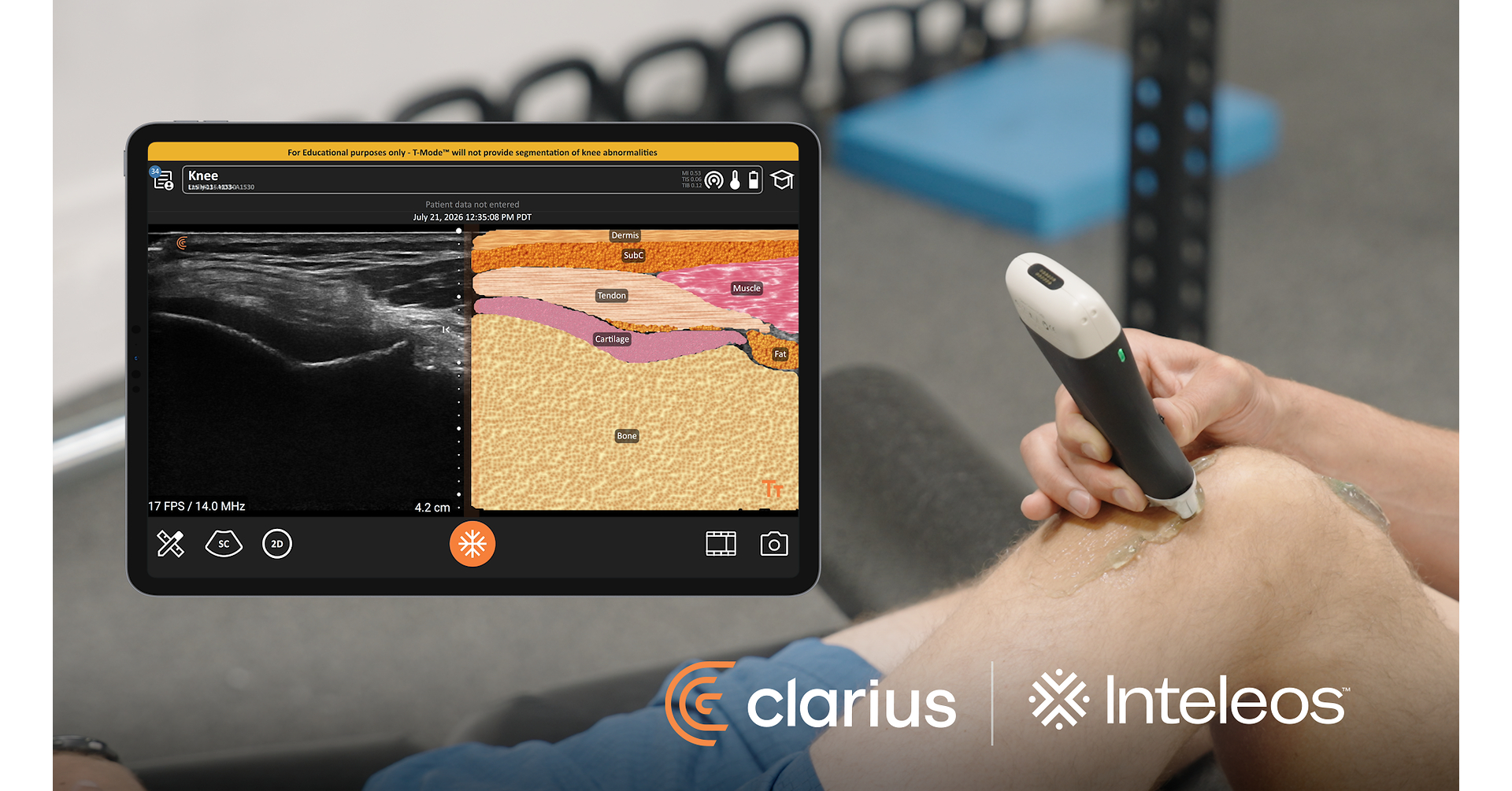
Clarius Mobile Health and Inteleos launched a North American bundle pairing each purchased Clarius handheld ultrasound system with access to the POCUS Fundamentals Certificate. The partnership combines device-based anatomy guidance, including Clarius's AI-powered T-Mode technology, with structured clinical training and certification pathways. The companies are targeting rising point-of-care ultrasound adoption, with the global POCUS market projected to expand from $4.16 billion in 2025 to $6.35 billion by 2030.
Analysis
This is strategically more relevant to Butterfly Network (BFLY) than to Clarius or Inteleos, neither of which offers an obvious liquid public-equity vehicle from the information provided. Bundled credentialing can reduce the largest non-hardware adoption friction in handheld ultrasound—clinician confidence, institutional governance, and training time—potentially raising scanner utilization and improving renewal/upgrade economics rather than simply driving unit shipments. If hospital purchasers begin requiring validated training alongside device procurement, education partnerships become a meaningful channel-control advantage and raise switching costs for vendors without comparable workflow support.
The near-term financial signal is weak: there is no disclosed pricing, attach rate, institutional contract size, reimbursement change, or evidence that the certificate is mandatory rather than promotional. Over 1-3 months, monitor BFLY's paid-subscription growth, enterprise customer adds, and gross-margin trajectory for signs that the category is converting training into recurring software/service revenue; a broad acceleration would validate the adoption thesis even if Clarius initially benefits. Over 6-18 months, this dynamic could pressure standalone hardware economics while favoring vendors that combine image quality, AI guidance, credentialing, and enterprise workflow integration; GE HealthCare (GEHC) and Philips (PHG) have distribution advantages but may be slower to bundle low-cost handheld products into clinical education pathways.
Contrarian view: the announcement may be more defensive than incremental demand creation. Training improves safe use but can expose the operational burden of quality assurance, image archiving, and clinician supervision, which may slow deployment in primary-care settings lacking centralized ultrasound programs. The thesis is falsified if handheld-ultrasound vendors continue reporting device growth without higher recurring revenue or if hospital procurement cycles remain dominated by reimbursement, IT integration, and infection-control requirements rather than training availability.
AllMind Terminal
AI-powered research, real-time alerts, and portfolio analytics for institutional investors.
Request TrialMarket Sentiment
Overall Sentiment
mildly positive
Sentiment Score
0.30
Ticker Sentiment
Key Decisions for Investors
- No immediate position based solely on this release; treat ALDMS as non-actionable until ticker identity, listing status, liquidity, and direct economic exposure to the partnership are independently verified.
- Place BFLY on a 1-2 quarter catalyst watch: consider a tactical long only if the next earnings release shows improving enterprise/subscription revenue and reaffirmed gross-margin progress. A training-led category expansion would be most valuable to BFLY if it converts into recurring revenue rather than lower-margin hardware volume.
- For diversified healthcare-technology exposure, prefer GEHC over PHG on a 6-18 month horizon only if portable-ultrasound adoption appears in order growth or imaging guidance; GEHC's hospital installed base gives it better ability to monetize workflow integration. Exit the relative view if GEHC's imaging orders weaken or PHG demonstrates superior handheld/AI attach metrics.
- Monitor BFLY versus GEHC relative performance after the next two reporting cycles. If BFLY's revenue growth fails to exceed GEHC's imaging-growth rate while cash burn remains elevated, avoid the pure-play adoption trade; category education alone will not offset balance-sheet and execution risk.
More News
- China's AI leaders keep quiet despite U.S. 'publicity' on tech risks
- U.S. stock futures drift higher with Fed rate hike in focus
- AWS says it can't restore service to Bahrain, UAE facilities 6 months after Iran strikes
- Chinese investors rush into US stocks as Beijing opens wider path overseas
- Factbox-How AI leaders and world governments react to ’AI doom’ fears
- Is Amazon Stock a Buy After Its Best Quarter in Years?