
Should Investors Hold CSX Stock Despite Its Higher Valuation?
Source: zacks.com
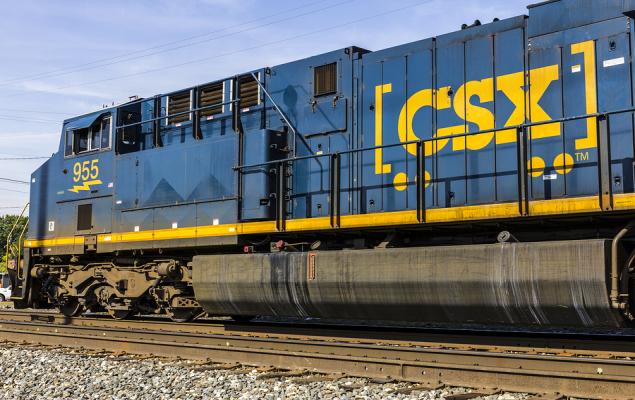
CSX raised its 2026 outlook to mid-to-high single-digit revenue growth, operating-margin expansion above 350bps and free-cash-flow growth exceeding 80%, versus prior expectations for mid-single-digit growth, 200-300bps-plus margin expansion and more than 60% FCF growth. However, the stock trades at 21.61x forward P/E versus a 20.66x industry average and 17.35x five-year median, while crew constraints, weaker service metrics and structurally challenged coal demand remain risks. After a 29.5% YTD gain, the article recommends holding rather than buying CSX, citing its premium valuation despite upward earnings-estimate revisions and ongoing capital returns.
Analysis
The central underwriting question is not whether CSX can price freight, but whether incremental volume can move through the network without reintroducing labor, locomotive and terminal costs. Rail margins exhibit asymmetric operating leverage: modest service slippage can force crew starts, overtime and asset repositioning faster than revenue accrues. That makes the upgraded free-cash-flow outlook vulnerable to a small deterioration in dwell, train velocity or trip-plan compliance, with the first evidence likely visible in the next quarterly operating-statistics release rather than at year-end.
CSX’s premium is therefore a bet on execution, while CNI offers a cleaner relative hedge through greater geographic and commodity diversification. The contrarian point is that a valuation-only short is premature: an FCF inflection, lower incident costs and capital returns can sustain a premium for several quarters if operating metrics normalize. Over 6-18 months, however, structurally declining domestic coal and a less favorable mix raise the hurdle for maintaining a premium multiple once the initial productivity gains are harvested.
The near-term catalyst path is binary: sequential improvement in service metrics and confirmation that margin gains are labor-productivity driven would validate the multiple over the next 1-3 months. Conversely, any guide-down tied to crew availability, congestion, industrial volumes or export-coal weakness should produce disproportionate downside because estimates have already moved higher. Falsify the relative-short thesis if CSX demonstrates two consecutive quarters of improving velocity/dwell alongside margin conversion above guidance without incremental labor expense.
AllMind Terminal
AI-powered research, real-time alerts, and portfolio analytics for institutional investors.
Request TrialMarket Sentiment
Overall Sentiment
mixed
Sentiment Score
0.12
Ticker Sentiment
Key Decisions for Investors
- Do not initiate an outright CSX short before the next operating update; the revised cash-flow framework can support the shares while service metrics improve. Set an alert for a sequential deterioration in dwell or trip-plan performance as the trigger.
- On a post-results rally without clear service normalization, initiate a 3-6 month pair: short CSX / long CNI (CNR in Toronto). Target 8-12% relative downside with a 5% relative stop; the trade isolates CSX execution and coal/mix risk from broad rail rerating.
- For existing CSX longs, retain exposure only with a tighter catalyst discipline: reduce 25-33% if quarterly operating margin or free-cash-flow conversion misses the implied path to current guidance, rather than waiting for a formal annual revision.
- Avoid using NSC as the primary long hedge until its own operating trajectory is independently confirmed; turnaround-specific execution risk can swamp the intended CSX valuation hedge.
More News
- South Korea’s exports hit record high on AI boom
- RAM supply set to worsen, says Micron, as CEO celebrates ‘much higher’ prices
- Tencent leases 100,000 chips from Oracle for $7 bln- FT
- Greer urges G20 to back Trump tariff agenda, takes aim at China
- Asia stocks rise on chipmaker gains, soft U.S. inflation; Nikkei outperforms
- Why is Nidec stock plunging today?