
Disrupting Business Banking: Scott Shay Challenges the Fractional-Reserve Model
Source: PR Newswire
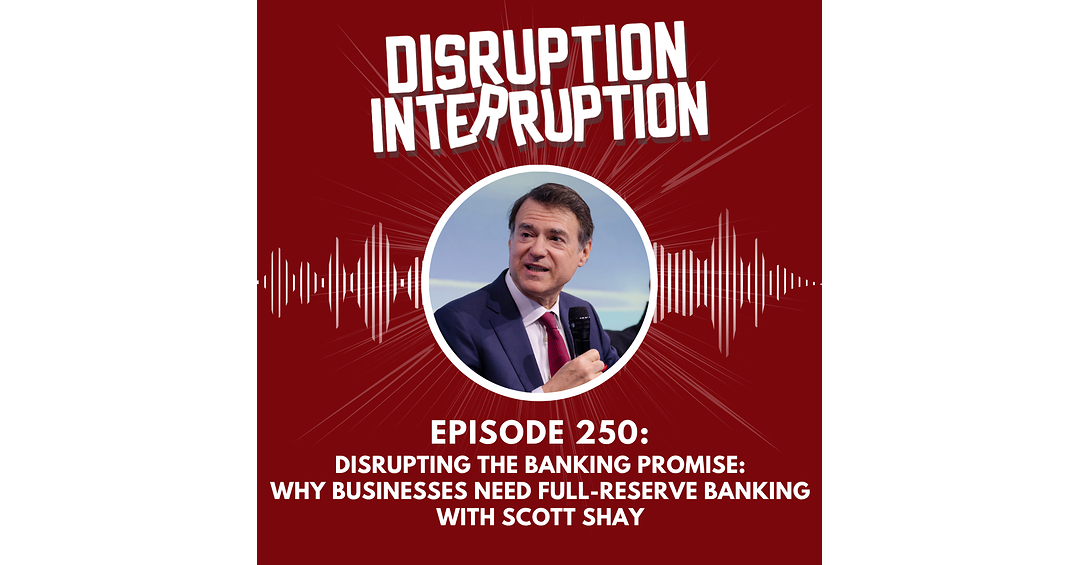
FDIC-estimated uninsured domestic deposits rose $233.5 billion in Q1 2026, while FDIC coverage generally extends to $250,000 per depositor at each insured bank. N3XT founder Scott Shay advocates full-reserve business banking, saying customer deposits are held in cash and short-term U.S. Treasuries rather than lent, and that its blockchain-based system settles payments in seconds. N3XT is a Wyoming state-chartered institution and is not FDIC insured; the article presents Shay’s claims and does not report market reaction.
Analysis
This is a business-development pitch, not evidence of deposit migration or a new competitive threat at scale. The investable mechanism is conditional: if treasurers move operating balances toward full-reserve providers, incumbent banks could lose low-cost funding and respond with higher deposit pricing or more wholesale funding, pressuring margins. But adoption depends on treasury-system integration, counterparty acceptance, and confidence in the provider—not settlement speed alone.
The model also shifts rather than eliminates risk. No FDIC insurance means customers must assess the institution’s legal structure, custody and access arrangements, operational resilience, and ability to meet withdrawals. Holding cash and short-dated Treasuries may reduce asset-duration risk, but the provider’s economics and resilience through stress remain unproven here. Programmable trade payments could reduce working-capital friction for logistics counterparties, though verifying delivery and resolving disputes remain real-world bottlenecks.
Near term, this podcast announcement is unlikely to change bank earnings or justify a sector position. Over 1–3 months, monitor verified customer balances, payment volumes, and whether N3XT publishes independently auditable reserve and liquidity data. Over 6–18 months, meaningful adoption could increase deposit competition and accelerate incumbent investment in real-time commercial payments. The contrarian point: uninsured-deposit concern is not automatically demand for a non-FDIC-insured alternative; many treasurers may prefer insured cash-sweep structures or established-bank protections. No company-specific valuation or financial impact is established.
AllMind Terminal
AI-powered research, real-time alerts, and portfolio analytics for institutional investors.
Request TrialMarket Sentiment
Overall Sentiment
mildly positive
Sentiment Score
0.15
Key Decisions for Investors
- No immediate trade: treat the announcement as promotional until there is evidence of funded customer balances, recurring payment volume, and retention.
- Set an alert on regional and commercial-bank deposit costs and uninsured-deposit trends. Consider a relative short in deposit-sensitive bank exposure only if sustained balance outflows or deposit-beta/guidance deterioration emerges; falsify the thesis if balances stabilize without pricing pressure.
- For any N3XT adoption thesis, require independent verification of reserve assets, custody and withdrawal mechanics, operational controls, and the legal treatment of customer funds. The absence of FDIC insurance is a material diligence issue, not a minor feature.
- Watch established banks and payment providers for real-time commercial settlement and programmable-payment launches. If incumbents match the functionality while retaining trusted treasury relationships, N3XT’s differentiation and pricing power may be limited.
More News
- The world needs Ukraine’s grain. Its farmers are running out of reasons to plant
- European bank stocks slide 8% as bond yields spark investor caution
- Trump vows quick end to Iran war as fighting in Yemen intensifies
- Verizon stock heads for worst day since 2002 as SpaceX U.S. network plans whack telcos
- Israel’s economy prospers despite years of war, but prices worry voters
- SpaceX’s Wireless Threat Rises With Spectrum Deal
From AllMind Research
- Anthropic IPO Preview: Valuation, Timing, and What to Watch
- Shein After the IPO: Venue, Valuation, and What Must Be Proved
- What AI Research Tools Should a Small Hedge Fund Buy First?
- The Great Divergence: North American Banking at the Crossroads of Monetary Policy and Agentic AI (Q4 2025 Bank Earnings)
- AI for M&A Target Screening: From Universe to Deal File