
HNS 2026: libro blanco técnico y de estándares sobre redes de campus inteligentes de 10 Gbps de alta calidad
Source: PR Newswire
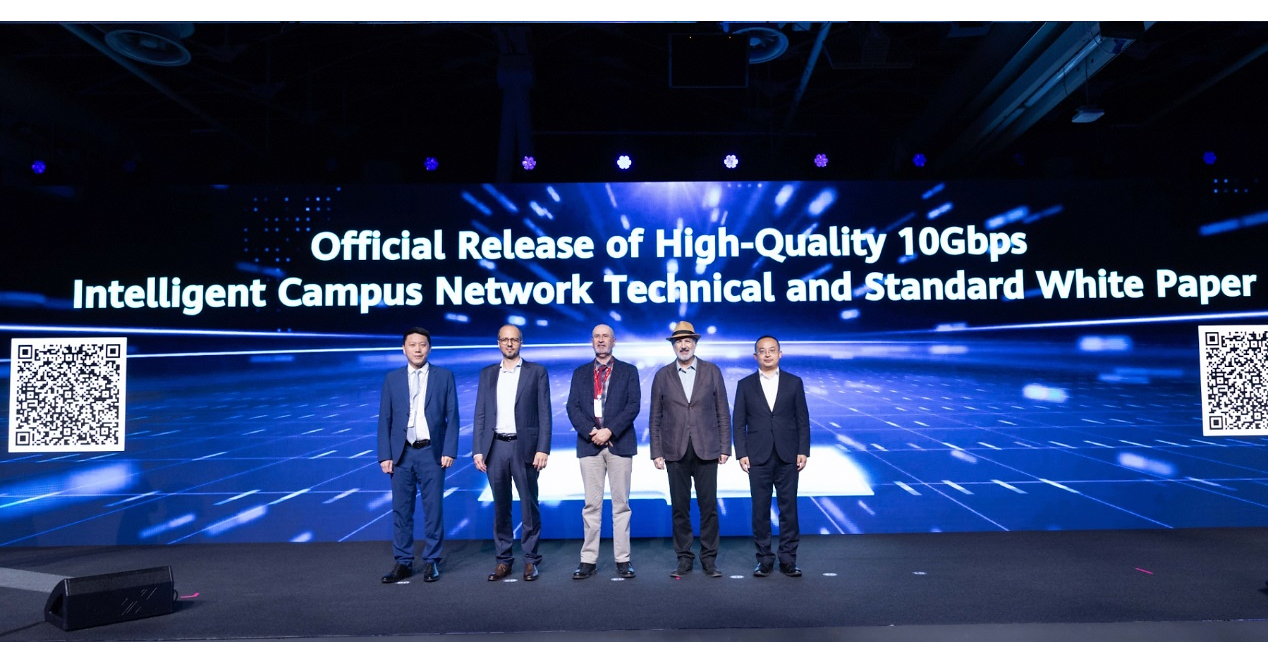
Huawei and industry organizations published a European white paper defining standards and capabilities for high-quality 10 Gbps intelligent campus networks, and Huawei presented an enhanced Stellar Intelligent Campus Network solution. The solution highlights Wi-Fi 7 Advanced multi-AP coordination that it says doubles network performance, automated 24/7 operations that it says cut mean time to repair by 90%, and integrated security and energy-saving features. The article reports product and industry initiatives but no sales, financial guidance, or market reaction.
Analysis
Huawei’s strategic gain here is less the white paper itself than an attempt to shape procurement language around a bundle—Wi‑Fi 7, automation, security, energy use—where buyers can compare vendors on operating outcomes rather than access-point price. If European customers adopt those capability criteria, Cisco and HPE Aruba may face pressure to demonstrate comparable automation and lifecycle-cost benefits; systems integrators could benefit from the complexity of migration and security validation. Conversely, the stated performance and 90% MTTR reduction are vendor claims, not independently verified results, and a white paper is not evidence of formal standards adoption or booked demand.
The key constraint is procurement eligibility: security reviews and country-specific restrictions can limit Huawei’s addressable market even if its technology is competitive. That can redirect spend to alternative vendors, while also lengthening buying cycles as customers validate security and interoperability. Near term (days), this is weak as a standalone earnings catalyst. Over 1–3 months, watch for named European deployments, competitive RFP language, and third-party validation of operational savings. Over 6–18 months, successful multi-vendor adoption of the proposed capabilities could support campus-network refreshes; alternatively, tight budgets may favor incremental upgrades over a full 10 Gbps rebuild.
Contrarian point: “10 Gbps” may be a powerful procurement label without implying a broad, immediate upgrade cycle. The commercial test is customer deployments and measurable total-cost-of-ownership improvement, not the launch narrative.
AllMind Terminal
AI-powered research, real-time alerts, and portfolio analytics for institutional investors.
Request TrialMarket Sentiment
Overall Sentiment
mildly positive
Sentiment Score
0.25
Key Decisions for Investors
- No immediate directional trade: the announcement provides no order, revenue, or independently validated performance evidence, and the supplied company mapping contains no tradable identities.
- Set a 1–3 month watch on European campus-network RFPs and customer wins. A shift toward explicit automation, energy-efficiency, and security criteria would be a constructive signal for Huawei’s campus proposition; monitor Cisco and HPE Aruba for competitive responses.
- Treat Huawei’s MTTR and throughput claims as diligence items: seek customer references, comparable baseline definitions, and independent security/interoperability testing before underwriting share gains.
- Falsification/watch items: Huawei excluded from relevant procurement, no follow-on deployments within 6–18 months, or evidence that budgets favor staged Wi‑Fi upgrades rather than campus-wide refreshes.
More News
- BlackRock, GIC among investors chasing Indian telecom major Jio's IPO as anchor bids top $26 billion
- Nscale, Anthropic Eye $45 Billion Cloud Deal as AI Trade Rebounds
- Elice shares plunge 28% on debut as investor doubts over AI trade deepen
- Gartner analyst behind tech rout: AI returns are not yet large enough to justify neocloud build-out
- Saudi Arabia cancels 2026 ‘Davos in the Desert’ amid Houthi attacks
- Alibaba Backs Chinese Robovan Maker in $400 Million Fundraising