
Nvidia: Building An Alternative AI Economy To Fight The Hyperscalers
Source: seekingalpha.com
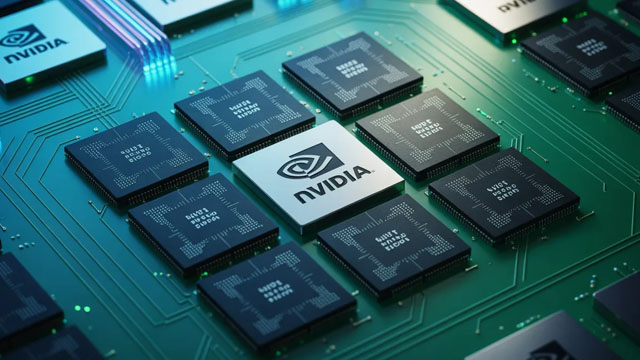
Nvidia reported record Q2 revenue of $96.22B, doubling year over year, and projects FY28 revenue growth of 70% while sustaining 72–73% long-term gross margins. The company is committing $99B to equity investments and $279B to supply agreements, guarantees and take-or-pay arrangements to secure AI infrastructure capacity and reinforce its competitive position. The financing strategy aims to diversify demand beyond hyperscalers by cultivating high-margin ACIE customers and an alternative AI ecosystem.
Analysis
The key incremental issue is not accelerator demand but NVDA’s conversion of balance-sheet capacity into demand creation. Equity stakes, guarantees and take-or-pay structures can lock in software and hardware standards across second-tier cloud providers, extending NVDA’s addressable market beyond the hyperscaler capex cycle; they also create vendor-financing risk if end-customer utilization fails to support contracted capacity. This is positive for foundry, advanced packaging and networking bottlenecks—TSM, AVGO and ANET—but raises the probability that NVDA ultimately absorbs credit losses, delayed receivables, or economically discounted GPU placements that are not visible in reported gross margin initially.
Over the next 1-3 months, consensus will likely reward evidence that supply commitments convert into backlog rather than merely capacity reservation. The more non-hyperscaler demand NVDA finances, the more investors should focus on cash conversion, accounts receivable growth, remaining performance obligations, and investment marks—not headline revenue growth; deterioration in any of these could trigger multiple compression even with intact earnings. AMD and custom-silicon efforts at GOOGL, AMZN and MSFT become less threatening near-term if NVDA can subsidize ecosystem adoption, but this strategy may invite antitrust scrutiny and intensify customer efforts to diversify over 6-18 months.
Contrarian view: the bullish narrative may underprice the circularity of an AI financing loop in which NVDA-backed buyers purchase NVDA systems. A structurally higher revenue base can justify premium valuation only if financed customers achieve external monetization; otherwise, the eventual risk is a capex-and-credit unwind resembling telecom vendor financing rather than a conventional semiconductor downcycle. The thesis is falsified if cash flow keeps pace with earnings and funded customers demonstrate utilization, recurring revenue, and independent financing access.
AllMind Terminal
AI-powered research, real-time alerts, and portfolio analytics for institutional investors.
Request TrialMarket Sentiment
Overall Sentiment
strongly positive
Sentiment Score
0.82
Ticker Sentiment
Key Decisions for Investors
- Maintain NVDA long only while operating cash flow and receivables remain broadly proportional to revenue through the next two earnings reports; use a 15-20% trailing stop or reduce if receivables/investments materially outgrow sales, as that would signal financed-demand risk. Upside is continued multiple support from durable ecosystem lock-in; downside is abrupt rerating if cash conversion weakens.
- Express the infrastructure spillover with a 3-6 month long ANET / short AMD pair. ANET benefits from AI-cluster network intensity regardless of which cloud customer funds the build, while AMD bears the near-term share-loss risk from NVDA locking customers into CUDA and bundled financing; reassess if AMD reports material MI-series design-win conversion or ANET guides to slowing AI revenue.
- Add TSM selectively on pullbacks rather than chasing NVDA: secured capacity supports utilization and advanced-node/package mix, while TSM has less direct end-customer credit exposure. Risk is that supply commitments are canceled or deferred; invalidate on a meaningful cut to foundry capex or advanced-packaging utilization commentary.
- Set an event-driven alert for disclosure of guarantees, take-or-pay liabilities, equity-investment concentration, and customer receivable terms in NVDA filings. If these commitments accelerate without corresponding operating-cash-flow growth, buy 6-12 month NVDA put spreads as a hedge rather than initiating fresh directional longs.
More News
- AI funding fears rattle Wall Street. Here's how we're adjusting our portfolio
- Will AI expose the rickety infrastructure of the internet?
- 3 AI Stocks That Can Beat the Nasdaq Composite in 2027
- Block’s new voice model sounds eerily human
- As AI Labs Burn Cash, the Real Question Is Which Suppliers Get Paid
- 3 Stocks to Buy as the AI Trade Sputters