
ZEELOOL and Aimee Song Launch New Eyewear Collection With "Let's Frame Your Vibe"
Source: PR Newswire
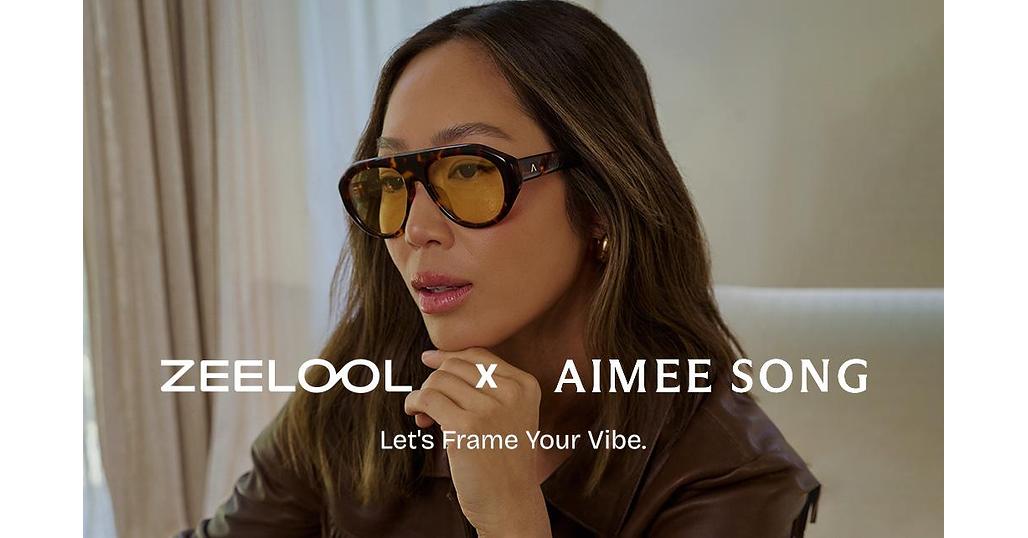
Online eyewear brand ZEELOOL launched a four-frame collaboration with creator and designer Aimee Song under the "Let's Frame Your Vibe" campaign. The collection includes Classic, 90s, Aviator and Shield styles, with selected frames using Italian Mazzucchelli acetate. The launch expands ZEELOOL's creator-led product offering, but the announcement provides no sales, pricing, financial guidance or material operating metrics.
Analysis
This is immaterial for listed eyewear incumbents absent evidence of distribution scale, sell-through, or paid-acquisition economics. Creator collaborations can lift conversion and reduce customer-acquisition cost briefly, but the category's low switching costs and highly promotional online channel mean incremental demand is likely displaced from other DTC frame sellers rather than additive to industry profit pools.
The more relevant read-through is the continued premiumization of low-ticket accessories through branded materials and creator endorsement. If campaigns like this demonstrate sustained demand at higher average selling prices, the beneficiaries are upstream acetate suppliers and scaled omnichannel operators with better inventory turns; however, neither ZEELOOL nor its likely private supply chain offers a clean public-equity expression. Public names such as EssilorLuxottica (EL) and Warby Parker (WRBY) have sufficiently diversified revenue bases that a single influencer collection has no earnings consequence.
Near term, no trade is warranted. Over 1-3 months, watch for independently verifiable indicators—social engagement translating into web traffic, repeat purchase, average order value, and promotional intensity—rather than launch-period marketing claims. A broader pattern of creator-led discounting would be modestly negative for WRBY's gross-margin expectations if it forces higher promotional spend across online optical; it would not alter EL's structural position in branded lenses, wholesale, and retail distribution over 6-18 months.
Contrarian view: the market often overvalues creator reach while underweighting fulfillment, prescription accuracy, returns, and paid-search dependence. Unless the collaboration produces repeatable customer cohorts rather than a one-time fashion purchase, its economics are more likely to raise marketing expense than create durable brand equity.
AllMind Terminal
AI-powered research, real-time alerts, and portfolio analytics for institutional investors.
Request TrialMarket Sentiment
Overall Sentiment
mildly positive
Sentiment Score
0.30
Key Decisions for Investors
- No standalone position: the disclosed information lacks price points, unit volumes, distribution footprint, traffic data, and margin structure needed to underwrite an earnings impact.
- Set a 1-3 month monitoring alert on WRBY: reassess only if competitor promotions or customer-acquisition costs visibly accelerate, or if WRBY reduces gross-margin/EBITDA guidance; absent those signals, this launch is noise.
- For existing EL exposure, maintain position rather than trade the news. The thesis is falsified only by broader evidence that DTC fashion frames materially erode branded-lens attachment, wholesale pricing, or retail traffic—not by isolated influencer launches.
More News
- Coffee giant Dutch Bros made all of its executives, including the CEO, do a two-week bootcamp where they learned how to pour drinks and run stores
- argenx reports positive phase 3 data for autoimmune myositis drug
- AI broke the cybersecurity world. What’s next?
- Good riddance, Cybertruck!
- Alabama Power spent more than $6 million on ads last year — and customers can be billed for half of them until 2029
- Starter homes cost $1 million in a record 242 U.S. cities—proof the affordability crisis has hit the homes meant for first-time buyers