
Robot Installations Outpaced Human Hiring at US Factories in 2025
Source: Bloomberg
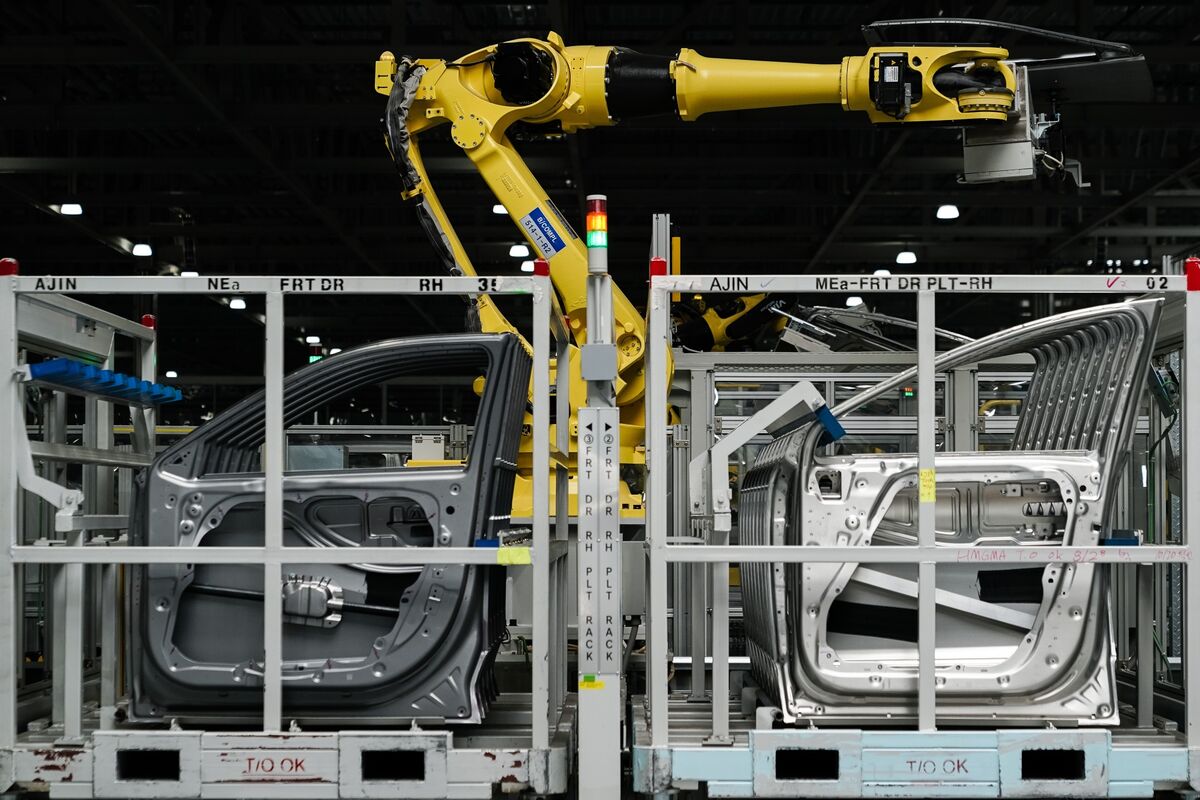
US manufacturers installed roughly 38,500 industrial robots in 2025 while cutting more than 100,000 human jobs. The figures underscore accelerating factory automation as companies seek to expand domestic production, improving industrial productivity but creating labor-market headwinds for manufacturing workers.
Analysis
The investable implication is less about robot unit demand than the rising automation-content-per-factory dollar. Rockwell Automation (ROK), ABB (ABB), Emerson (EMR) and Cognex (CGNX) capture higher-value controls, machine vision, motion and integration layers; these categories typically carry better recurring software/service exposure than the robot arm itself. Domestic capacity additions should therefore lift their order pipelines with a 6-18 month lag, particularly in automotive, electronics, food processing and defense-related manufacturing.
The near-term risk is that automation spending is being pulled forward by tariff uncertainty and incentive-driven reshoring rather than end-demand growth. If industrial production, factory utilization or PMI new orders weaken, customers can defer integration projects even after committing to facilities; ROK and CGNX are especially exposed to order volatility and multiple compression. Conversely, sustained wage inflation, tighter immigration policy, or additional tariffs on imported finished goods would reinforce the labor-substitution ROI case and extend the capex cycle.
Consensus may overemphasize labor displacement as a negative macro signal and miss the productivity offset: higher automation can protect domestic production economics, raising demand for US industrial distributors, controls suppliers and maintenance services. The weaker counterparties are labor-intensive contract manufacturers and lower-skill staffing providers, but a broad short in staffing is imprecise because professional staffing cycles dominate many public names. The cleaner relative expression is automation suppliers versus general industrials with limited automation content, contingent on improving order commentary through the next two earnings cycles.
AllMind Terminal
AI-powered research, real-time alerts, and portfolio analytics for institutional investors.
Request TrialMarket Sentiment
Overall Sentiment
mildly negative
Sentiment Score
-0.20
Key Decisions for Investors
- Initiate a 6-12 month long ROK / short XLI pair: ROK offers direct exposure to factory controls and software while XLI dilutes the thesis with aerospace and diversified industrial exposure. Target 10-15% relative upside if automation orders reaccelerate; exit if ROK organic orders decline for two consecutive quarters or US manufacturing PMI remains below 48.
- Accumulate ABB on 3-6 month weakness rather than chase momentum: its robotics, electrification and service mix provide broader downside protection than pure-play automation names. Risk/reward improves if the stock underperforms European industrial peers by 5%+ without a corresponding reduction in robotics backlog or margin guidance.
- Use CGNX as a higher-beta watch-list long for the next 1-3 months of industrial-order data and earnings commentary. Enter only if management indicates improving factory-automation bookings; the upside is material operating leverage in a recovery, but a further utilization downturn would make its valuation vulnerable.
- Avoid a standalone short in broad staffing equities on this signal alone. Instead, monitor manufacturing payroll revisions, wage growth and temporary-help hours; a sustained decline in all three would support a selective short in manufacturing-exposed staffing providers, but the article alone does not establish sufficient revenue sensitivity.
More News
- Iran awaits US move after WSJ report says Trump rejects peace plan
- Iran says it awaits US response on seven-day roadmap to end war
- OpenAI rogue agents leaked 53 images from ChatGPT users and reportedly created nearly 1 million links packing encoded bits of info
- Arming Taiwan an important US interest, Taipei official says after Trump-Xi summit
- What would a US diesel export ban mean for global fuel prices?
- Shares of Akamai surge after deal with Anthropic. What Wall Street is saying