
Molecular Devices and STEMCELL Technologies Collaborate to Accelerate Adoption of Human-Relevant Organoid Models Through Automation
Source: PRWeb
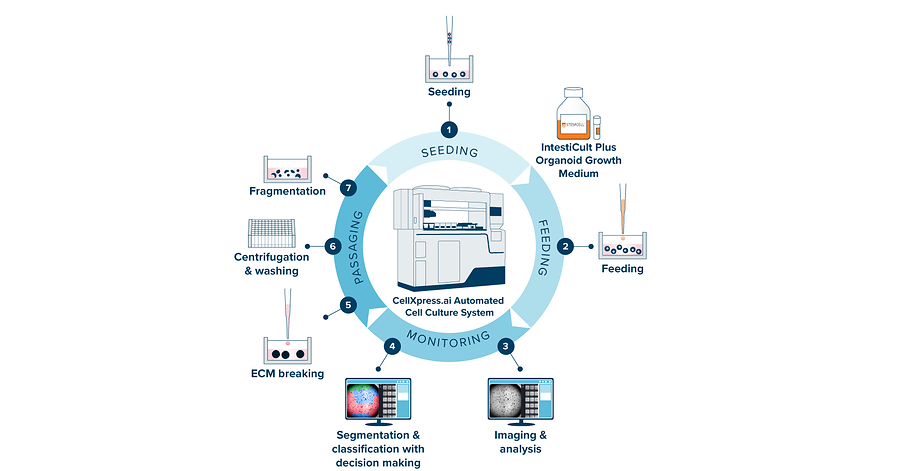
Molecular Devices, a Danaher company, and STEMCELL Technologies launched a validated automated workflow for culturing human intestinal organoids using STEMCELL's IntestiCult Plus medium on the CellXpress.ai system. The downloadable protocol is intended to reduce hands-on time and experimental variability while enabling scalable, standardized organoid generation for drug discovery, disease modeling, toxicology, and translational research. The announcement is the first milestone in a collaboration that plans to add automated workflows for further organoid models.
Analysis
This is strategically positive for Danaher’s DHR Life Sciences platform but immaterial to near-term consolidated earnings. The economic value lies less in a downloadable protocol than in lowering workflow-validation friction: validated applications can raise CellXpress.ai utilization, pull through consumables/software, and make automation purchases more defensible in capital-constrained academic and biopharma labs. The relevant KPI is whether Molecular Devices converts protocols into repeatable instrument placements and recurring reagent/assay revenue, not protocol downloads.
Over 1-3 months, the announcement is unlikely to change estimates without evidence of orders, installed-base growth, or expansion into higher-value disease and toxicology models. Over 6-18 months, a broad validated organoid menu could improve DHR’s competitive position versus TMO, RGEN and BDX-adjacent automated cell-analysis offerings, particularly if organoids displace portions of legacy 2D screening. STEMCELL is private, so DHR is the only direct public-market expression; indirect beneficiaries include CRL and IQV, whose preclinical-service models could see higher throughput if standardized organoid assays become commercially accepted.
The contrarian view is that organoid automation remains bottlenecked by biological standardization, assay acceptance, and customer validation—not liquid-handling capacity. A non-exclusive protocol does not create a hardware moat, and customers can adapt workflows across competing automation stacks. The thesis is falsified if Molecular Devices fails to disclose a growing workflow catalog or if Life Sciences organic growth and margin fail to improve despite an apparent recovery in biopharma capex.
AllMind Terminal
AI-powered research, real-time alerts, and portfolio analytics for institutional investors.
Request TrialMarket Sentiment
Overall Sentiment
moderately positive
Sentiment Score
0.42
Ticker Sentiment
Key Decisions for Investors
- No standalone event trade in DHR: treat this as a diligence flag rather than an earnings catalyst given low expected revenue contribution over the next two quarters.
- For an existing DHR long, retain exposure through the next 2-3 earnings reports only if management shows Molecular Devices order growth, automation placements, or consumables pull-through; reduce if Life Sciences organic growth remains weak and margins do not benefit from mix.
- Monitor a potential 6-18 month pair: long DHR / short RGEN only after evidence that validated organoid workflows are translating into placements. The reward is a modest multiple premium for recurring workflow pull-through; risk is that RGEN’s broader bioprocess exposure and cheaper valuation dominate.
- Set an alert for named pharma/CRO adoption, fee-based validated assay launches, or a second and third automated organoid protocol. Those would be stronger signals that the collaboration is shifting from marketing content to a scalable installed-base and consumables opportunity.
More News
- Biotechs buck a sluggish IPO market, but investors should tread warily
- What investors need to know about Alphabet's stock-busting earnings report
- Our next steps for Alphabet stock after earnings disappoint at nearly every turn
- Budget 2026 speech
- The UK cuts energy bills, taxes banks and boosts defense in high-stakes budget
- Microsoft's Big Bets on AI Start to Pay Off