
TurnCare Presents New Real-World Clinical Data at ELSO 2026 Demonstrating Reductions in Hospital-Acquired Pressure Injuries in ECMO Patients
Source: PR Newswire
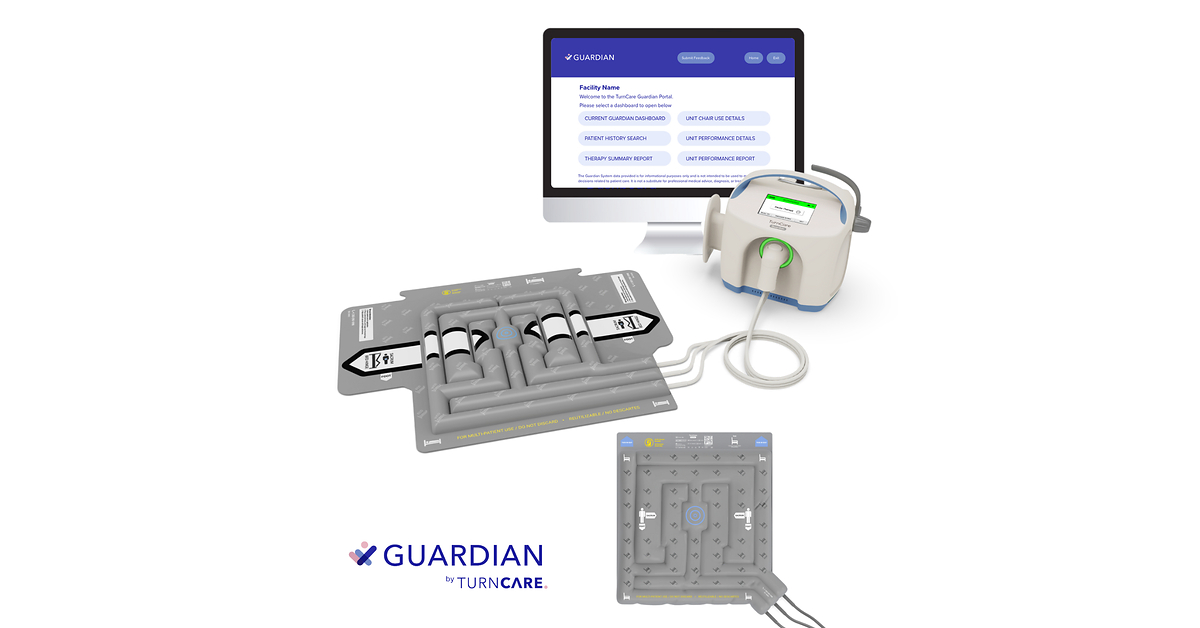
TurnCare presented retrospective single-center data showing its Guardian System reduced sacral-region hospital-acquired pressure injury incidence by 40.8% to 8.4 events per 1,000 ECMO days and total HAPI incidence by 36.2% to 35.3 events per 1,000 days. Stage 2 sacral HAPIs declined 72.7%, while ECMO survival increased to 57.8% from 53.2%. The findings are encouraging clinical evidence for the device, though they are based on a non-randomized pre- and post-cohort study and are unlikely to have broad market impact.
Analysis
This is not investable as a standalone signal: TurnCare appears private, the evidence is retrospective, single-center, and based on a small post-implementation cohort. The relevant commercial question is whether reduced injury rates translate into measurable avoided costs, nursing-time savings, and lower quality penalties; without a controlled design, changes in patient acuity, ECMO protocols, staffing, or surveillance can explain part of the result. A conference abstract should not be capitalized into public-equity estimates until peer-reviewed data demonstrate reproducibility and a hospital-level ROI case.
If independently replicated, the most exposed public ecosystem is critical-care equipment rather than broad medtech. Getinge (GETI B) and LivaNova (LIVN) have ECMO-adjacent hospital relationships that could make them potential distribution partners, while Stryker (SYK), Baxter (BAX), and Arjo (ARJO B) face incremental competitive risk in pressure-injury prevention surfaces and patient-handling workflows. The second-order benefit would accrue to hospitals with high ECMO volumes, but procurement cycles are typically 6-18 months and require evidence that device acquisition costs are outweighed by avoided treatment costs and liability exposure.
Consensus should avoid treating the reported survival improvement as a product effect: the sample is not designed to establish causality, and survival is especially vulnerable to case-mix confounding. Near-term validation catalysts are a peer-reviewed full dataset, multicenter prospective results, disclosed installed-base growth, and reimbursement or purchasing-contract wins; absence of these within 12 months would imply limited commercialization velocity. The thesis is falsified if subsequent controlled studies fail to show statistically credible reductions in severe pressure injuries or if hospital customers cannot document net savings after consumables, training, and workflow costs.
AllMind Terminal
AI-powered research, real-time alerts, and portfolio analytics for institutional investors.
Request TrialMarket Sentiment
Overall Sentiment
moderately positive
Sentiment Score
0.48
Key Decisions for Investors
- No directional public-equity trade on this release; classify as a private-company clinical-validation watch item rather than an earnings-relevant event.
- Monitor GETI B and LIVN over the next 6-12 months for any disclosed Guardian distribution, co-marketing, or ECMO-center adoption relationship; initiate no position absent commercial terms or evidence of material revenue contribution.
- For SYK, BAX, and ARJO B, add an alert for multicenter controlled data or large integrated-delivery-network contracts. Only then evaluate a relative short versus a critical-care beneficiary, as current evidence does not establish meaningful share displacement.
- Require three diligence datapoints before underwriting a theme basket: per-patient system and consumable cost, independently measured avoided-cost savings, and outcomes from a prospective multicenter cohort. Failure to obtain these data is a reason to maintain zero exposure.
More News
- Nvidia Faces Questions Over China AI Chip Smuggling Cases
- Broadcom to lend Anthropic up to $42 billion to lease its chips, filing says
- $8.2B acquisition validates AI-picked chip stock: +20% since June
- Markets slip on dollar pressure, but this IT stock is up 10% today
- One of our most recent defensive buys cleared a hurdle and its stock jumped
- AI’s biggest players promise to police themselves at the White House
From AllMind Research
- Anthropic IPO Preview: Valuation, Timing, and What to Watch
- Shein After the IPO: Venue, Valuation, and What Must Be Proved
- What AI Research Tools Should a Small Hedge Fund Buy First?
- Weekly Update: Adding Live MBO Level 3 Data - Liquidity Heatmap, OFI Charts, and More
- Alternative Data Due Diligence for Institutional Investors