
Huawei Launches Fintelligent AI Solution to Help Global Financial Institutions Realize "Own Your AI, Own Your Intelligence"
Source: PR Newswire
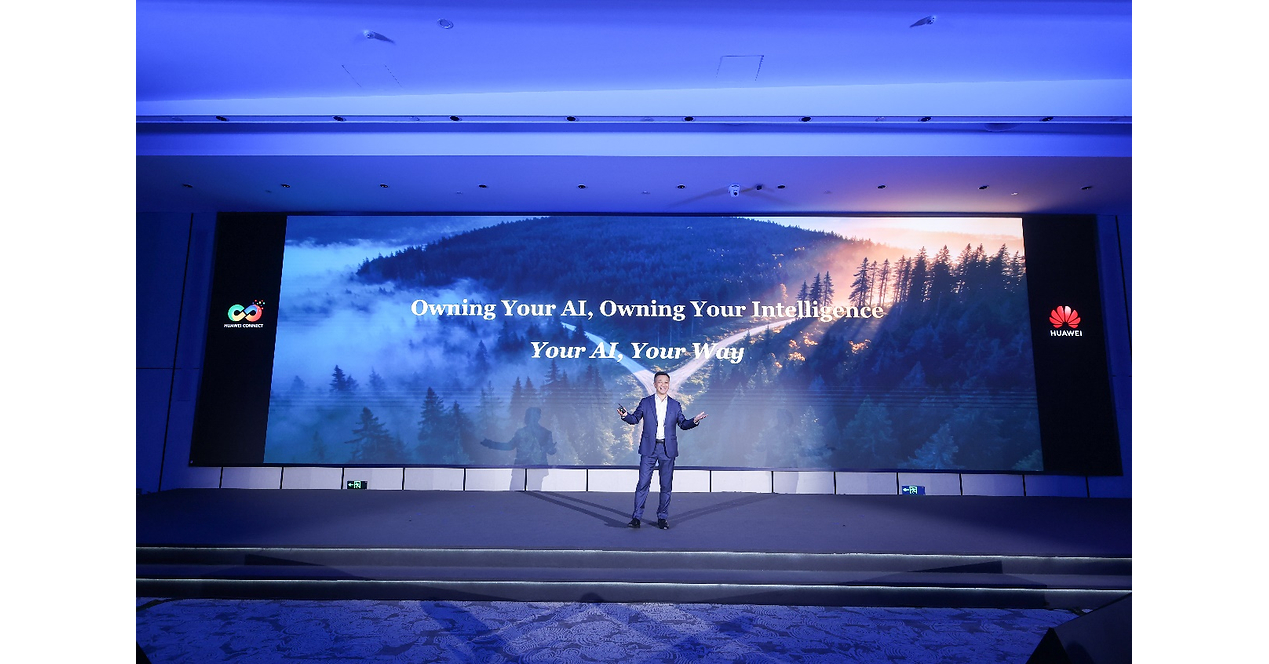
Huawei launched its Fintelligent AI Solution globally at HUAWEI CONNECT 2026, targeting production-scale deployment of AI agents by financial institutions. The offering combines an Agent Factory, Token Factory and Data-Knowledge Factory, including the open-source openJiuwen agent platform and TokeNexus token-operations system, with an emphasis on security, scalability and controllable AI costs. Huawei said it has served more than 7,100 financial customers in over 80 countries, including 54 of the world’s top 100 banks.
Analysis
FISI has no identifiable economic linkage to Huawei’s enterprise-AI stack; treating this as a catalyst for the U.S. community-bank name would be a category error. The relevant investable read-through is instead a gradual increase in competitive pressure on Western financial-technology and infrastructure vendors serving banks in Huawei-accessible markets, particularly where data sovereignty and on-premise deployment outweigh preference for hyperscaler ecosystems.
Near term, the announcement is unlikely to move public markets because it contains no disclosed customer contracts, pricing, recurring-revenue commitments, or independently verifiable deployment metrics. Over the next 1-3 months, the key diligence item is whether named tier-one bank wins emerge outside sanctioned markets; that would matter more for incumbents with international banking-software exposure than for domestic U.S. banks. The proposed architecture could also expand demand for local compute, systems integration, data-governance tooling, and legacy-code modernization, but only if implementation converts from pilots to multiyear operating budgets.
The non-obvious structural effect is vendor fragmentation: banks seeking model portability may resist locking into a single hyperscaler or foundation-model provider. That is modestly negative for proprietary platform pricing power over 6-18 months, but potentially positive for neutral integration and governance vendors. The counterview is that regulated-bank buying cycles, model-risk validation, and cyber reviews are long enough that an open platform can generate substantial services activity without creating meaningful software profit pools; without disclosed utilization or renewal data, there is no basis to underwrite a revenue inflection.
AllMind Terminal
AI-powered research, real-time alerts, and portfolio analytics for institutional investors.
Request TrialMarket Sentiment
Overall Sentiment
mildly positive
Sentiment Score
0.32
Key Decisions for Investors
- No trade in FISI: maintain neutral exposure; reassess only if the bank announces a specific AI partnership with quantified efficiency targets, technology spend, or deposit/customer-acquisition impact.
- Create a 1-3 month watchlist for bank-technology vendors with material non-U.S. revenue and proprietary workflow pricing exposure; require evidence of competitive displacement, contract value, and gross-margin pressure before initiating shorts.
- Monitor Huawei customer disclosures and procurement wins at large banks for 6-18 months. A named production deployment with multiyear contract economics would support a relative-value long in regional compute/integration beneficiaries versus global banking-software vendors exposed to emerging-market competition.
- Thesis falsifier for any competitive-pressure trade: absence of production customer wins or disclosed recurring revenue by the next two reporting cycles would indicate the launch remains primarily positioning rather than a monetizable platform shift.
More News
- Fed’s Goolsbee: Strong demand may be adding to US inflation, ’no ambiguity’ how Fed would react
- Trump administration sued over withheld federal grants for US community lenders
- Taiwan benchmark Taiex rises to record intraday high as tech stocks advance
- AMD joins the $1 trillion club as chip rally surges - our AI Strategy saw it early
- Jamie Dimon says hyperscaler AI spending could hit $1 trillion next year
- Factbox-Key issues for this week’s Trump-Xi summit in Washington