
GOFO Expands Its Dallas Central Primary Hub, Raising Daily Capacity to 800,000 Parcels, With a Nationwide Network Upgrade Set for Completion Ahead of Peak Season
Source: PR Newswire
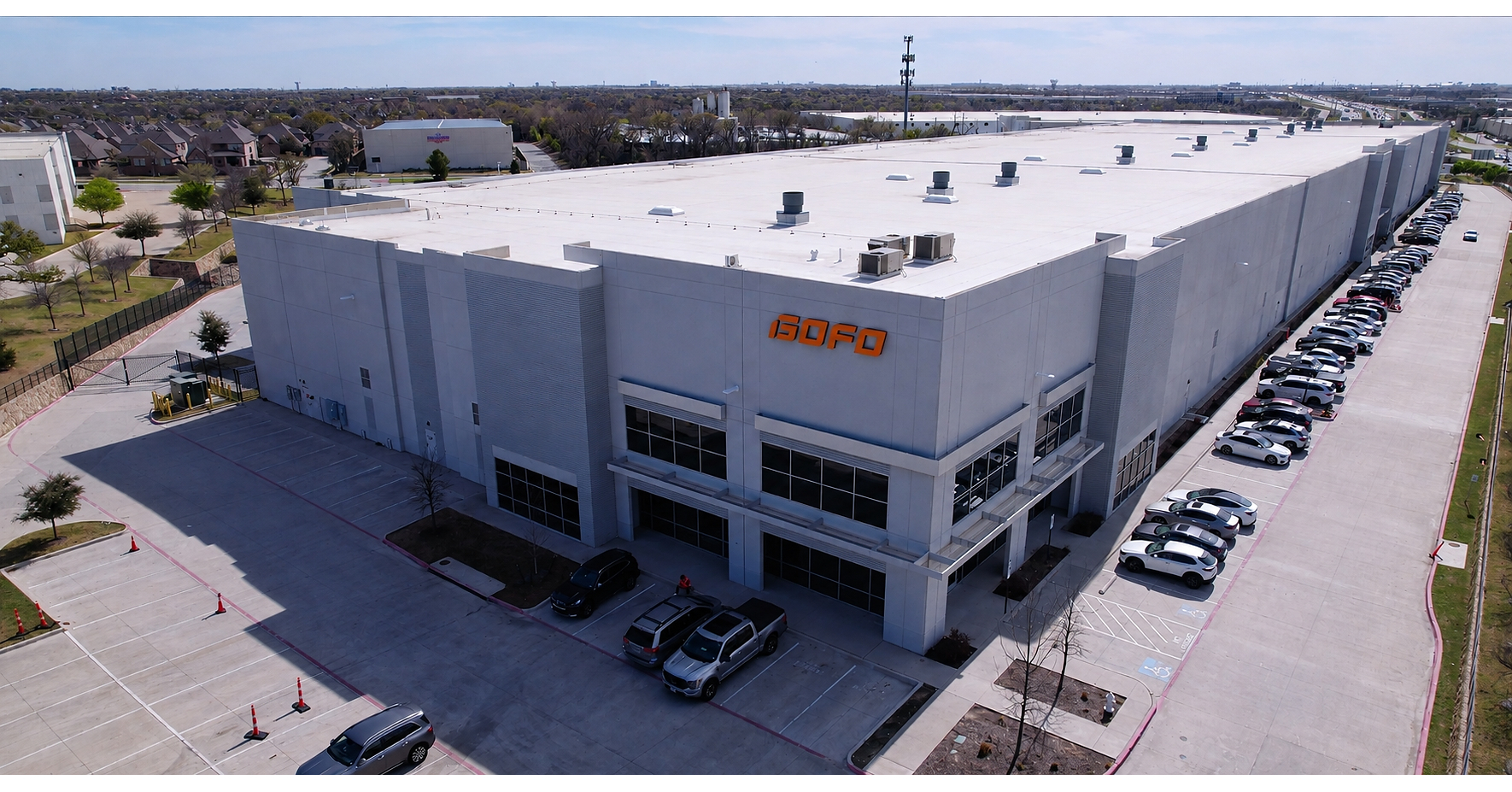
GOFO expanded its Dallas Central Primary Hub by adding ~200,000 sq. ft. and commissioning a large-scale double-deck cross-belt sorter, lifting sorting speed to 45,000 parcels/hour. The upgrade doubles daily capacity from ~400,000 to ~800,000 parcels and is positioned as one of the milestones in its 2026 North American expansion plan, with additional anchor-hub capacity in New Jersey (800,000 sq. ft., ~100k parcels/hour) and Los Angeles (750,000 sq. ft., ~90k parcels/hour). GOFO frames the automation plus its ATLAS intelligent operations platform as enabling more reliable peak-season throughput without peak-season surcharges.
Analysis
The important read-through is not capacity for its own sake; it is pricing power. A carrier that can credibly absorb peak volume without surcharge and with tighter transit times can undercut incumbents on the exact lanes where UPS and FDX make the best incremental margin: dense e-commerce, time-definite ground, and coast-to-coast replenishment. That matters most in the South/Central U.S., where a central hub lowers linehaul cost and makes a challenger more bidable on national accounts, even if total market share gains are gradual.
The second-order winner set is merchants and 3PLs that are still shipping on a fragmented parcel stack. If service reliability improves, shippers can hold less safety stock and push more inventory into the middle of the country, which is a quiet working-capital tailwind for large omnichannel retailers. The loser is not necessarily a single public name; it is the industry’s ability to hold peak pricing. If one operator keeps adding automation ahead of demand, peers may be forced to match service levels with lower pricing, compressing margins before volumes are fully visible.
This is a 1-3 month earnings-season setup, not a day-one trade. The thesis only works if utilization fills in quickly; otherwise the capex becomes an ROIC drag and the network looks like excess steel in an already competitive market. Falsifiers are simple: stable or improving UPS/FDX yield commentary, no evidence of share gains in Texas/South-central lanes, or any service incident that exposes the new automation as more aspirational than operational.
AllMind Terminal
AI-powered research, real-time alerts, and portfolio analytics for institutional investors.
Request TrialMarket Sentiment
Overall Sentiment
moderately positive
Sentiment Score
0.45
Key Decisions for Investors
- No immediate trade in GOFO itself; treat this as a watch item and monitor UPS/FDX peak-season commentary over the next 1-2 earnings prints for any sign of yield pressure or mix shift in ground parcels.
- Tactical pair trade: long AMZN / short UPS for a 1-3 month horizon. Thesis: merchants and marketplace logistics benefit from lower linehaul and better service; UPS is more exposed if competitive pricing in parcel intensifies. Use a tight stop if UPS guides package yields flat and on-time metrics hold.
- If you want a cleaner event-driven expression, buy 3-6 month UPS put spreads only after confirmation that peak-season pricing is softening; risk/reward is attractive if the stock rerates on volume but not yield, with downside protected by the spread structure.
- Avoid shorting the sector on the headline alone; if the new capacity simply absorbs peak without errors, the first-order loser may be private carriers and regional networks, not the public proxies.
More News
- Nvidia GPUs are everywhere. Here are the ways companies are accessing them
- Bank of America is bullish on these top stocks ahead of earnings
- As companies pour billions into Earth-based AI infrastructure, Google is taking the data center race off-planet
- AI's Supercharging a Scam Economy Bigger Than the Cocaine Trade
- How U.S. know-how is fracking Australia into a gas boom, from Texas oilmen to Trump’s energy secretary
- The world needs Ukraine’s grain. Its farmers are running out of reasons to plant
From AllMind Research
- Anthropic IPO Preview: Valuation, Timing, and What to Watch
- Shein After the IPO: Venue, Valuation, and What Must Be Proved
- What AI Research Tools Should a Small Hedge Fund Buy First?
- AI Tools for Private Equity Due Diligence: A Buyer Workflow
- Weekly Update: In-App Tutorials, Futures Data, and Watchlist Enhancements