
From Market Access to Long-Term Trust: KuCoin VP Edwin Wong Outlines a Four-Pillar Trust Framework for Institutional Digital Asset Infrastructure
Source: PR Newswire
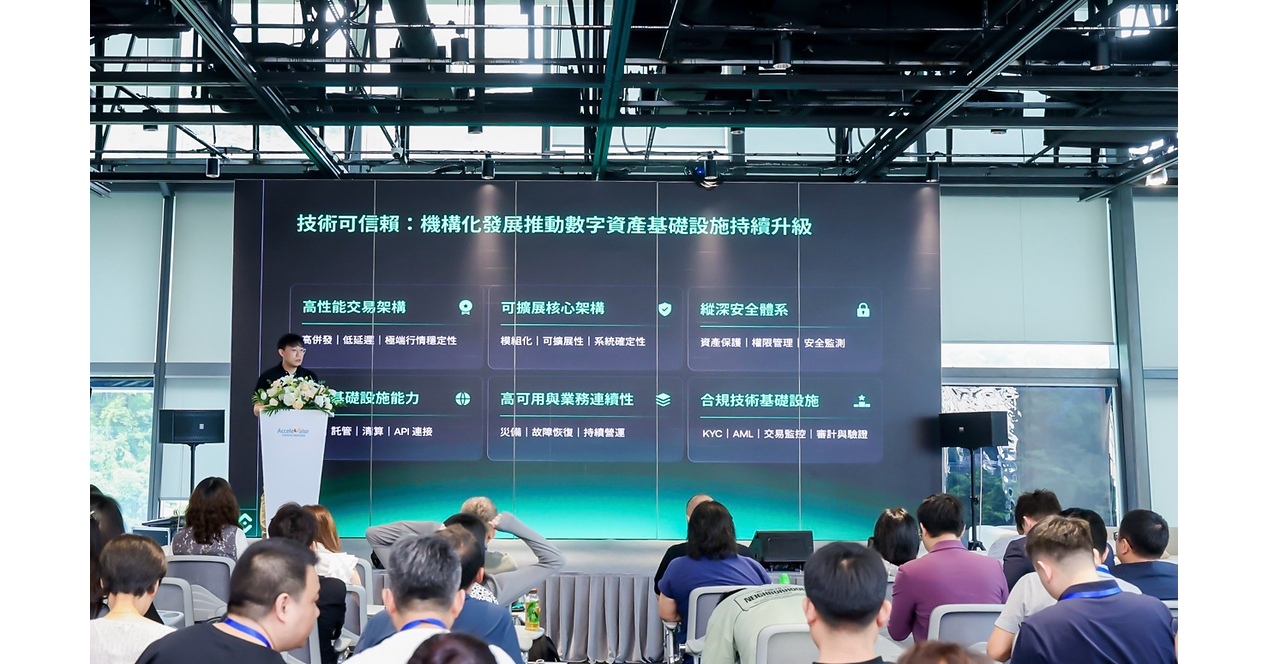
KuCoin VP Edwin Wong outlined a four-pillar institutional trust framework for digital-asset infrastructure—legal/regulatory clarity, technological operational resilience, verifiable security controls, and “enduring trust” via long-term accountability—as Hong Kong expands its regulatory and tokenization initiatives. The article emphasizes embedding risk management across governance, technology operations, and user protection, and notes that trusted ecosystems require clearly defined roles across issuance, custody, risk management, and market infrastructure. Overall tone is constructive, with limited direct market impact beyond reinforcing institutional-readiness expectations.
Analysis
This reads less like a growth catalyst than a positioning move in a market-share race where the winning venues are the ones that can prove control, not just attract flow. The incremental value migrates toward exchanges/custodians with segregated assets, audited controls, continuity planning, and local licenses; that favors the few firms that can convert trust into lower onboarding friction and stickier institutional balances. The losers are opaque offshore venues and the market-makers/payment rails that rely on frictionless, high-velocity turnover, because institutions generally trade less but demand more documentation and higher counterparty quality.
Near term, the PR is not enough to move earnings, so the tradeable signal is weak until there is evidence of custody AUM, institutional account growth, or licensed product launches in Hong Kong. Over 1-3 months, the key catalyst is whether HK approvals and tokenization pilots create measurable volume migration; over 6-18 months, the real upside is from recurring custody/treasury fees rather than trading take rates. The main reversal risks are a security incident, a licensing delay, or a crypto risk-off episode that freezes institutional adoption before it becomes sticky.
The contrarian point: the market may be overvaluing certification language and underweighting balance-sheet strength and legal recourse. Institutions will not reward a trust framework unless it shows up in assets retained through volatility; if volumes rise but balances do not, the narrative fades quickly. The likely beneficiaries are broader infrastructure names in custody, cyber, and compliance rather than the exchange branding itself.
AllMind Terminal
AI-powered research, real-time alerts, and portfolio analytics for institutional investors.
Request TrialMarket Sentiment
Overall Sentiment
mildly positive
Sentiment Score
0.12
Key Decisions for Investors
- No immediate trade in ASGXF or DGTEF; treat this as a watch item until there is hard evidence of institutional AUM or licensed product adoption in Hong Kong.
- Add COIN only on a pullback if upcoming results show institutional custody growth outpacing retail trading softness; otherwise the trust-premium story is likely already priced in.
- Use IBIT/BITX as a sentiment proxy only if spot BTC liquidity improves alongside Hong Kong regulatory follow-through; if BTC volumes stall, skip the trade.
- Watch CRWD and other cybersecurity vendors as secondary beneficiaries of the trust arms race; consider a small long only if exchange/issuer incidents re-accelerate demand for verifiable controls.
- Falsifier alert: if over the next 1-2 quarters Hong Kong licensing and tokenization headlines do not convert into higher reported institutional balances, fade the theme and avoid chasing exchange-related rallies.
More News
- RBI Tightens Rupee Defense as Pricey Crude, Foreign Outflows Bite: USD/INR
- Why is SK Hynix stock sliding today?
- TikTok CEO sees major scientific breakthroughs from AI within three years
- Senior Iranian official threatens to attack cables, data centers, and AI facilities in the region if the war escalates sharply again
- The hawk Fed Chair who broke the bond market?
- TSMC expected to report sixth straight quarter of record profit thanks to AI boom