
California Waste Solutions Expands San José Recycling Service With New Household Battery Collection
Source: PR Newswire
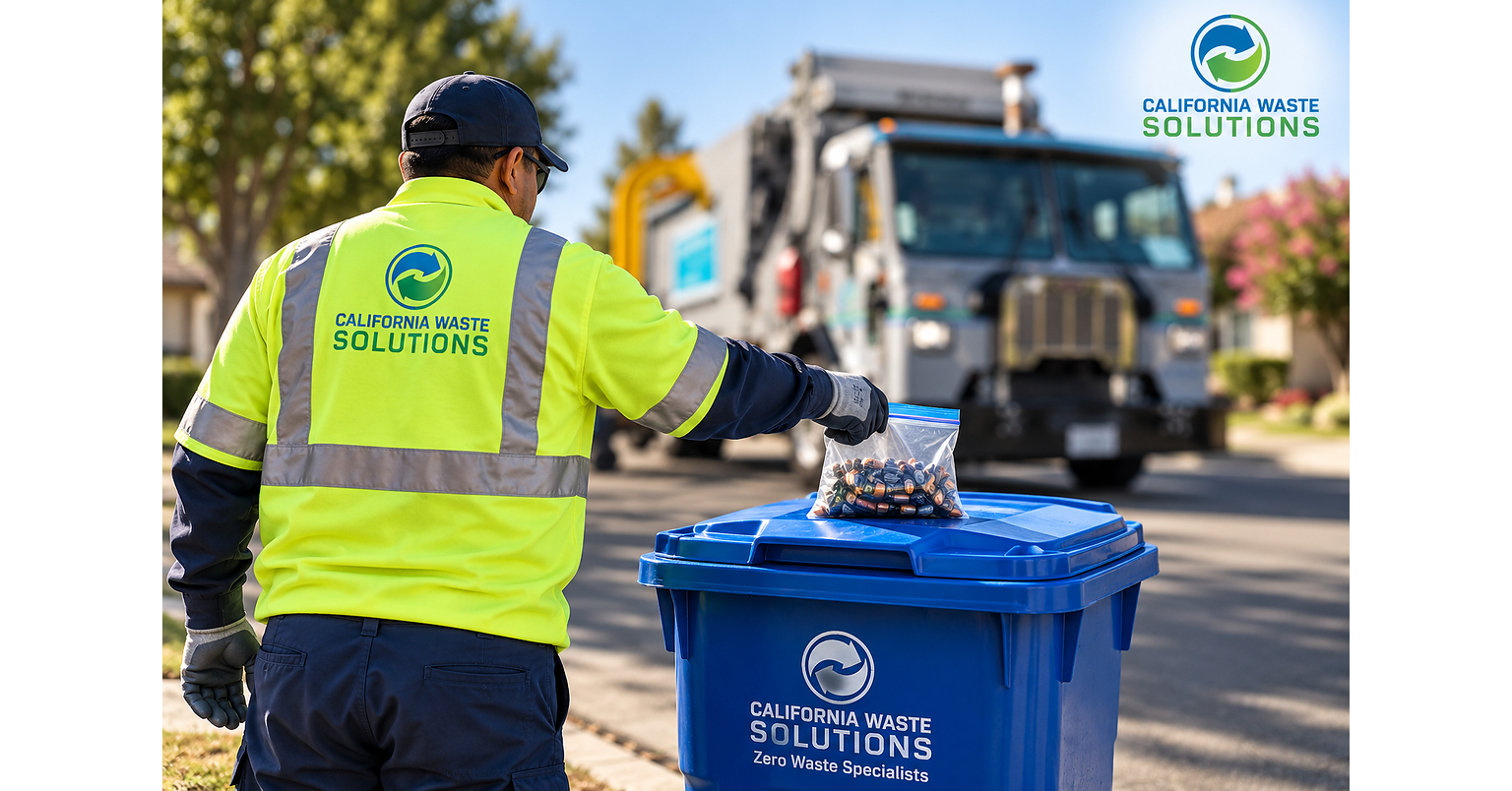
California Waste Solutions plans to begin curbside household battery collection for San José single-family customers in early 2027, expanding a program it has operated in Oakland since 2015. The company also ratified a five-year Teamsters Local 350 agreement in San José that improves pay, benefits and vacation provisions, supporting workforce retention ahead of expanded service responsibilities. CWS said its investments in Pellenc optical sorting and EverestLabs AI scanning technology complement—rather than replace—separate battery handling to reduce collection and facility safety risks.
Analysis
This is not a directly investable corporate catalyst, but it reinforces a broader liability shift in municipal recycling: lithium-ion contamination is becoming an operating-cost and insurance constraint rather than a public-relations issue. Public waste operators with integrated collection, transfer, and disposal assets—WM, RSG and WCN—should be better positioned to recover program costs through municipal contract repricing than stand-alone materials-recovery operators. The offset is that curbside programs can raise collection labor, training, packaging, transport and downstream hazardous-material handling costs before participation reaches efficient scale.
The five-year labor structure modestly strengthens the negotiating position of organized waste labor in Northern California. Over 6-18 months, wage and benefit settlements can pressure route-level margins for regional haulers and private operators with fixed-price municipal contracts, while scaled public incumbents can absorb or pass through cost inflation at rebid. The more consequential read-through is procurement: municipalities may increasingly value documented battery-safety protocols and technology-enabled sorting, raising qualification barriers and favoring WM/RSG/WCN over smaller local bidders.
Near term, the financial impact is immaterial for listed waste equities and does not justify a directional trade. Watch California and municipal contract language over the next 1-3 months for mandatory battery collection, producer-responsibility funding, or fire-loss cost recovery; a funded mandate would turn safety spending from a margin drag into a reimbursable service line. The thesis is falsified if local programs remain voluntary and unfunded, leaving operators unable to pass incremental handling costs through rate structures.
AllMind Terminal
AI-powered research, real-time alerts, and portfolio analytics for institutional investors.
Request TrialMarket Sentiment
Overall Sentiment
mildly positive
Sentiment Score
0.30
Key Decisions for Investors
- No immediate position: treat this as a regulatory/procurement watch item rather than an earnings catalyst for WM, RSG or WCN.
- Maintain a 6-18 month relative-quality bias toward long WM or RSG versus smaller, less-diversified waste/recycling operators where identifiable; scale advantages in compliance, insurance and municipal bidding should matter if battery-safety requirements proliferate.
- Set alerts for California battery producer-responsibility rules, San José procurement amendments, and disclosed waste-facility fire incidents. A funded statewide requirement would support adding WM/RSG exposure; an unfunded mandate combined with elevated labor settlements would instead be a margin-risk signal.
- At upcoming earnings, monitor insurance expense, labor-cost guidance, recycling-processing margins and municipal price escalators for WM/RSG/WCN. A sustained increase in safety costs without matching contractual recovery would invalidate the constructive scale-advantage thesis.
More News
- Asian stocks rise as oil retreat eases inflation fears, BOJ in focus
- Microsoft exec called AI scraping the “largest theft of labor in human history”
- Jensen Huang says Nvidia will sell twice as many chips next year
- Generac shares surge on big Amazon deal. Wall Street thinks the generator stock has more to go
- After being sidelined, Boeing's Starliner to get starring role in NASA's spaceflight plans
- This AI-picked stock jumps 18% on Amazon’s $8 billion power deal