
Judge Halts Big Renovations From Kennedy Center’s Trump-Picked Board
Source: Bloomberg
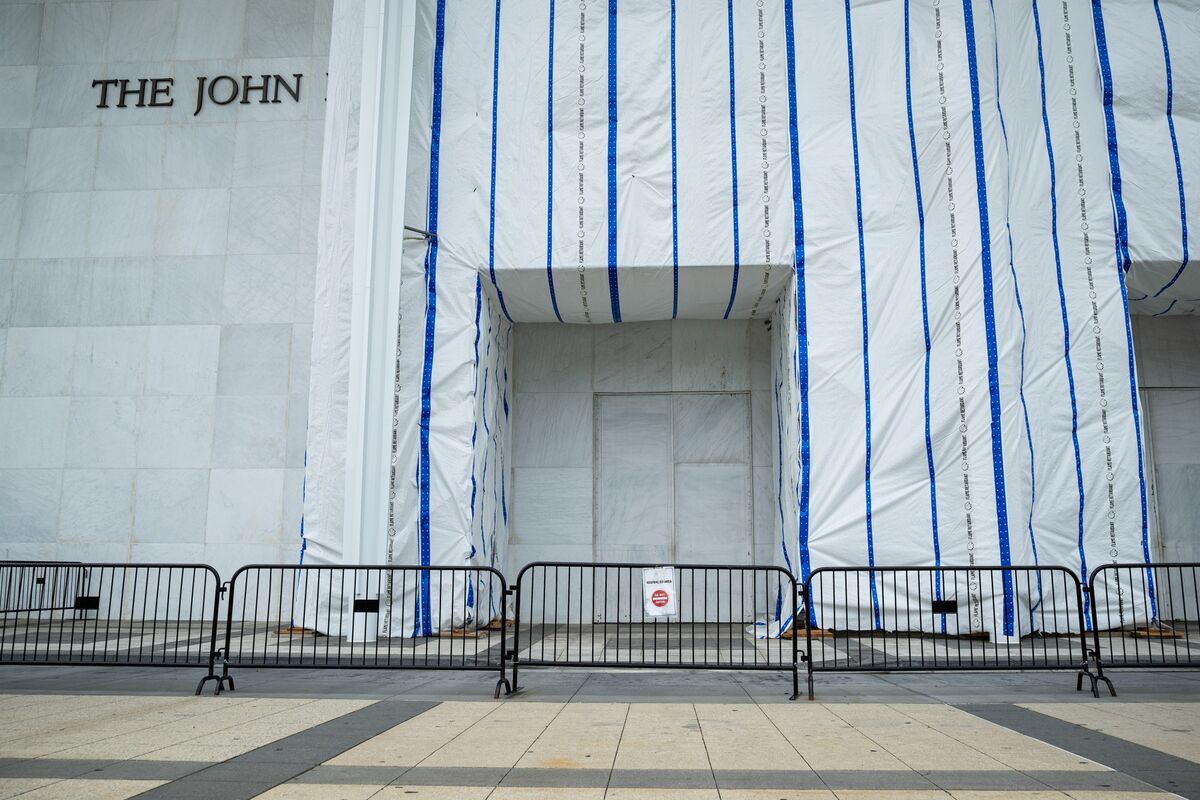
A Washington federal judge ordered the Kennedy Center to disclose more information regarding its recent closure and to notify challengers before any future demolition or broader renovation plans. The ruling creates a legal hurdle for the Trump-picked board as it asserts that the decades-old performing arts venue faces financial collapse.
Analysis
This is principally a governance and execution-risk signal rather than a listed-equity catalyst. The immediate economic exposure sits with project contractors, architects, event promoters, and nearby hospitality operators, but absent identified public counterparties the financial transmission channel is too diffuse for a directional trade. The injunction-like disclosure requirement can nonetheless raise the probability of schedule slippage, cost escalation, and constrained access to capital if the institution’s financial-stress narrative depends on a rapid redevelopment plan.
Over the next 1-3 months, the key issue is whether court-mandated disclosures reveal a larger capital program, committed demolition contracts, or funding sources that create liability beyond the operating budget. A prolonged dispute would likely shift programming toward temporary venues and reduce local event traffic, modestly pressuring Washington, D.C.-centric hotel and restaurant demand at the margin; that effect is immaterial to national lodging names unless multiple venues or federal tourism disruptions compound it. The more material 6-18 month risk is precedent: aggressive board-led restructuring at quasi-public cultural institutions may face heightened judicial scrutiny, increasing approval timelines and contingency costs for similar civic redevelopment projects.
Consensus should resist treating legal oversight as proof that the renovation cannot proceed. Disclosure orders often alter sequencing and bargaining leverage rather than ultimate project feasibility; a settlement or revised preservation plan could remove the near-term overhang quickly. Without identifiable publicly traded contractors, lenders, insurers, or media-rights counterparties—and without project budget, funding, and closure-duration data—there is no investable single-name conclusion.
AllMind Terminal
AI-powered research, real-time alerts, and portfolio analytics for institutional investors.
Request TrialMarket Sentiment
Overall Sentiment
mildly negative
Sentiment Score
-0.25
Key Decisions for Investors
- No directional equity position at present; classify as a legal-governance watch item rather than a tradeable media-and-entertainment catalyst.
- Monitor court filings over the next 30-60 days for named general contractors, insurers, municipal/federal funding sources, and debt providers. Reassess only if a public issuer has contract exposure large enough to affect backlog, working capital, or guidance.
- For D.C. hospitality exposure, use weekly hotel occupancy, convention-calendar changes, and event relocation data as confirmation signals; do not short national lodging proxies such as HLT or MAR from this development alone.
- A thesis that redevelopment is materially impaired is falsified by a court-approved renovation plan, disclosed financing, and a reopening/programming timetable that limits closure duration and cost overruns.
More News
- Trump vows to create an ‘AI Force’ and nods to justice system after rejecting calls to slow down industry. ‘Rather, we will cherish it’
- Polymarket fraud concerns mount as company prepares for potential IPO
- Paramount could settle with states over Warner Bros. as soon as this weekend, sources say
- Lawsuit claims Anthropic, OpenAI, SpaceXAI and Google violated antitrust laws when they coordinated AI slowdown, reducing value of subscriptions
- Mark Ruffalo leads Hollywood revolt against Paramount-Warner merger deal
- Buffett Son Takes Chair as Berkshire Transition Ends
From AllMind Research
- Anthropic IPO Preview: Valuation, Timing, and What to Watch
- Shein After the IPO: Venue, Valuation, and What Must Be Proved
- What AI Research Tools Should a Small Hedge Fund Buy First?
- Weekly Update: Sector Analysis, Improvements on Research Data, and Performance Enhancements
- Choosing an AI Copilot for Equity Research