
Q3 2026 J.S. Held AI Disputes Monitor für das 3. Quartal 2026 zeigt, dass sich der Schwerpunkt bei Rechtsstreitigkeiten im Bereich der künstlichen Intelligenz von der Art und Weise, wie Systeme aufgebaut sind, hin zu ihrem Verhalten verlagert
Source: PR Newswire
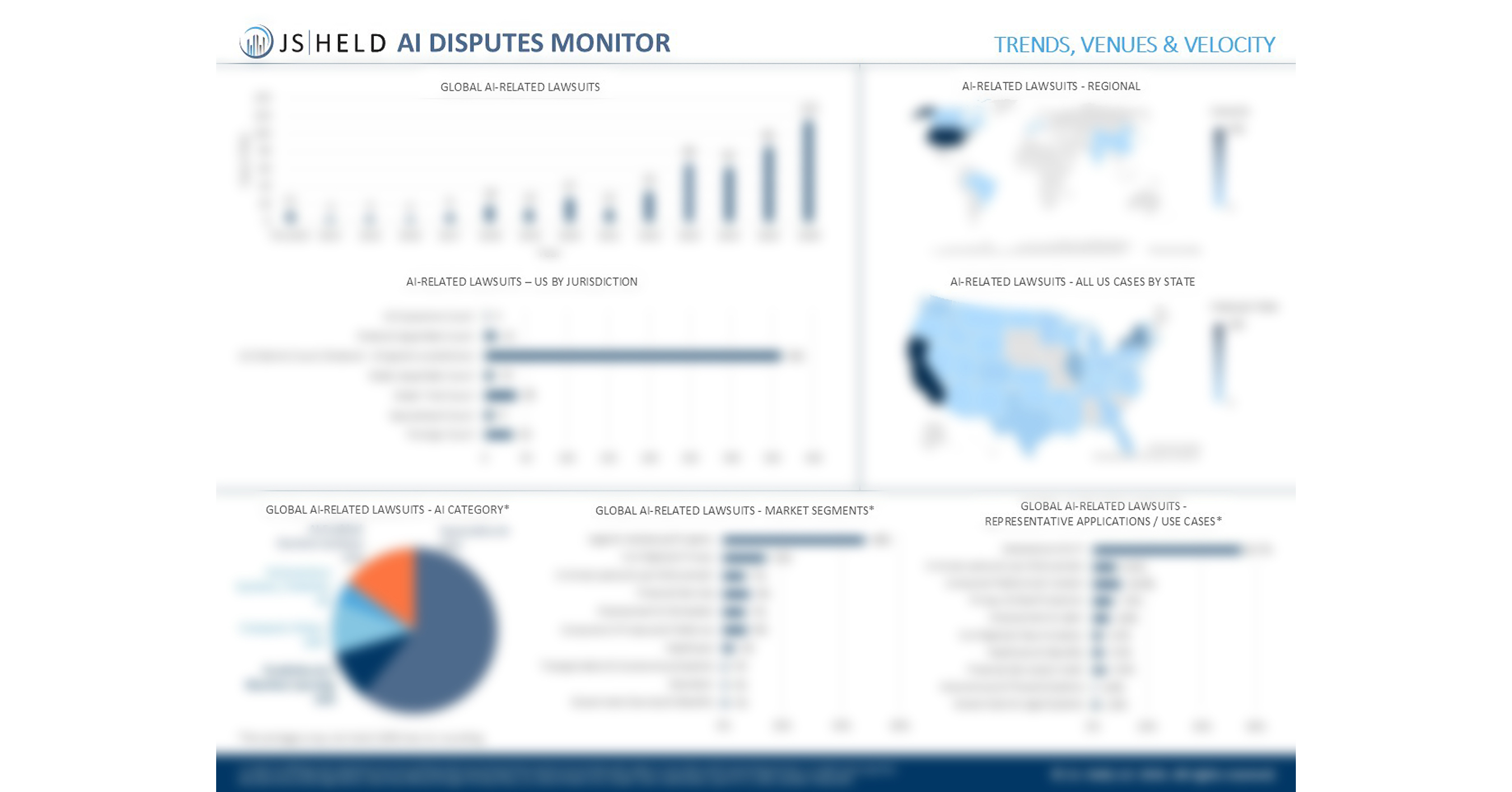
J.S. Held’s Q3 2026 AI Disputes Monitor added 42 cases, bringing its tracked total to 468, including 115 lawsuits filed through September 30, 2026. The update says AI litigation is broadening beyond training data and copyright disputes toward system outputs, product safeguards, automated decisions, corporate disclosures, and board oversight; it does not report a decline in copyright-related cases. The findings describe expanding legal and operational exposure but provide no company-specific financial impact or market reaction.
Analysis
The investable implication is a shift in AI risk allocation, not evidence of a sector-wide increase in realized losses. As claims move from training inputs to deployed behavior, exposure can reach enterprise adopters, directors, and insurers—not just model developers. The same telemetry that supports a defense (versioning, prompts, tests, human review) can also establish what a company knew and when; weak records create a separate control failure. This raises the value of auditable deployment and incident-response capability, while adding documentation and insurance costs that may weigh more on smaller adopters.
The monitor is a consultant’s compilation of public disputes, not a measure of merits, settlements, or damages. Filing counts alone do not support a broad short of AI or software. Near term, expect headline-driven volatility around individual incidents and disclosures; over 1–3 months, watch for complaints, court rulings, insurer wording, and public-company guidance that quantify remediation or claims costs. Over 6–18 months, standardized logging and governance may become procurement requirements, benefiting compliance and legal-workflow vendors, but commoditization could limit returns. Thomson Reuters and RELX are watch-list exposures to greater legal-workflow demand, not demonstrated beneficiaries in this release.
Contrarian point: more documentation is not unambiguously protective—retained logs may strengthen causation and knowledge allegations. The thesis weakens if disputes fail to produce material settlements, insurance pricing stays stable, or companies show no incremental controls spending or disclosure changes.
AllMind Terminal
AI-powered research, real-time alerts, and portfolio analytics for institutional investors.
Request TrialMarket Sentiment
Overall Sentiment
neutral
Sentiment Score
0.00
Key Decisions for Investors
- No broad AI-sector position on this signal alone. Treat the reported case additions as an early risk indicator, not a proxy for expected liability or earnings impact.
- Add an alert on public companies making material AI capability or growth claims: review risk-factor language, product incident disclosures, board oversight, and evidence of model-version tracking, testing, and human escalation before expressing a single-name view.
- Monitor D&O and technology E&O insurers for exclusions, renewal pricing, and claim commentary. A sustained repricing or tighter coverage would be a more actionable catalyst than filing counts; stable terms and no disclosed losses would falsify the near-term cost thesis.
- Keep Thomson Reuters and RELX on a watch list for legal research and workflow demand, but require disclosed AI-related bookings or guidance contribution before taking a thematic long. Do not assume J.S. Held’s monitor establishes revenue gains for these firms.
More News
- Why did CoreWeave stock get crushed this week? Look to this corner of the debt market for clues
- AI stock sell-off ramps up over debt-fueled data center spending fears: ‘Full-blown crisis of confidence'
- Stock fixing scandal could see Turkish companies frozen out of global indexes
- Dow falls 189 points as AI stocks slide and oil prices surge
- Wall Street Anxiety Spreads as AI Rout Meets $110 Oil Shock
- Wall Street's fear gauge is ripping. Traders see it going even higher