
LULU Q2 Earnings Show Tariff Refunds but Demand Remains Under Pressure
Source: zacks.com
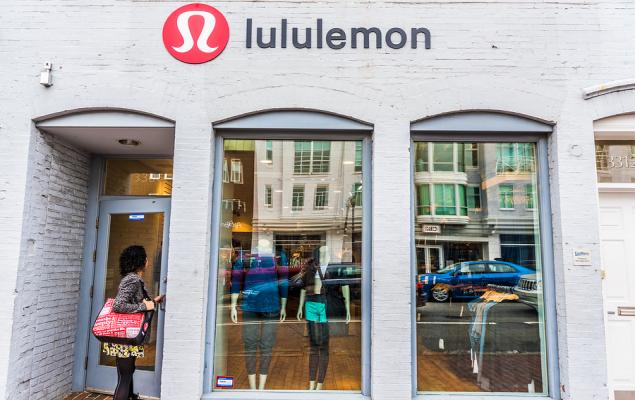
lululemon reported fiscal Q2 revenue of $2.4 billion, down 4% year over year, with comparable sales down 9% and Americas revenue down 8%. A $134.5 million IEEPA tariff refund plus $4.1 million of interest added $0.86 to diluted EPS and lifted gross margin 200bps to 60.5%, but operating income still fell 13% to $453.7 million. Management cut fiscal 2026 guidance to revenue of $10.35-$10.50 billion, down 5%-7%, and EPS of $9.48-$9.73; Q3 revenue is projected to decline 10%-11% and EPS to fall to $0.93-$0.98 from $2.59.
Analysis
The key investable issue is not the one-time earnings distortion but a negative operating loop: weaker full-price sell-through requires incremental promotion, which lowers merchandise margin and amplifies fixed-cost deleverage; heavier brand spending then delays the margin repair investors may be underwriting for FY27. The faster-chase inventory model improves responsiveness only if product read accuracy improves; otherwise it increases late-season replenishment, freight, and markdown risk. This makes the next two quarters disproportionately important for validating whether the reset is demand-led or a deeper brand/product relevance problem.
Competitive read-through is selective rather than broadly bullish for athletic apparel. Private competitors such as Vuori and Alo Yoga are likely the clearest share beneficiaries, while public substitutes are imperfect: NKE has its own turnaround and footwear-led exposure, whereas RL's more differentiated premium/lifestyle positioning offers a cleaner relative hedge. Near term, the market may already discount a weak reported quarter, but consensus could still be too high on the speed of gross-margin normalization once promotional intensity and marketing investment flow through holiday results.
The contrarian risk to a bearish position is that low expectations, a still-strong balance sheet, and even modest stabilization in North American traffic can drive a sharp multiple rebound before fundamentals recover. The thesis is falsified if third-quarter comparable-sales trends improve materially versus the implied outlook, inventory growth falls below sales growth while markdown pressure eases, or management demonstrates sustained full-price recovery rather than relying on tariff or cost offsets.
AllMind Terminal
AI-powered research, real-time alerts, and portfolio analytics for institutional investors.
Request TrialMarket Sentiment
Overall Sentiment
strongly negative
Sentiment Score
-0.68
Ticker Sentiment
Key Decisions for Investors
- Initiate a tactical LULU short only on a post-results relief rally; use a 3-6 month put spread rather than outright puts to cap premium exposure. Target approximately 2:1 reward/risk into third-quarter results and holiday guidance; cover if management raises the full-year margin outlook or North America comps materially outperform its implied trajectory.
- Run a 3-6 month pair trade: long RL / short LULU in dollar-neutral size. The objective is to isolate a potential premium-apparel share and execution divergence rather than take broad discretionary beta; exit if RL's North American full-price sell-through weakens or LULU shows two consecutive months of traffic stabilization.
- Do not buy NKE solely as a LULU share-gain proxy. Establish an alert for evidence of footwear/apparel conversion gains in NKE's North American channel data; without that evidence, NKE's own product-cycle and wholesale-reset risks dominate any category benefit.
- Monitor weekly web traffic, Google Trends/product search data, and third-party markdown breadth through the holiday period. A narrowing markdown gap and improving searches for core women's franchises would be an early signal to reduce LULU short exposure before reported sales inflect.