
Soda Honey Boost Introduces a Seven-Ingredient Gummies HoneyBoost Supplement Designed for Men Over 40
Source: globenewswire.com
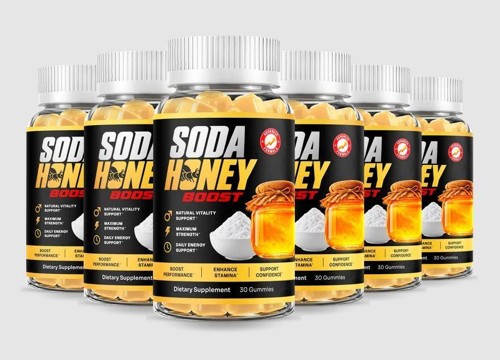
Soda Honey Boost is described as a once-daily dietary supplement for men aged 40 and older, combining seven disclosed botanical and nutritional ingredients in gummy form. The announcement provides no sales, clinical efficacy, or financial data.
Analysis
This is a low-information product announcement, not evidence of a material earnings catalyst. A gummy format and ingredient disclosure may help conversion in men’s wellness, but neither establishes differentiated efficacy, pricing power, repeat purchase, or distribution. The likely competitive effect—if the product gains traction—is incremental pressure on undifferentiated supplement brands, while retailers and contract manufacturers could benefit only if sell-through becomes meaningful. Those are conditional hypotheses; the release provides no company identity, channel, pricing, sales, or independent outcome data.
Near term, there is no defensible basis for repricing a public company. Over 1–3 months, the useful signals are verified retail availability, customer reviews and repeat-purchase evidence, and any disclosed sales contribution. Over 6–18 months, the key question is whether the brand can sustain customer acquisition and product quality in a crowded category. Supplement quality issues, adverse-event reports, or claims scrutiny could quickly outweigh convenience-led marketing. The contrarian point is that a launch can sound differentiated while remaining economically immaterial; do not extrapolate category interest into company-level growth.
AllMind Terminal
AI-powered research, real-time alerts, and portfolio analytics for institutional investors.
Request TrialMarket Sentiment
Overall Sentiment
neutral
Sentiment Score
0.10
Key Decisions for Investors
- No trade on the announcement alone: no issuer, distribution, pricing, or financial contribution is identified, so there is no grounded ticker-level exposure.
- Treat as a watch item for consumer-health and supplement companies: revisit only if verified distribution and repeat-purchase data indicate durable demand rather than launch-driven trial.
- If evaluating a related public company, request evidence of sell-through, gross-margin contribution, customer-acquisition cost, and repeat rates before underwriting earnings or valuation impact.
- Falsify a positive demand thesis if availability remains limited, repeat-purchase evidence is weak, or quality/adverse-event or claims-related concerns emerge; no price target or options position is warranted from the available information.
More News
- Sovereign wealth funds' China and Hong Kong investments surge 190% after a bruising slump
- Apple's iPhone Duo in short supply — plus, the 2 stocks fueling an AI rebound
- Arcus Biosciences prices $250 million stock offering at $17.50
- Tesla stars Optimus robot production in California as profit falls 43%
- AstraZeneca says U.S. FDA approves rare kidney disease drug
- Mark Zuckerberg says Meta is 'entering a new phase' with Muse
From AllMind Research
- Anthropic IPO Preview: Valuation, Timing, and What to Watch
- Shein After the IPO: Venue, Valuation, and What Must Be Proved
- What AI Research Tools Should a Small Hedge Fund Buy First?
- What Is an AI Research Agent?
- Bitcoin's 52% Crash Proves It's a Tech Stock: Here's What That Means for Portfolio Construction