
ThayerMahan Awarded Contract to Deliver 40 Outpost® Acoustic Intelligence Payloads, TransparenSea® Processing Software to Ocius, Royal Australian Navy
Source: PR Newswire
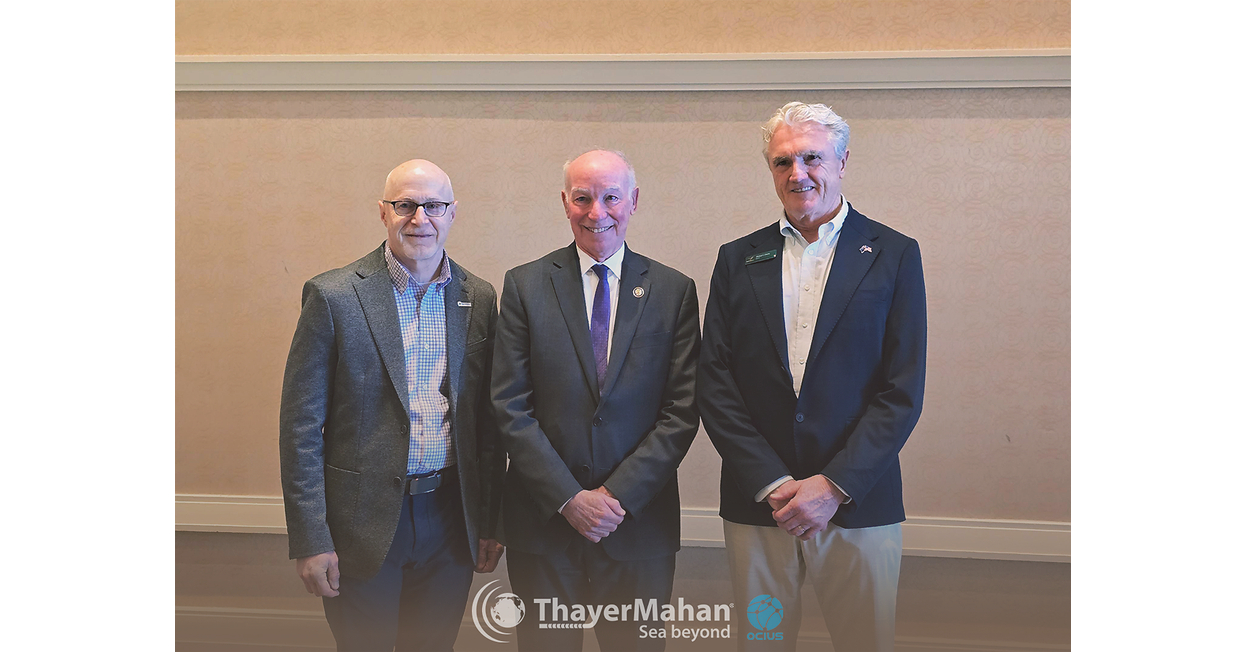
ThayerMahan was awarded a contract to deliver 40 Outpost® acoustic intelligence payloads plus TransparenSea® processing software for the Royal Australian Navy’s SEA1200 Program of Record, via Ocius and the Ocius Bluebottle USVs. The article cites successful RAN trials covering 85+ consecutive days of near-persistent ISR with detection/classification/tracking performance exceeding expectations. The award is framed as a large-volume, first-of-its-kind unmanned acoustic sensing deployment supporting persistent undersea domain awareness in the Indo-Pacific.
Analysis
The real signal is procurement validation, not the initial dollar value. Once an allied navy moves a capability from trial mode into a program of record, the sales cycle for similar autonomous ISR systems shortens materially because budget holders can justify repeatable deployments instead of one-off experiments. That favors platform-agnostic autonomy stacks and sensor/data-fusion software more than hardware-heavy primes, and it should help pull forward adjacent AUKUS spending across Australia, the U.K., and select Indo-Pacific partners.
For public markets, the first-order EPS impact is negligible, but the second-order read-through is constructive for undersea sensing and C2 names with export pathways: LHX, NOC, and, to a lesser extent, RTX on networked ISR and processing. The incremental loser is legacy manned ASW and some shipbuilding budgets if navies reallocate marginal dollars toward persistent unmanned coverage; HII is the cleanest relative-value short if the market starts paying up for "defense tech" exposure without distinguishing content mix. The structural effect should play out over 6-18 months as allied procurement language shifts from prototypes to fleet buys.
The contrarian view is that the market may overestimate how quickly this becomes revenue. Early orders in emerging defense tech often look impressive but are diluted by integration, sustainment, and training spend; the real test is whether Australia adds quantity in the next budget cycle and whether the U.S. Navy follows with a funded requirement. Watch for follow-on RFPs, maintenance costs, and any delays in field reliability—those are the catalysts that would either confirm a multi-year adoption curve or cap the rerating.
AllMind Terminal
AI-powered research, real-time alerts, and portfolio analytics for institutional investors.
Request TrialMarket Sentiment
Overall Sentiment
mildly positive
Sentiment Score
0.25
Key Decisions for Investors
- No direct trade in WWRL; treat this as a thematic read-through, not a standalone catalyst, until a listed supplier or integrator shows order flow.
- Tactical long LHX on weakness over the next 1-3 months as a proxy for undersea sensing and ISR software optionality; target a modest multiple expansion if allied procurement language broadens.
- Relative-value pair: long NOC / short HII for 3-6 months if the market starts rewarding autonomy and undersea surveillance versus legacy shipbuilding mix; thesis fails if shipboard and autonomy budgets both accelerate.
- Set an alert for Australia follow-on funding in the next budget cycle; if there is no incremental order or budget line within 6-9 months, fade the theme and take profits on defense-tech exposure.
- If you want optionality, use LHX or NOC call spreads rather than outright equity; the downside is limited to premium if this remains a one-off validation event.