
SDMC präsentiert auf der IBC 2026 einsatzbereite KI-Dienste für das Zuhause
Source: PR Newswire
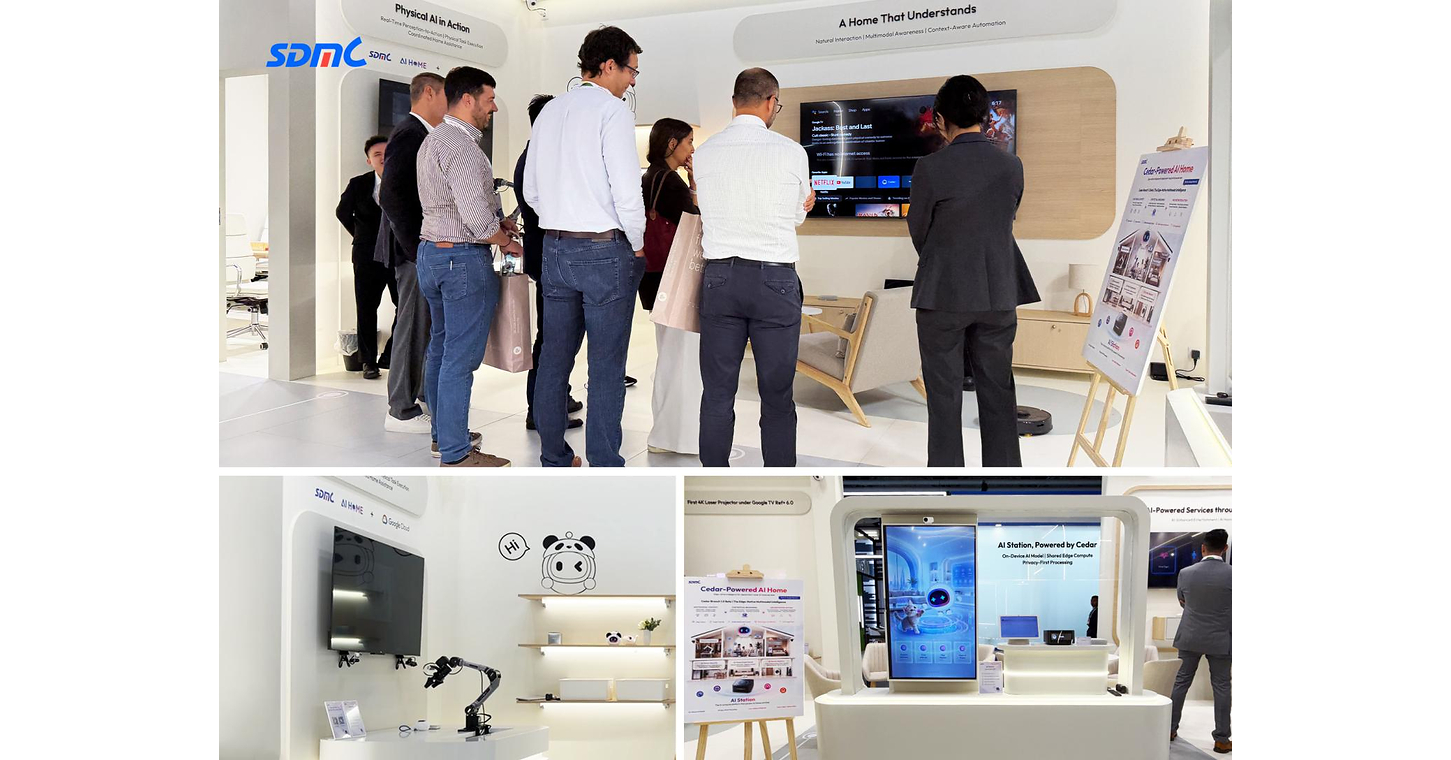
SDMC showcased a deployable AI-home architecture at IBC 2026, centered on its Cedar multimodal edge-AI platform and AI Station shared-computing hub powered by NVIDIA Jetson T5000. The company is collaborating with Google Cloud through its Proactive Physical AI Acceleration Program to validate and pilot services spanning home entertainment, security, network operations and connected devices. The announcement signals product and ecosystem progress, but provides no revenue, customer-contract or commercialization figures.
Analysis
This is strategically supportive of Google’s effort to make Gemini/Gemma the control layer for operator-managed devices, but it is not yet a monetizable cloud-consumption event. Local inference can improve adoption by avoiding latency and privacy objections, while also reducing recurring cloud inference revenue per household; Google’s economic upside therefore depends on attaching premium services, advertising/search surfaces, or enterprise operator contracts rather than token usage alone. The nearer competitive pressure falls on Qualcomm (QCOM), AMD and edge-device ODMs: a shared home hub architecture concentrates AI compute into fewer, higher-value boxes and reduces the need for AI silicon at every endpoint.
For NVDA, the cited edge platform is a potential design-in rather than an earnings catalyst. Carrier deployments have unusually long qualification cycles; meaningful volume requires pilots to convert into operator SKU commitments and subsidy economics to work, likely a 6-18 month process. The market may overread the Google association: the key falsifier is whether SDMC or a named operator discloses paid deployments, unit volumes, and recurring software/service attach rates within the next two quarters; absent that, this remains trade-show validation with limited read-through to GOOG or NVDA estimates.
The non-obvious structural beneficiary could be broadband operators that can use a managed AI gateway to lower truck rolls, Wi-Fi support calls and device-management costs. However, any savings may be competed away through lower churn or bundled service pricing rather than retained as margin, limiting upside for telecom equities until operators quantify opex reduction. Privacy scrutiny or a security failure involving in-home multimodal data would sharply impair adoption and favor simpler, cloud-light consumer-device architectures.
AllMind Terminal
AI-powered research, real-time alerts, and portfolio analytics for institutional investors.
Request TrialMarket Sentiment
Overall Sentiment
moderately positive
Sentiment Score
0.42
Ticker Sentiment
Key Decisions for Investors
- No directional GOOG or NVDA trade on this announcement; impact is below the threshold for estimate revision. Reassess only after a named carrier pilot converts to a commercial rollout with disclosed units or service revenue.
- Maintain GOOG as the cleaner long-term platform exposure versus pure edge-hardware suppliers: monitor Gemini/Gemma distribution through operator channels over the next 6-18 months, but require evidence of paid service attachment before underwriting incremental revenue.
- Set an NVDA catalyst alert for SDMC/operator procurement disclosures and edge-platform BOM details over the next 1-3 quarters. A broad carrier rollout would be modestly positive, but thesis fails as an investable read-through if deployments use low-cost ASICs or competing QCOM/AMD silicon.
- Watch QCOM and AMD for second-order downside only if shared-hub architectures gain operator scale: endpoint AI silicon content could be displaced, but there is insufficient evidence to initiate a short before shipment data and design-win disclosures emerge.
More News
- Crusoe raises $3.9B to build massive data centers and small modular “AI factories”
- Jensen Huang says Nvidia will sell twice as many chips next year
- Warsh says AI’s hyperscalers are part of why your borrowing costs are rising: ‘The competition for capital is real’
- AI coding agents' 0-click RCE flaw could hand attackers keys to the kingdom
- What an Oscar-winning movie can teach us about investing through the AI slowdown debate
- Waymo to bring autonomous ride-hailing to Singapore in 2028