
Hanshow, shopreme, and Lucky cart Unveil a New Smart Cart Solution to Enhance the Shopping Experience and Drive Retail Growth
Source: PR Newswire
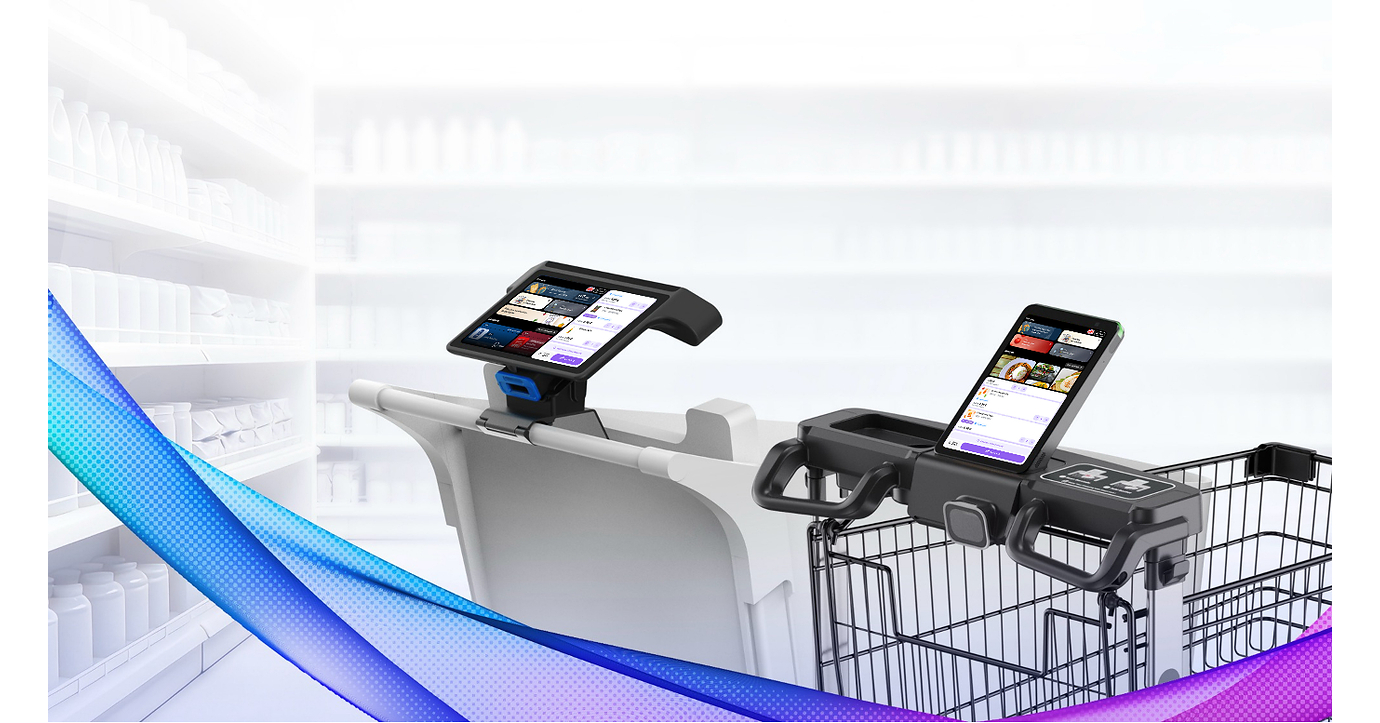
Hanshow, shopreme, and Lucky cart launched a jointly developed AI-enabled Smart Cart platform integrating in-store navigation, self-checkout, camera- and scale-based loss prevention, personalized promotions, and retail-media measurement. The solution is offered as either a fully integrated cart or an AI-camera retrofit for existing compatible fleets, both using the same software stack and requiring equal investment. The launch could improve retailer checkout efficiency and enable closed-loop measurement of in-store advertising, but the announcement provides no deployment contracts, financial terms, or revenue outlook.
Analysis
This is not yet a public-markets catalyst: the vendors are private and the release provides no signed retailer, deployment volume, unit economics, or independently verified shrink reduction. The relevant investable question is whether smart carts become a budget line funded by retail-media revenue rather than store-labor savings; without that shift, high hardware cost, cart maintenance, POS integration, and customer adoption remain material barriers to rollout.
For listed grocers, the first-order economics are mixed. Kroger (KR), Ahold Delhaize (AD.AS), Carrefour (CA.PA), and Tesco (TSCO.L) could monetize first-party in-store intent data and relieve front-end labor pressure, but only if incremental vendor funding exceeds depreciation, connectivity, support, and higher shrink from self-scanning. Walmart (WMT) and Costco (COST) are comparatively less likely near-term beneficiaries: their scale supports proprietary workflows, while high throughput makes cart charging, fleet availability, and exception handling operationally costly.
The more non-obvious risk is competitive substitution against conventional self-checkout suppliers and electronic shelf-label vendors if the cart becomes the consumer interface. NCR Voyix (VYX) and Diebold Nixdorf (DBD) have exposure to checkout infrastructure, whereas SES-imagotag (SESL.PA) and Pricer (PRIC-B.ST) could benefit only if carts drive broader store digitization rather than cannibalize retailers' discrete technology budgets. Over 6-18 months, smart-cart penetration would strengthen retail-media networks at the expense of untargeted CPG trade spend, but privacy restrictions and retailer reluctance to share closed-loop attribution data can cap that upside.
Consensus is likely to over-credit AI functionality and underweight deployment friction. The decisive proof point over the next 1-3 months is a named chain pilot with disclosed basket uplift, shrink delta, labor hours saved, cart utilization, and advertiser-funded revenue per trip; absent those metrics, treat trade-show demonstrations as vendor positioning rather than a demand signal.
AllMind Terminal
AI-powered research, real-time alerts, and portfolio analytics for institutional investors.
Request TrialMarket Sentiment
Overall Sentiment
mildly positive
Sentiment Score
0.38
Key Decisions for Investors
- No immediate directional position from this release; set an event-driven alert for named retailer contracts or pilots above 100 stores, particularly involving KR, AD.AS, CA.PA, or TSCO.L.
- Monitor VYX and DBD for evidence that smart-cart adoption displaces fixed self-checkout lanes. Consider a tactical short only after two consecutive quarters of weaker-than-guided retail systems bookings or margin pressure attributable to checkout-capex deferral; the current announcement alone does not support it.
- Keep SESL.PA and PRIC-B.ST on a 6-18 month watchlist as second-order beneficiaries of broader connected-store capex. Upgrade only if deployments demonstrably attach ESL, indoor-location, or store-data infrastructure rather than consume the same capex pool.
- For retail-media exposure, favor established scaled ecosystems over hardware-led narratives: WMT and KR remain better quality proxies, but require evidence that in-store attribution improves media yield without incremental promotional expense. Falsifier: retail-media growth decelerates while store-technology capex rises.
More News
- Two camps have emerged in the debate over AI safety and regulation
- U.S. stock futures drift higher with Fed rate hike in focus
- AWS says it can't restore service to Bahrain, UAE facilities 6 months after Iran strikes
- Treasury yields are hovering above a critical threshold. Here's what it means for stocks
- US 10-Year Yield Rises to Highest Since '07, Trump Says AI Fears a 'Hoax'
- Push for AI regulation mounts as talk of AI’s ‘existential’ risks go mainstream. But Trump resists calls for a slowdown