
Going introduces Price Drop tracking for members, saving $150 when a lower fare is found
Source: PR Newswire
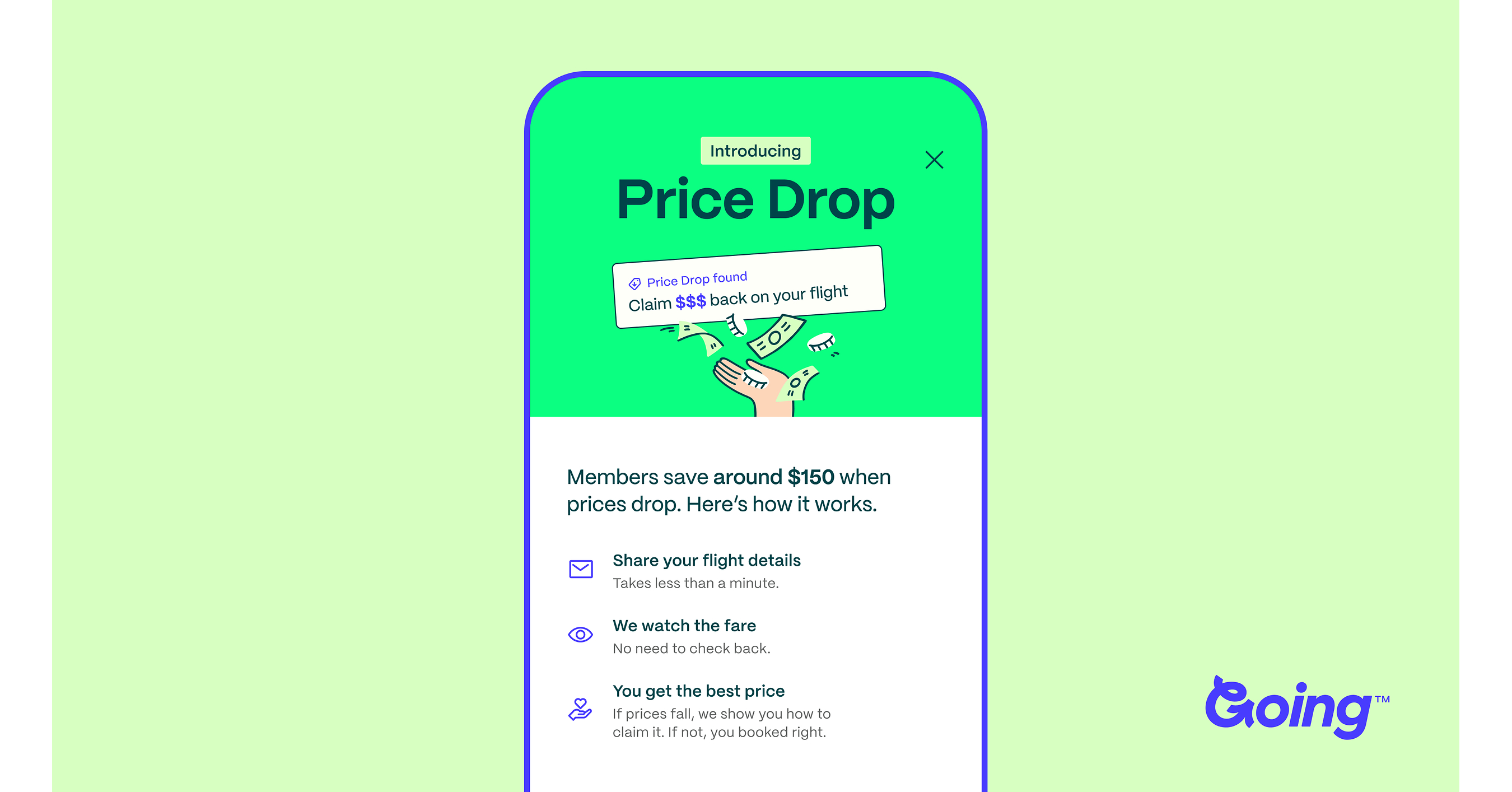
Going launched Price Drop, a free feature for Premium and Elite members that monitors up to five booked flights and alerts users when fares decline at least 10%. Members who found lower fares through the feature have saved about $150 per ticket, generally as airline credit for future travel. The launch expands Going's post-booking offering alongside its 2025 Trips fare-alert product, potentially increasing membership value and retention.
Analysis
This is primarily a retention and engagement feature, not a near-term public-equity earnings catalyst. The economic value is constrained because savings are generally airline credits rather than cash, eligible itineraries exclude low-cost carriers, and fare-rule friction limits conversion; nevertheless, post-booking monitoring can increase subscription renewal by extending the app's utility beyond the initial purchase decision. The relevant competitive pressure is on subscription travel-alert platforms and fare-tracking tools, rather than listed airlines.
For airlines, widespread adoption would be marginally negative to ancillary/rebooking breakage economics only if it materially increases customers' use of fare-difference credits. In practice, airline credit expiration, restricted usage, and customer inertia should preserve substantial breakage, while carriers may benefit from incremental repeat bookings funded by credits. Larger network carriers—DAL, UAL, AAL—are more exposed than LCCs because the product explicitly targets changeable, single-airline itineraries; however, the potential revenue impact is immaterial versus demand, capacity discipline, and premium-cabin trends.
The non-obvious structural implication is that fare transparency tools can gradually shorten the effective booking curve: consumers gain confidence booking earlier when they perceive downside protection. Over 6-18 months, that could modestly improve airline load-factor visibility and reduce last-minute pricing power, but only if consumers can actually capture credits easily. There is no actionable standalone trade today; monitor whether major carriers tighten fare-difference rules or credit terms, which would signal the tools are creating measurable leakage.
AllMind Terminal
AI-powered research, real-time alerts, and portfolio analytics for institutional investors.
Request TrialMarket Sentiment
Overall Sentiment
mildly positive
Sentiment Score
0.38
Key Decisions for Investors
- No directional airline position on this launch; its addressable fare-credit leakage is too small relative to DAL, UAL and AAL quarterly revenue volatility.
- Add an industry watch item for 1-3 months: track airline policy changes on no-change-fee fare repricing, e-credit expiration, and basic-economy exclusions. Broad rule tightening would be a negative read-through for travel-tech price-monitoring platforms, not yet a listed-equity catalyst.
- For existing long UAL/DAL exposure, treat expanding post-booking repricing tools as a minor downside to ancillary yield and a potential modest positive to repeat-travel frequency; falsify the benign view if management cites elevated fare-difference credits or weaker unit-revenue yields attributable to post-booking repricing.
- Avoid extrapolating this feature into a consumer-demand signal. A more actionable travel trade requires independent confirmation from TSA throughput, corporate booking data, or airline forward-unit-revenue guidance.
More News
- Chinese authorities reportedly in possession of F-35 components in Hong Kong
- Meta announces new lightweight virtual reality glasses to one-up Apple’s Vision Pro
- How Meta took the lead in the race for the post-smartphone world
- Here's what happens to the economy when Treasury yields soar like they are now
- Oil industry warns a diesel export ban will raise fuel prices as Trump weighs restrictions
- Mark Zuckerberg debuts $1,299 Meta VR Glasses and Muse Charm pendant amid AI agent push