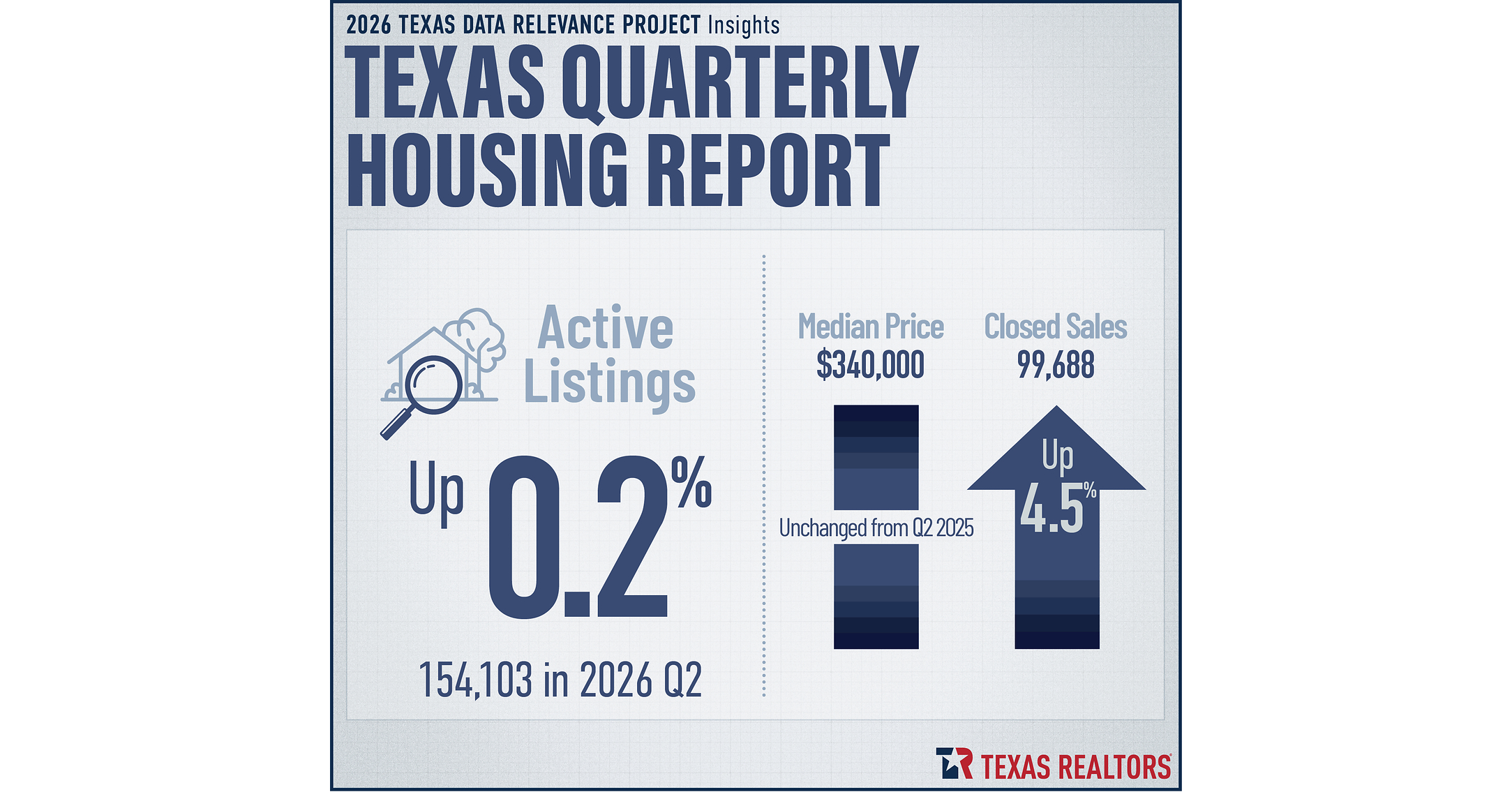
Texas Q2 statewide home pricing was flat year-over-year at $340,000, but activity improved: closed sales rose 4.5% to 99,688. Demand signals were mixed—homes took 65 days on average (+3 days), while months of inventory dipped to 5.4 from 5.6 (slightly tighter) and active listings were roughly flat (+0.2% statewide). Performance was highly local, with standout sales gains in Eagle Pass (+22.9%), Odessa (+16.2%), and Tyler (+15.6%) offset by declines in Corpus Christi (-5.9%), College Station-Bryan (-5.4%), and Beaumont-Port Arthur (-0.8%).
This reads more like a normalization signal than a bullish breakout. In housing, flat prices with modestly higher transactions and inventory still near balance means the marginal buyer is showing up, but sellers do not have enough leverage to re-ignite pricing power. That is supportive for volume-sensitive businesses, but it caps upside for anyone relying on margin expansion from stronger home prices.
Second-order, the clearest beneficiaries are Texas-heavy residential builders and adjacent transaction fee businesses, not lenders. Builders like DHI, KBH, PHM, and LEN can keep absorbing lots without having to slash prices, which helps order conversion and reduces the risk of land writedowns. By contrast, mortgage originators such as RKT only get a partial benefit: more closes help, but the slightly longer days-on-market suggests rate pressure is still suppressing velocity and refi optionality.
The contrarian read is that the consensus may be too casual about “stable.” Stable at a balanced inventory level is not the same as reacceleration; it usually means the next leg depends on mortgage rates, not local demand. If 30-year rates stay elevated into the next 1-2 quarters, today’s resilience can turn into inventory creep and more concessions, which would hit builder margins before it shows up in headline prices.
AI-powered research, real-time alerts, and portfolio analytics for institutional investors.
Overall Sentiment
neutral
Sentiment Score
-0.05
Ticker Sentiment
