
Indonesia's Forest-Zone Oil Palm Dilemma: Why Laws Aren't Enough
Source: PR Newswire
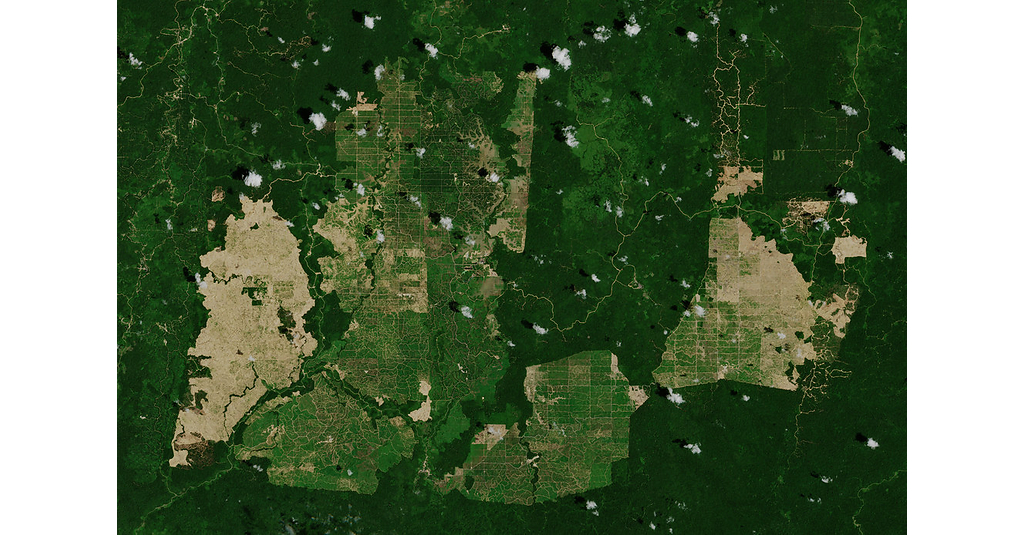
Indonesia’s move from the SJB “Rehabilitation Period Strategy” (2020–2021) toward stricter enforcement under Presidential Regulation No. 5/2025 introduces penalties and potential state reclamation for oil palm in state forest zones. The study says SJB provided few incentives to replace profitable plantations and that Perpres 5/2025 could further marginalize smallholders by increasing uncertainty over reclaimed land. Authors call for clearer land rights and social forestry arrangements, which may raise compliance and supply-risk considerations for the palm/oil supply chain.
Analysis
The market should treat this less as an immediate supply shock and more as a governance-tax event: the earnings impact lands through slower replanting, weaker smallholder capex, and a higher discount rate on Indonesian ag assets. In the near term, any price reaction in Indonesia-linked names is likely to be sentiment-driven; the real fundamental lever is whether mills can keep sourcing fruit from plots with disputed tenure or whether volumes get pushed into the informal channel.
Second-order winners are likely outside Indonesia. If enforcement meaningfully constrains future palm supply growth, Malaysian plantation names and regional edible-oil substitute chains can gain relative pricing power, while crushers and packaged-food names face cost volatility only if the policy leaks into global CPO prices for multiple quarters. The larger spillover is that buyers increasingly pay up for traceability and title clarity, which can widen the valuation gap between compliant operators and “cheap for a reason” small-cap land plays.
The contrarian view is that the headline may overstate near-term disruption. Indonesia has a long history of policy drift toward amnesty, grace periods, or negotiated regularization, so the first few months may produce more legal noise than lost barrels of oil-equivalent. What is underappreciated is the 6-18 month productivity drag: uncertainty suppresses replanting and yields, which is structurally bullish for non-Indonesian supply and bearish for any attempt to normalize Indonesian plantation valuations without a clean land-rights framework.
AllMind Terminal
AI-powered research, real-time alerts, and portfolio analytics for institutional investors.
Request TrialMarket Sentiment
Overall Sentiment
mildly negative
Sentiment Score
-0.15
Ticker Sentiment
Key Decisions for Investors
- Do not force a trade in INDO or WWRL on the first headline reaction; use them as watch items unless there is evidence of actual reclamation orders, export disruption, or a change in plantation throughput over the next 1-3 months.
- If you can access local equities, favor a relative-value long in Malaysian plantation names (KLK.KL, IOI.KL, SIME.KL) versus Indonesian-exposed ag assets for a 3-6 month horizon; the trade is cleaner title certainty vs governance overhang.
- On a 6-12 month view, consider a modest long in edible-oil sensitivity via DBA or BG only on confirmation that Indonesian enforcement is showing up in export data; if CPO does not tighten, carry is poor and upside is limited.
- Short rallies in palm-input-sensitive consumer staples such as UL or KMB only if benchmark veg-oil prices stay elevated for several quarters; otherwise pass-through should cap the downside and make the short low quality.
- Falsifier: if Jakarta announces a broad amnesty, social-forestry conversion, or compensation scheme within 60-90 days, exit any bullish veg-oil/plantation thesis, as the policy premium is likely to mean-revert quickly.
More News
- US forces disable ship ‘attempting to run’ Iran blockade in Gulf of Oman
- Middle East war, high debt levels to dominate IMF-World Bank meetings in Bangkok
- Attack on Saudi airport kills 12 people and wounds more than 300—the deadliest strike in any Gulf Arab country since the start of the Iran war
- Why is US turning to Russia for diesel despite sanctions?
- Ship captains and crews transiting the Strait of Hormuz make so much danger pay that they’re ‘almost being viewed as mercenaries’
- Trump says Ukraine should get a new president as he blames Zelenskyy for U.S. diesel prices
From AllMind Research
- Anthropic IPO Preview: Valuation, Timing, and What to Watch
- Shein After the IPO: Venue, Valuation, and What Must Be Proved
- What AI Research Tools Should a Small Hedge Fund Buy First?
- Document Search Enhancements, AI Enhancements, AI Actions, & Chat Export
- AI Vendor Landscape for Institutional Investment Teams