
AI-Fueled Profit Growth Set to Flow Through Every S&P 500 Sector
Source: Bloomberg
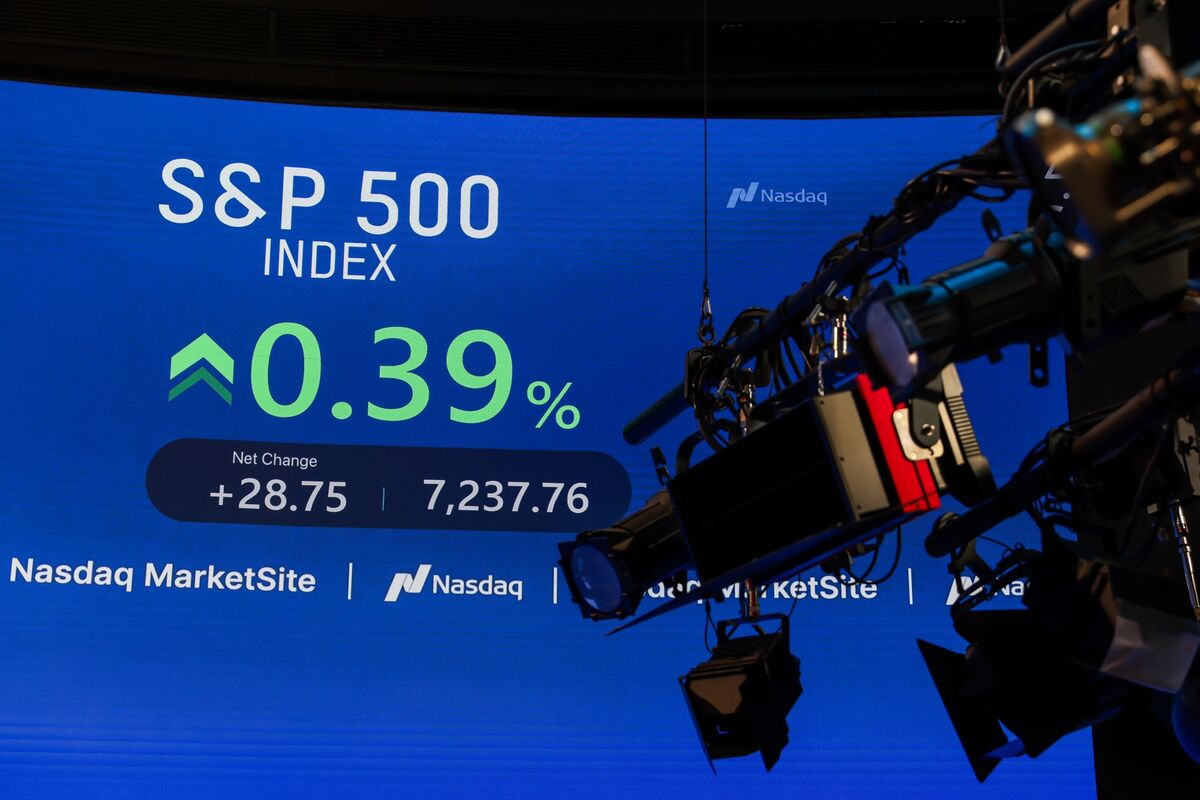
AI-related spending is expected to support broad-based S&P 500 profit growth in the third quarter. Bloomberg Intelligence forecasts earnings growth in every S&P 500 sector, the first such across-the-board expansion since 2021 as companies emerged from the pandemic downturn. The outlook signals that AI investment benefits are broadening beyond technology into the wider economy.
Analysis
The investable implication is not simply broader earnings growth, but a potential rotation from AI infrastructure beneficiaries into cyclical and “old economy” adopters if management teams can demonstrate revenue yield on technology spending. Equal-weight indices and select software, industrial automation, financial services, and business-services franchises have greater operating leverage to an improvement in productivity expectations than mega-cap semiconductors, where a large share of AI capex upside is already embedded in estimates and multiples.
The near-term risk is that earnings breadth reflects low estimate bars rather than durable margin expansion. AI deployment initially raises cloud, data, cybersecurity, consulting, and depreciation expense; companies without pricing power may report favorable productivity narratives while absorbing the costs in operating margins. The decisive 1-3 month catalyst is not aggregate EPS delivery but the ratio of upward FY2027 revisions to capex guidance: broad-based estimate upgrades without further capex escalation would validate an efficiency cycle, while another round of spending increases would favor NVDA, AVGO, ANET, VRT and power infrastructure rather than end-user adopters.
Contrarian view: a synchronized earnings narrative can compress dispersion and leave the market exposed to a modest macro disappointment, especially in rate-sensitive sectors whose multiples have expanded on anticipated productivity gains. Over 6-18 months, electricity availability, grid interconnection queues, and skilled implementation capacity are more likely constraints than chip supply; utilities with regulated capital-base growth and electrical-equipment suppliers could capture a larger, less debated portion of enterprise AI economics. This thesis is falsified if corporate capex intentions soften materially, hyperscaler power-demand forecasts are reduced, or earnings calls show AI projects remain pilots with no measurable labor or revenue benefit.
AllMind Terminal
AI-powered research, real-time alerts, and portfolio analytics for institutional investors.
Request TrialMarket Sentiment
Overall Sentiment
moderately positive
Sentiment Score
0.58
Key Decisions for Investors
- Initiate a 1-3 month relative-value position: long RSP / short QQQ in equal dollar notional. This expresses earnings-breadth and productivity diffusion while reducing mega-cap AI-duration exposure; reassess if QQQ outperforms RSP by more than 7% from entry or if forward EPS revisions remain concentrated in Technology.
- Build a 6-12 month basket of AI power-and-electrification enablers, favoring ETN, PWR and VRT over broad semiconductor exposure. Enter in tranches around earnings; target a 15-20% upside versus 8-10% downside, with thesis invalidation on reduced data-center backlog, weaker utility load forecasts, or evidence that interconnection delays defer projects beyond 2027.
- Avoid adding unhedged exposure to high-multiple application software solely on AI commentary. Upgrade this from a watch item only when a company reports quantified seat expansion, pricing uplift, or at least 100-200 bps of recurring-margin improvement attributable to automation; absent those metrics, AI-related multiple expansion is vulnerable after results.
- Use the next reporting cycle as a dispersion screen: go long companies that raise FY2027 EPS while holding capex-to-sales flat or lower, and short or underweight firms raising capex without matching revenue or margin guidance. The key confirmation is two consecutive quarters of positive forward revisions rather than a one-quarter beat against reduced expectations.
More News
- Arcee AI trained four models for $20 million. Now, it’s worth $1 billion.
- Premarket movers: Intel jumps on SK Hynix memory-chip talks, J.B. Hunt slides
- AWS says wartime damage means some Middle East cloud resources are gone for good
- Fed decision looms large; Zuckerberg on AI safety fears - what’s moving markets
- News Flash: 70% of Wall Street Institutions Are Calling for at Least a 50-Basis-Point Fed Rate Hike in 2026
- Markets Brace for First US Fed Hike Since 2023