
Micron: Why I Added $5,000 Worth Of Shares During The Selloff (Rating Downgrade)
Source: seekingalpha.com
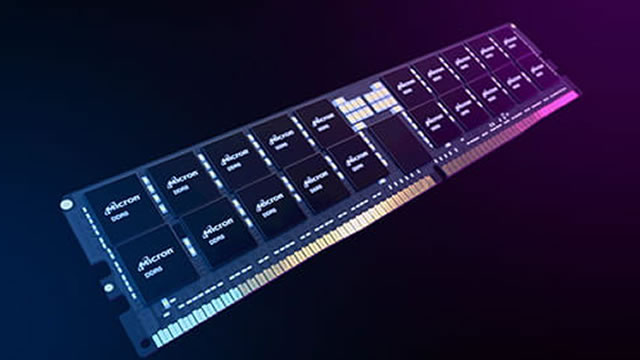
Chip stocks had their worst day since 2020 amid post-election fears about data-center policy, but the article argues this is noise rather than a change in fundamentals. It says most 2027 capacity is already under construction, more than 75% of Micron's FY27 shipments are contracted, and supply remains constrained, with no new fabs expected before 2028 as demand outpaces supply.
Analysis
The key distinction is volume visibility versus price and utilization risk: contracted shipments, if verified, may cushion MU’s near-term unit volumes but do not guarantee pricing, product mix, or customer acceptance if data-center plans are delayed. Fixed capacity commitments can also magnify downside if demand expectations reset before supply can adjust. Conversely, genuinely constrained supply would make a modest demand slowdown less damaging to memory pricing than to semiconductor companies whose valuations rely more directly on uninterrupted data-center capex. That relative advantage is conditional, not proof MU is insulated from a broad risk-off move.
Near term, election-driven de-risking can keep the whole semiconductor complex under pressure regardless of fundamentals. Over 1–3 months, watch MU guidance, customer capex commentary, memory contract/spot pricing, and evidence that shipment commitments are being deferred or repriced. Over 6–18 months, the supply constraint could support pricing if demand holds; it becomes a liability if capacity arrives into weaker demand. The article’s shipment and construction assertions need verification against company filings and customer disclosures. The contrarian opportunity is relative performance, not necessarily an immediate sector rebound.
AllMind Terminal
AI-powered research, real-time alerts, and portfolio analytics for institutional investors.
Request TrialMarket Sentiment
Overall Sentiment
mildly positive
Sentiment Score
0.15
Ticker Sentiment
Key Decisions for Investors
- Avoid chasing the selloff or treating contracted shipments as a price floor. Consider a staged, relative-value long MU versus a short broad semiconductor basket only after MU stabilizes relative to the sector; this expresses memory resilience while limiting broad-market beta.
- Keep initial risk modest and define the thesis break as MU reducing shipment or revenue guidance, customers delaying commitments, or memory pricing weakening alongside data-center capex cuts. Exit or reassess on those signals rather than relying on capacity-tightness claims alone.
- Use the next 1–3 months to verify shipment-contract scope and cancellation or deferral terms, plus company guidance and independent memory-price data. If those remain supportive while semiconductor peers revise capex-linked outlooks lower, the relative trade strengthens; absent confirmation, there may be no trade.
More News
- 3 Stocks to Buy for an AI Chip Recovery
- Prediction: This Will Be the Best-Performing AI Stock of 2027
- 3 AI Chip Stocks to Buy in November After the October Sell-Off
- Trump says renewed Iran strikes ‘highly unlikely’ if talks progress but warns he could still strike
- How a Frenchman’s book on ‘Democracy in America’ nearly 200 years ago explains the midterms, from data centers to Texas
- Here are the 2 big things we're watching in the stock market in the week ahead
From AllMind Research
- AllMind Platform Feature Updates - Fall 2026
- AI Credit Covenant Monitoring: From Clause to Review
- AI-Led Expert Interviews vs. Transcript Libraries
- AI for Investment Thesis Validation: A Claim-Ledger Method
- Capital Intensity as Gravity: The AI Trade Enters Its Industrial Era (Looking at Q3 2025 Earnings in Tech)