
« Taiwan Weeks 2026 » s'ouvre alors que Taïwan renforce l'interconnexion avec les marchés financiers mondiaux
Source: PR Newswire
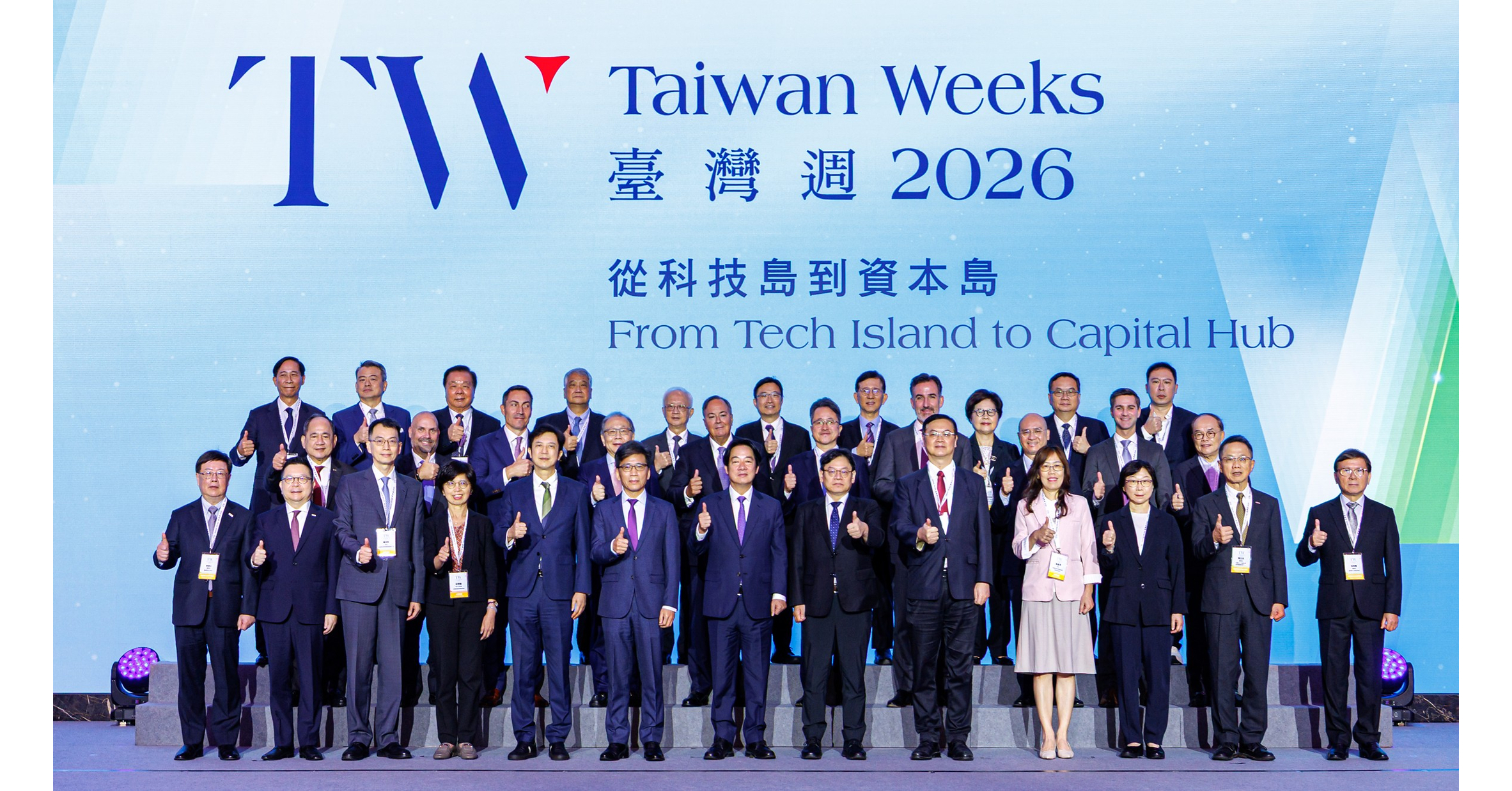
Taiwan launched its second annual Taiwan Weeks, drawing more than 400 participants and scheduling over 45 events from November 3–13 to strengthen international financial links and advance its ambition to become a leading Asian asset-management hub. The FSC chairman said the TAIEX rose from 28,000 to 45,000 points over the past year, while Taiwan ETF assets reached NT$11.6 trillion (US$370 billion), third-largest in Asia-Pacific. The program focuses on market internationalization, regulatory and business reforms, sustainable finance, and connecting AI startups with international investors.
Analysis
The investable signal is not the event itself but whether Taiwan can convert equity-market scale into recurring cross-border mandates, listings and fee income. That would benefit local asset managers, brokers, custodians and market infrastructure over time, while intensifying competition for regional fund flows with Singapore, Hong Kong and Tokyo. Yet larger ETF assets are not proof of fresh foreign demand: rising underlying prices can inflate AUM, and Taiwan’s market remains exposed to concentrated semiconductor/AI exposure and geopolitical risk. Those factors may cap any valuation premium for a financial-center narrative.
Near term (days), the announcement is unlikely to change earnings or justify chasing the rally. Over 1–3 months, look for measurable implementation—foreign fund registrations, cross-border distribution access, listing or settlement reforms, and net foreign portfolio flows—rather than conference participation or policy targets. Over 6–18 months, sustained inflows and stronger governance could lower issuers’ cost of capital and deepen local financial-sector revenues, but the benefit is conditional and likely gradual. The contrarian risk is that investors price the ambition as though it were already a functioning regional hub; absent evidence of recurring fee pools, this is primarily a policy option, not an earnings catalyst. Falsifiers: stalled rule changes, weak net foreign flows despite market strength, or renewed geopolitical risk premiums.
AllMind Terminal
AI-powered research, real-time alerts, and portfolio analytics for institutional investors.
Request TrialMarket Sentiment
Overall Sentiment
mildly positive
Sentiment Score
0.30
Key Decisions for Investors
- No event-driven trade: the announcement provides no verified earnings, flow or implementation data sufficient to support a directional position.
- Put Taiwan financials and market-infrastructure exposure on a catalyst watchlist; upgrade only after evidence of cross-border fund registrations, distribution access and sustained net foreign inflows.
- Track ETF AUM alongside net creations and foreign-flow data. Treat AUM growth driven chiefly by market appreciation as a weak confirmation of the asset-center thesis.
- For a relative-value expression, consider Taiwan versus Singapore or Hong Kong only after reforms and flow data demonstrate durable capture of regional mandates; define the thesis as invalid if reforms stall or foreign flows remain weak while equities rise.
More News
- Magnificent 7 loses $1 trillion. The most eye-popping stats from Thursday's tech stock plunge
- Tech stocks are suffering their biggest selloff since Covid, as investors see premature end to AI datacenter boom
- Wall Street’s best post-midterm rally in 44 years lasted just one day—then $3 trillion vanished as chip stocks plunged over AI fears
- How Wall Street's postelection rally got obliterated — and what's next
- Equity Volatility Jumps Most Since April 2025 Tariff Turmoil
- AI stocks plunge after election, driving down US markets