
New Study Finds America's Commercial Buildings Are Big Business, Generating Nearly $610 Billion in Economic Activity
Source: PR Newswire
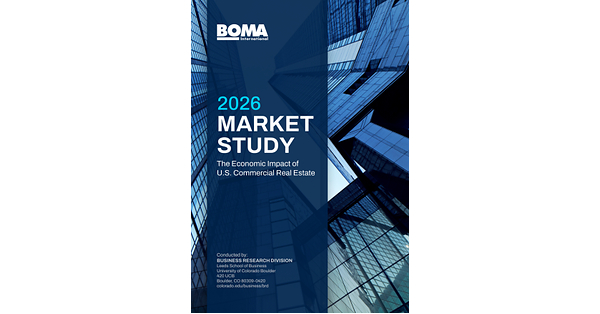
BOMA's 2026 study estimates that commercial-building operations across 79 U.S. markets support 3.9 million jobs, generate $609.9 billion in annual economic output, and contribute $344.4 billion to U.S. GDP from $274.9 billion in operating expenditures. Data centers represented approximately $41.2 billion, or 46%, of 2025 private office construction, underscoring their growing influence on commercial real estate investment. Industrial construction remained elevated at $274.2 billion in 2025 despite a 7.9% annual decline, while retail construction totaled $47.1 billion.
Analysis
The investable signal is not aggregate commercial real estate activity but the growing misclassification of data-center capex within "office" data. This makes headline office-construction strength a poor read-through for BXP, KRC and VNO, whose leasing economics remain driven by hybrid-work absorption, tenant downsizing and refinancing costs. Conversely, DLR, EQIX, VRT, ETN, PWR and CARR benefit from a multi-year shift toward power-dense, cooling-intensive facilities; the bottleneck is increasingly grid interconnection and electrical equipment availability rather than building shell construction.
The stated operating-spend multiplier is association-sponsored research, not evidence of an incremental demand acceleration, and should not change estimates for CBRE, JLL, ABM or ISS A/S without corroboration from organic revenue, contract pricing and labor utilization. The more relevant near-term transmission channel is service-cost inflation: wage, insurance, utility and maintenance increases can be passed through at industrial/data-center assets with stronger landlord pricing power, but may pressure office and retail owners locked into gross leases. This favors PLD and data-center landlords over office-heavy REITs over the next 6-18 months.
Consensus may still overstate the positive macro implication of construction totals: data centers are capital intensive but employ relatively few permanent on-site workers versus traditional office occupancy. That distinction matters for urban retail, transit-adjacent real estate and downtown office recovery. A reversal in hyperscaler capex guidance, utility interconnection delays, or evidence that AI workloads are being served with lower power intensity would compress the data-center supply-chain premium quickly; monitor MSFT, AMZN, GOOGL and META capex commentary over the next two earnings cycles.
AllMind Terminal
AI-powered research, real-time alerts, and portfolio analytics for institutional investors.
Request TrialMarket Sentiment
Overall Sentiment
mildly positive
Sentiment Score
0.38
Key Decisions for Investors
- Do not initiate a broad CRE trade from this release; require confirmation in CBRE/JLL leasing and property-management organic growth, plus REIT same-store NOI guidance, before treating operations spending as incremental demand.
- Maintain a 6-12 month relative-value bias: long DLR or EQIX against short BXP or KRC. The thesis is that data-center capacity monetizes power scarcity while conventional office remains exposed to weak absorption and refinancing; reassess if office net absorption turns sustainably positive or hyperscalers cut capex guidance.
- For infrastructure exposure, prefer ETN and PWR over generalized construction ETFs on 6-18 month pullbacks. Their earnings sensitivity is to electrical distribution and grid expansion rather than cyclical office starts; reduce if backlog growth decelerates materially or utility interconnection queues begin clearing faster than expected.
- Watch PLD versus office REITs for lease-structure divergence: add to industrial exposure only if same-store NOI and tenant retention remain resilient through the next reporting cycle. A broad manufacturing/warehouse capex retrenchment would invalidate the relative-strength leg.
More News
- Japan’s corporate leaders sound alarm over weak yen — even dollar-earners are voicing concerns
- 'Hostile act': Trump threatens EU with tariffs over Canada associate-membership proposal
- Fed hikes again - an AI-Picked insurer is still cashing in
- US military claims Strait of Hormuz remains open amid ongoing blockade
- Oil prices extend losses as fears of Middle East supply disruptions ease
- Berkshire May Boost Japan Trading House Holdings, Itochu Says