
Oracle: Load Up While The Market Continues To Misprice Delay Risks
Source: seekingalpha.com
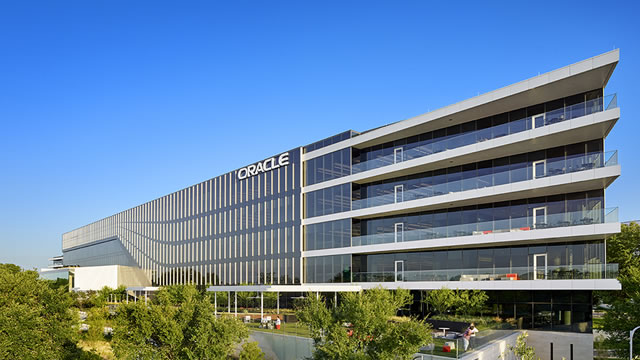
Oracle faces negative optics from a reported force majeure notice involving Project Jupiter, which carries a stated $25B revenue risk. The analysis views the move as proactive risk management rather than an execution failure and expects FY2027 guidance to remain intact, supported by backlog conversion and strong OCI growth. ORCL is characterized as already discounting substantial pessimism at 17x forward earnings, below big-tech valuation averages.
Analysis
The key valuation question is not whether a single site is delayed, but whether Oracle can redeploy contracted compute demand across its broader capacity footprint without incremental capital intensity. If capacity is fungible, a disruption primarily shifts revenue recognition and working-capital timing; if it is not, the market will discount backlog quality and apply a lower multiple to OCI growth. The next earnings call needs to establish whether the issue affects customer acceptance, construction milestones, power availability, or merely contractual delivery dates.
Near-term optics can pressure ORCL because hyperscale infrastructure narratives are highly sensitive to evidence that AI demand is constrained by execution rather than demand. The more important second-order risk is to Oracle's financing model: delayed utilization while data-center capex continues would weaken free-cash-flow conversion and raise scrutiny of lease liabilities and debt-funded buildout. That risk would be amplified if management avoids quantifying the affected capacity, customer concentration, or revised in-service timing.
The contrarian case is that the market may be treating any force-majeure language as a demand impairment when it could instead improve Oracle's negotiating leverage on delivery schedules and preserve economics. A credible reaffirmation of OCI growth, capex discipline, and customer commitments over the next 1-3 months would likely drive a sharp reversal in the execution discount. Thesis failure would be a cut to FY2027 cloud growth expectations, evidence of cancellation rather than deferral, or a material increase in capex without matching contracted revenue.
AllMind Terminal
AI-powered research, real-time alerts, and portfolio analytics for institutional investors.
Request TrialMarket Sentiment
Overall Sentiment
mildly positive
Sentiment Score
0.28
Ticker Sentiment
Key Decisions for Investors
- Maintain ORCL as a watch-list long rather than add aggressively before the next disclosure window. Initiate only if management quantifies delayed capacity and reaffirms OCI revenue and capex targets; target a 10-15% rerating over 3-6 months if execution risk is contained, with a stop on any reduction in long-term cloud guidance.
- For existing ORCL exposure, buy a 3-6 month 5-10% out-of-the-money put spread around the next earnings call. This specifically hedges the asymmetric risk that a project-level delay becomes a backlog-conversion or free-cash-flow issue while retaining upside to a clean clarification.
- Monitor relative performance of ORCL versus MSFT, AMZN, and GOOGL over the next 20 trading days. Persistent ORCL underperformance after a guidance reaffirmation would indicate investors are repricing funding and execution risk, not reacting to headlines; avoid averaging down until that relative trend stabilizes.
- Set an earnings-call diligence trigger: require disclosure on affected megawatts/capacity, customer payment obligations, revised service commencement dates, and incremental capex. Absence of these metrics is bearish even if aggregate guidance is maintained, since it raises the probability of a later guidance reset.
More News
- ShinyHunters tells The Reg: We hacked the FBI to 'protect our business'
- Ellison Pledges $9.2 Billion More in Oracle Shares as Collateral
- Nasdaq 100: Futures Lead the Stock Market Rebound as Bond Yields Stay High
- Votes and Verdicts: Diesel Export Ban, Oracle, Snap, SpaceX
- Upstart sports leagues fail constantly. SailGP is beating the odds
- AMD Just Joined Nvidia in the $1 Trillion Club. At $614, Wall Street Is Paying Too Much for a Distant No. 2.
From AllMind Research
- Anthropic IPO Preview: Valuation, Timing, and What to Watch
- Shein After the IPO: Venue, Valuation, and What Must Be Proved
- What AI Research Tools Should a Small Hedge Fund Buy First?
- Alternative Data Due Diligence for Institutional Investors
- Introducing AllMind: A New Data & AI Workspace for Institutional Investors