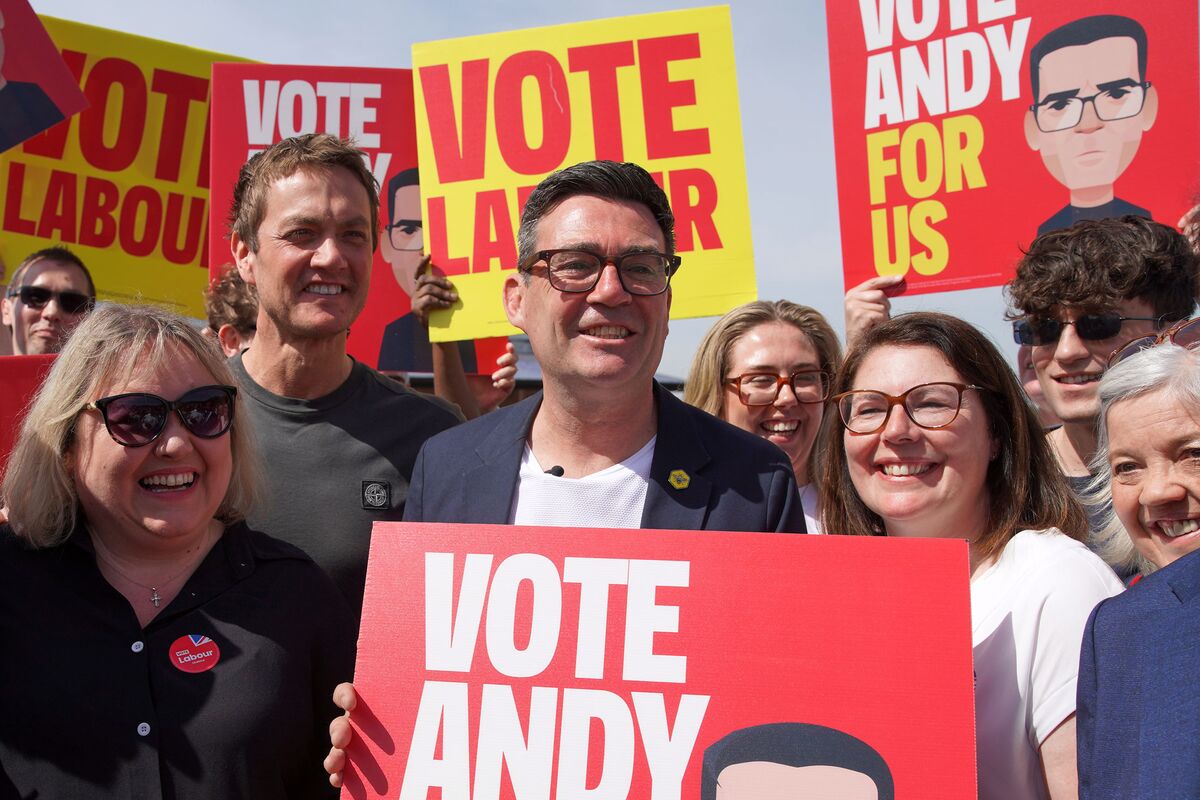
The article focuses on Greater Manchester Mayor Andy Burnham’s refusal to detail broader ambitions beyond the special election he is currently contesting, amid speculation about a possible showdown with Keir Starmer. It is primarily a political positioning story, with no direct economic or market-moving policy developments. The tone is neutral and speculative, and the market impact is minimal.
The important market signal here is not the personalities involved but the probability of a broader center-left reordering. A credible challenger to Starmer from the local-government/municipal wing would likely pull Labour policy further toward redistribution, housing, and public-service delivery, which would matter more for UK domestically exposed sectors than for global exporters. That implies a higher odds distribution of headline volatility around fiscal assumptions, planning rules, and labor regulation over the next 6-18 months.
The first-order beneficiaries would be firms tied to public capex, regulated infrastructure, and housing supply if the internal contest forces pro-build positioning; the losers are incumbents reliant on stability and slow-moving policy. The second-order risk is that leadership speculation depresses decision velocity inside Labour, which can be as damaging as a policy shift because it delays commitments on planning, schools, NHS outsourcing, and local authority funding. That creates a window where UK domestics trade on narrative rather than fundamentals, with reaction function stretched over days, not quarters.
The contrarian view is that this is still mainly a governance story, not a regime change. Burnham’s signaling may be more about extracting leverage than mounting an immediate bid, so the market may be overpricing near-term Labour fragmentation and underpricing the probability that the party recentralizes quickly once electoral arithmetic tightens. If Starmer avoids a public split and keeps polling resilient, the premium for political uncertainty should compress within weeks.
Tail risk is a visible succession contest that forces the market to reprice UK fiscal credibility and policy continuity into the 2026 budget cycle. The catalyst to watch is any widening gap between party management and local mayoral influence, especially if it spills into housing or transport policy; that would pressure sterling-sensitive domestic equities first, with a lag into banks and homebuilders. Conversely, a clean resolution or muted challenge would unwind event-risk premium rapidly.
AI-powered research, real-time alerts, and portfolio analytics for institutional investors.
Request TrialOverall Sentiment
neutral
Sentiment Score
0.00
