
Report on China's Sewing Equipment Exports: From Manufacturing Hub to Capability Exporter
Source: PR Newswire
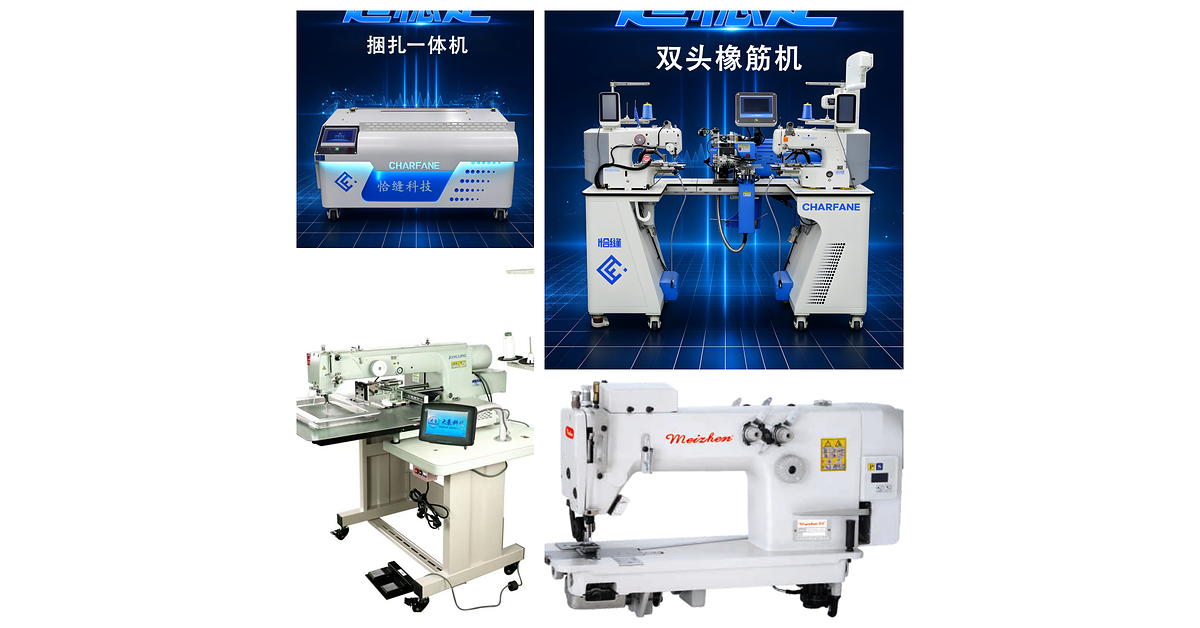
Baochuang estimates its overseas custom orders will rise about 20% this year versus last year, amid increased demand for sewing equipment as apparel manufacturing expands in Southeast Asia and Africa. The company says one worker can operate six of its automated machines, each producing more than twice the output of a traditional machine; Puma orders over 100 machines annually, with orders valued at about RMB 4 million a year. Meizhen reports that nearly 90% of its orders have come from overseas since 2025 and recently delivered more than RMB 5 million of machines for an Indonesian government procurement project.
Analysis
The investable read-through is supply-chain productivity, not a meaningful near-term earnings event for PUMA SE (XETR: PUM). The reported equipment relationship suggests automation is helping factories in newer production locations address labor-skill and throughput constraints; over 6–18 months, that could make supplier relocation more feasible and reduce labor intensity per unit. It may also raise the importance of machinery uptime, operator training, and local service coverage: if those fail, nominal automation gains will not translate into reliable deliveries. The article is promotional and provides no independent confirmation of orders, factory adoption, PUMA’s sourcing mix, or realized cost savings. The cited supplier relationship therefore supports a hypothesis, not a PUMA margin estimate.
Near term, expect little fundamental repricing from this item alone. Over the next 1–3 months, the useful catalysts are PUMA disclosures on sourcing geography, supplier productivity, lead times, and inventory—not further vendor claims. The structural upside is more flexible supplier capacity in Southeast Asia and Africa; countervailing risks include execution delays, uneven utilization, service/spares dependence, and trade-policy disruption. The contrarian point: automation can enable geographic diversification without necessarily lowering total delivered cost, since equipment, training, and maintenance add costs. The thesis weakens if PUMA reports no meaningful sourcing shift or if delivery reliability and unit costs do not improve.
AllMind Terminal
AI-powered research, real-time alerts, and portfolio analytics for institutional investors.
Request TrialMarket Sentiment
Overall Sentiment
mildly positive
Sentiment Score
0.35
Ticker Sentiment
Key Decisions for Investors
- No standalone PUM trade on this article: treat it as a low-confidence operational signal, not an earnings catalyst.
- Add a watch item for PUMA’s next guidance and supply-chain commentary: look for evidence of sourcing diversification, shorter lead times, or improved supplier productivity before revisiting the margin thesis.
- If independently confirmed adoption coincides with improved delivery metrics, consider a modest PUM long only as part of a broader view on resilient apparel supply chains; exit or reassess if guidance, inventory, or delivery performance deteriorates.
- Do not extrapolate the reported vendor-level order figures into PUMA-wide revenue or cost savings; the article lacks consolidated scale, sourcing exposure, and realized productivity data.
More News
- US-Iran war, then and now: How the landscape has changed since February
- With earnings in rearview mirror, SpaceX-Tesla merger chatter takes center stage
- Looters hit 3,000 French businesses. Within hours, the haul was trending on Vinted under the riot’s date
- Energy markets are adapting to the Iran war as a ‘forever conflict’ while oil producers keep supplies flowing and avoid ‘mutually assured destruction’
- Apple’s $2,000 iPhone Duo Debuts With Limited Supply
- Are global oil reserves sufficient to withstand renewed US-Iran war?