
Jixingfeng Strengthens Smart Manufacturing of High-Performance Socks with Advanced Materials and Specialized Production
Source: PR Newswire
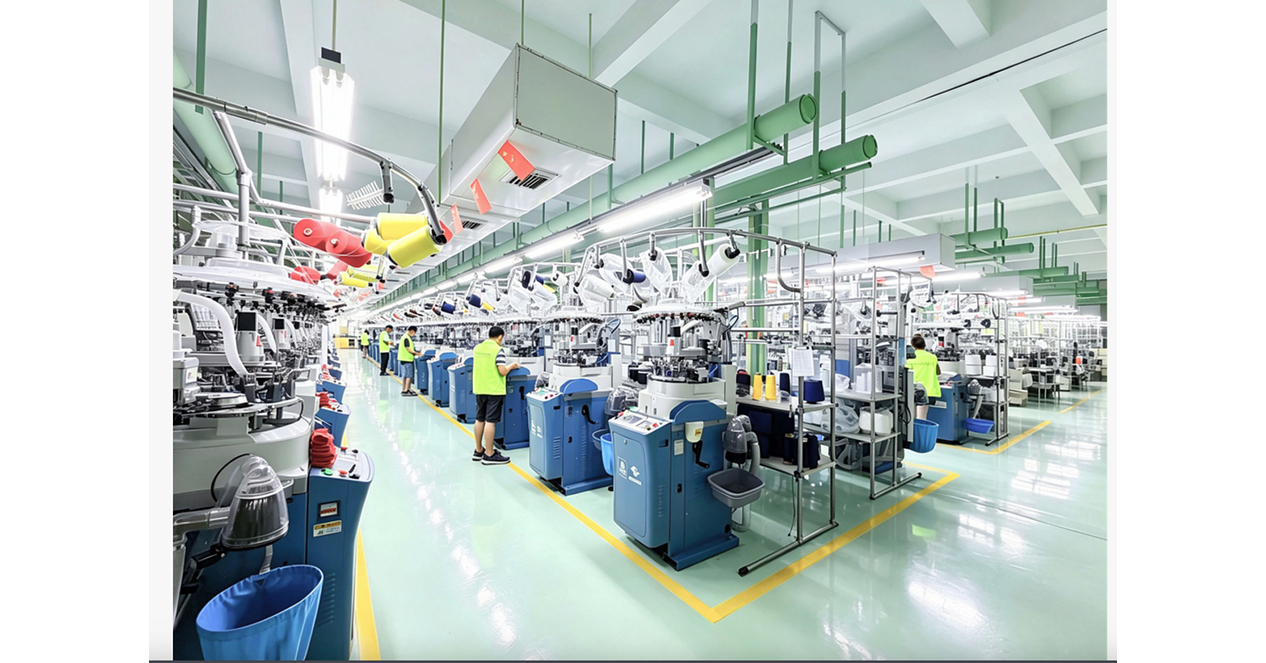
Jixingfeng is upgrading smart manufacturing for functional socks, supported by a 19,000-square-meter factory, roughly 570 knitting machines, and daily capacity exceeding 170,000 pairs. The company is targeting a performance-socks market projected to grow from $1.8 billion in 2025 to $2.809 billion by 2032, a 6.6% CAGR, through advanced materials, digital printing, and specialized sports and medical products. About 60% of its output is exported to the U.S., Europe, and Australia, while scaled production of recycled and Sorona bio-based yarn socks expands its sustainable-product offering.
Analysis
This is not a near-term earnings signal for BASF (BAS) or Lenzing (LNZ): a single OEM's claimed capacity expansion is far below the scale required to affect either supplier's volumes, pricing, or valuation. The investable implication is instead a modest confirmation that functional apparel brands are pushing product differentiation into low-ticket accessories, where moisture management, compression, seamless construction, and sustainability claims support higher ASPs without materially increasing consumer basket size.
The second-order risk falls on undifferentiated cotton-hosiery suppliers and brands relying on basic private-label assortments. Faster prototyping and lower minimum-order capability can shorten product cycles, reduce inventory risk for sportswear retailers, and increase supplier switching power; however, it may also intensify price competition among Chinese OEMs once the equipment and design capabilities diffuse. Claims around medical and diabetic products should not be capitalized until there is evidence of regulatory clearance, clinical substantiation, or contracts with healthcare distributors.
For BAS, specialty-polymer and functional-yarn exposure is too diluted within the broader chemicals cycle to justify a position from this development. LNZ has relatively more direct strategic relevance through cellulosic-fiber adoption, but the key earnings variable remains branded-fiber pricing, utilization, and retailer replenishment rather than announced OEM capability. The contrarian view is that "bio-based" and recycled-content sock launches may cannibalize conventional fiber demand rather than create net new volume if consumers remain unwilling to pay a sustained premium.
AllMind Terminal
AI-powered research, real-time alerts, and portfolio analytics for institutional investors.
Request TrialMarket Sentiment
Overall Sentiment
mildly positive
Sentiment Score
0.28
Ticker Sentiment
Key Decisions for Investors
- No standalone trade in BAS or LNZ on this release; treat it as a low-materiality supplier-demand datapoint rather than a forecast revision catalyst.
- Set a 1-3 month watch alert for LNZ: upgrade only if branded/modal fiber order commentary, utilization, or pricing improves across multiple apparel OEMs and retailers. A broad-based recovery would be more actionable through long LNZ versus a short commodity-textile proxy, not an outright position based on one factory.
- For consumer exposure over 6-18 months, monitor athletic-apparel names with accessory-led gross-margin opportunities, including NKE, LULU and DECK. Initiate only after evidence that functional accessories are growing faster than footwear/apparel units; the thesis is falsified if elevated promotions prevent ASP realization.
- Avoid assigning healthcare multiples to functional-hosiery suppliers absent product classification, reimbursement, or regulated-channel evidence. Any announcement of diabetic-sock commercialization without these milestones should be viewed as marketing-driven and potentially a short-term sentiment fade, not a durable revenue catalyst.
More News
- Are global oil reserves sufficient to withstand renewed US-Iran war?
- OpenAI Trims Target Value & Volvo Cars Cuts 2,500 Jobs
- PG&E’s CEO says AI is ‘the best thing that could’ve ever happened to the grid’
- The mobile ambitions of SpaceX see telecom stocks get hit again. What the latest developments mean.
- Defense giant Saab sees orders triple after Gripen fighter jet deal with Ukraine
- Volvo Cars shares plunge 25% amid China sales slump and fresh job cuts
From AllMind Research
- Anthropic IPO Preview: Valuation, Timing, and What to Watch
- Shein After the IPO: Venue, Valuation, and What Must Be Proved
- What AI Research Tools Should a Small Hedge Fund Buy First?
- AI Tools for Private Equity Due Diligence: A Buyer Workflow
- Weekly Update: In-App Tutorials, Futures Data, and Watchlist Enhancements