
India Proprietary Trading Slumps on Auction Liquidity Woes, Trading Curbs
Source: Bloomberg
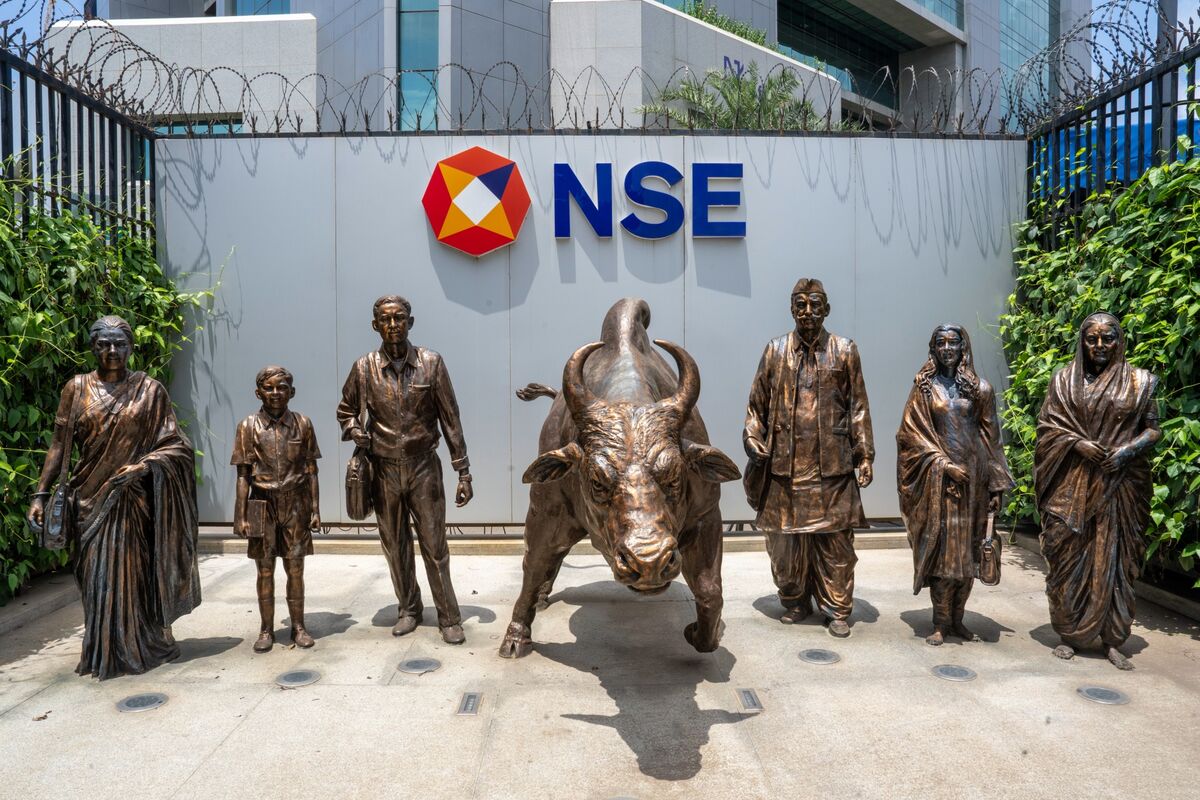
India’s proprietary trading activity has fallen to a four-year low as closing auctions contend with thin liquidity and amplified price swings. The market backdrop is otherwise supportive: oil prices have declined for four straight sessions and Wall Street posted its best day since early August, potentially extending the local equity rally. Closing-auction liquidity problems remain a market-structure risk for Indian equities.
Analysis
The more actionable signal is market-structure fragility rather than a broad India risk-off call. Reduced proprietary participation makes closing prints less informative, raises implementation shortfall for index funds and benchmarked global investors, and can mechanically widen NAV-to-underlying dislocations in INDA and EPI on rebalance days. The near-term effect is likely concentrated in the most index-sensitive, lower-float Indian large caps; a thin close can create false technical breaks that reverse during the following session rather than signal a change in fundamentals.
Lower crude is a favorable incremental input for India’s external balance, INR stability and domestic cyclicals, but the transmission to equities depends on whether the oil move reflects improved supply or weakening global demand. Over the next 1-3 months, sustained softer crude should reduce inflation-tail risk and preserve room for RBI accommodation, supporting financials and consumer exposure through INDA/EPI. The contrarian point is that a liquidity-impaired close can amplify foreign-flow narratives in either direction: a sharp ETF move should be treated as a trading-liquidity event unless confirmed by INR, local bank funding conditions and persistent FPI flows.
META’s read-through is weak. AI-agent optimism can support the high-duration platform complex, but the relevant earnings catalyst is monetization evidence—agent-driven advertising conversion, engagement, or incremental business messaging revenue—not headline enthusiasm. Without an estimate revision cycle, upside is vulnerable to multiple compression if rates rise or AI capex remains ahead of disclosed revenue contribution over the next two quarters.
AllMind Terminal
AI-powered research, real-time alerts, and portfolio analytics for institutional investors.
Request TrialMarket Sentiment
Overall Sentiment
mixed
Sentiment Score
-0.15
Ticker Sentiment
Key Decisions for Investors
- Do not initiate a directional India position solely from the closing-auction signal. For existing INDA/EPI exposure, avoid market-on-close execution for the next 4-6 weeks; use VWAP or intraday limits and monitor closing-auction volume as a percentage of daily turnover.
- If Brent remains below its 50-day moving average for 3-4 weeks while INR is stable, add a tactical 1-3 month long INDA versus short EEM position. The thesis is India’s relatively greater oil-import sensitivity; exit if Brent rebounds more than 10% from entry or INR weakens materially against the dollar.
- Treat any 3%+ one-day INDA/EPI divergence from local-market fundamentals as a mean-reversion alert, not an automatic entry. Validate with FPI flow data, USD/INR and next-day opening liquidity before trading; thin closing volume is the missing confirmation needed for a recommendation.
- Maintain META as a catalyst-driven hold rather than add on broad AI sentiment. Add only if upcoming results show accelerating ad pricing or measurable AI/business-messaging revenue while 2027 capex expectations remain contained; reduce if capex rises without corresponding revenue guidance, which would challenge the current multiple support.
More News
- +17% in a single session: This AI-picked stock catches a data-center breakout
- Asia stocks rise tracking U.S. tech rally; Trump-Xi meeting eyed
- Intel surges 12% as CPU stocks rally. Here's what's driving the move
- Gold rises as oil slide eases inflation fears, Trump signals Iran talks
- Asia energy stocks slip as oil clocks protracted losses
- Investors discover their new favorite consumer AI play in Meta. Options volume is surging
From AllMind Research
- Anthropic IPO Preview: Valuation, Timing, and What to Watch
- Shein After the IPO: Venue, Valuation, and What Must Be Proved
- What AI Research Tools Should a Small Hedge Fund Buy First?
- Reading Conviction in the Tape: What Level 3 Order Book Data Really Tells Discretionary PMs
- AI Tools for CFA Charterholders: An Evidence Standard