
Rika Water Quality Sensors Support Faster Liquid Cooling Commissioning for High-Density AI Data Centers
Source: PR Newswire
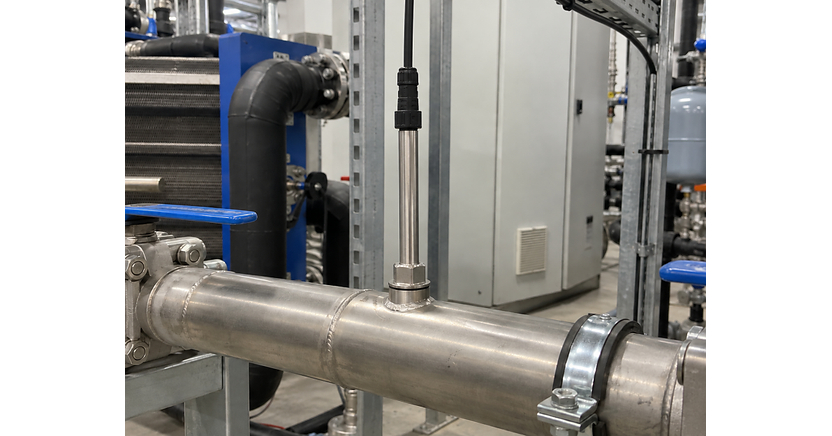
Rika Sensor says it supplied 86 pre-calibrated monitoring units for the first phase of a Dubai hyperscale data center with 2,000 high-density cabinets; installation took less than 15 minutes per monitoring point, with no field calibration required. In a separate Bavaria Tier IV data center project, 24 units were installed across 12 racks, and two abnormal-reading points were relocated after investigation found they were too close to chemical injection ports. The company presents factory configuration and early integration as ways to support faster liquid-cooling commissioning; the article is a company announcement and reports no financial results or market reaction.
Analysis
The investable read-through is a modest reduction in liquid-cooling deployment friction, not evidence of meaningful sensor revenue or a new demand inflection. Pre-configured monitoring can move work from scarce on-site commissioning labor to factory preparation, potentially reducing schedule risk and making operators more comfortable scaling liquid-cooled halls. The second-order benefit accrues mainly to broader cooling and data-center infrastructure vendors—such as Vertiv (VRT), Schneider Electric (SU.PA), and Eaton (ETN)—if smoother commissioning accelerates deployment or increases monitoring requirements. Sensors themselves are likely a small part of project economics; commoditization, customer qualification cycles, and integration with existing BMS platforms limit the inference that Rika’s approach creates durable pricing power.
The examples are company-reported and do not establish repeat orders, independently verified performance, or adoption across a meaningful share of projects. The Bavaria commissioning issue also highlights the operational risk: bad sensor placement can undermine confidence in the data even when the device works. Factory configuration shifts, rather than eliminates, validation and integration risk.
Near term (days), this is not a credible catalyst for listed equities. Over 1–3 months, watch hyperscaler and colocation commentary for commissioning delays, liquid-cooling deployment rates, and supplier order trends. Over 6–18 months, standardized monitoring and handover workflows could support higher attach rates, but buyer standards and incumbent controls ecosystems may determine who captures value. The contrarian point: the bottleneck may be system integration and commissioning capacity, not sensor availability; faster sensor installation alone does not unlock deployments. Thesis weakens if liquid-cooling schedules remain constrained despite monitoring upgrades, or if operators treat these devices as low-cost, interchangeable components.
AllMind Terminal
AI-powered research, real-time alerts, and portfolio analytics for institutional investors.
Request TrialMarket Sentiment
Overall Sentiment
mildly positive
Sentiment Score
0.10
Key Decisions for Investors
- No standalone trade on this release: Rika has no supplied public ticker identity, and the reported projects do not establish scale, repeatability, or financial materiality.
- Watch VRT, Schneider Electric (SU.PA), and ETN as broader infrastructure read-throughs, but require evidence in orders, backlog conversion, or management commentary tying commissioning efficiency to deployment before adding exposure.
- Due-diligence alert: verify repeat deployments, customer references, sensor replacement and calibration intervals, integration costs, and whether operators standardize on a specific monitoring platform; these determine whether value accrues to sensors or incumbent controls vendors.
- Falsification/watch item: if liquid-cooling project delays persist for reasons unrelated to monitoring, or operators do not expand monitoring scope after commissioning, the proposed schedule and attach-rate benefit is immaterial.
More News
- Taiwan agrees to buy 30% of gas from Alaska LNG project, Trump says
- South Korean carmaker Hyundai plans 'strategic' investment of $15.5 billion in India by 2032
- Houthis Hit Saudi Aramco Headquarters in Missile Attack
- Applied Materials’ $5 billion AI lab aims to cut chip development time in half—and restore Silicon Valley’s edge
- Wells Fargo CFO on Earnings, Deals, Consumer Strength
- Bank of America hit with more than $1.2 billion in penalties over money-laundering violations