
US-China Trade, AI Take Center Stage at Trump-Xi Summit: Podcast
Source: Bloomberg
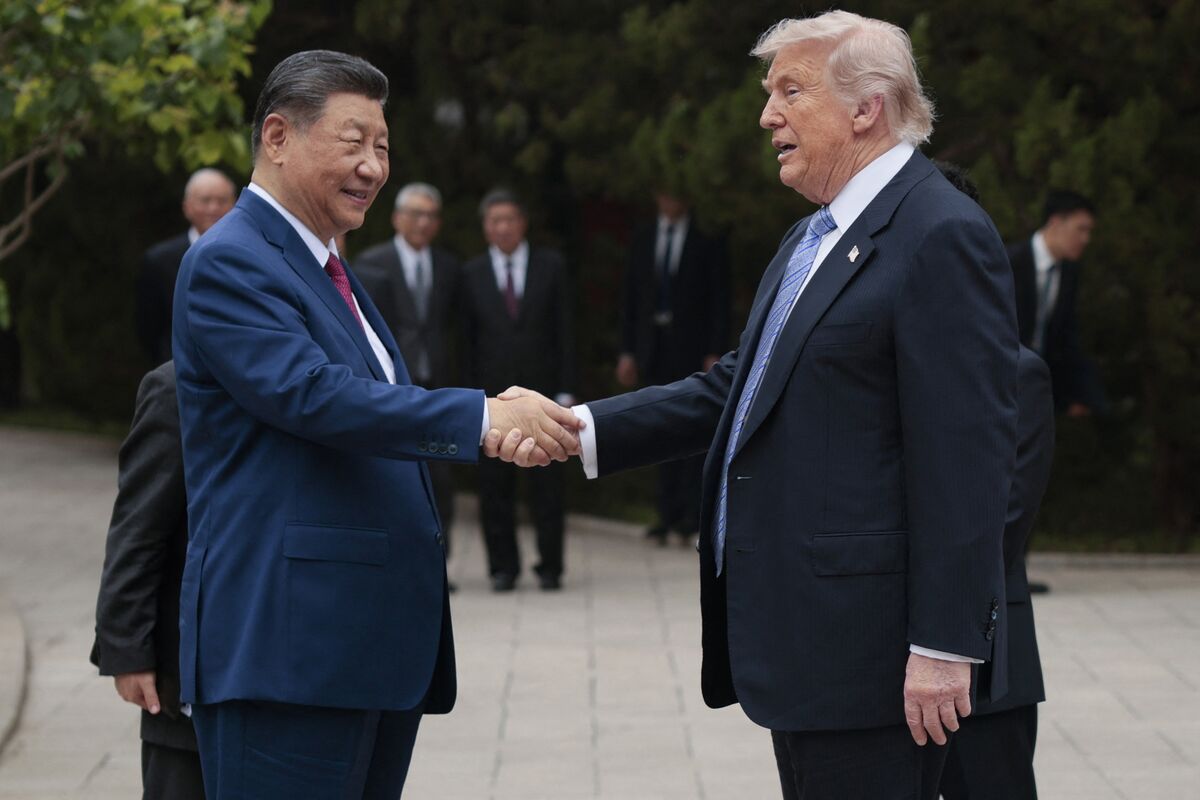
Chinese President Xi Jinping's first Washington visit in more than a decade will center on trade relations and the AI race in talks with President Donald Trump. The high-stakes summit could influence U.S.-China policy direction, though the article provides no announced agreements, policy actions, or financial figures.
Analysis
The investable issue is not summit optics but whether any language translates into enforceable changes to export controls, tariff exemptions, or market-access rules. Semiconductor equipment (AMAT, LRCX, KLAC), China-exposed handset/compute supply chains (AAPL, QCOM, AVGO), and industrial automation names (TER, ROK) have the highest near-term headline beta because their valuation multiples embed varying degrees of China revenue normalization. A vague détente is likely insufficient to change earnings estimates; a specific licensing or tariff mechanism could drive a 5-10% relative move in the affected baskets within days.
The asymmetric risk remains that AI becomes the negotiating currency rather than an area of compromise. Any perceived loosening of US controls would support China-sensitive semiconductor demand, but could simultaneously dilute the scarcity premium awarded to domestic AI infrastructure beneficiaries such as NVDA and data-center suppliers. Conversely, tougher implementation or broader entity restrictions would initially favor US-based AI leaders but create second-order inventory corrections for equipment and component vendors with China exposure over the following one to two quarters.
Consensus may overvalue a near-term bilateral reset. Corporate procurement and supply-chain relocation decisions require policy durability, not diplomatic rhetoric; manufacturers are unlikely to reverse diversification until tariff and licensing rules survive several quarters. The more durable beneficiaries of continued uncertainty are Mexico/ASEAN production proxies and automation providers, while companies dependent on discretionary China AI-capex recovery face the greatest estimate risk.
There is no high-conviction directional trade before verifiable policy details emerge. The key falsifiers are formal changes to export-control licensing, tariff schedules, or company guidance on China demand; absent those, any summit-driven equity move should be treated as positioning rather than a fundamental rerating.
AllMind Terminal
AI-powered research, real-time alerts, and portfolio analytics for institutional investors.
Request TrialMarket Sentiment
Overall Sentiment
neutral
Sentiment Score
0.00
Key Decisions for Investors
- Maintain a 1-3 month relative hedge: long XSD or SOXX against a basket short of China-sensitive semiconductor equipment exposure (AMAT, LRCX, KLAC) only if summit headlines trigger a 5%+ equipment rally without licensing relief. Target 8-12% relative downside on policy disappointment; exit if formal rules expand permissible China sales.
- Watch-list AAPL, QCOM, and AVGO for a post-meeting entry rather than buying the initial headline move. Initiate only after management commentary or supplier data indicates renewed China order visibility; a policy statement without demand evidence does not justify higher FY earnings assumptions.
- Use defined-risk protection around the event: buy 1-2 month SOXX put spreads if implied volatility remains below the prior policy-headline range. This hedges a downside scenario in which AI restrictions broaden; close if no concrete action appears within two weeks, as event premium should decay.
- For a 6-18 month structural allocation, prefer automation and non-China manufacturing beneficiaries (ROK, TER) over a pure China-reopening thesis. Reassess if tariff exemptions become multi-year and corporate capex guidance indicates supply-chain re-concentration rather than continued diversification.
More News
- Wall Street’s Nasdaq hits all-time high as AI frenzy gathers pace
- Oil falls on increased Gulf supply and hopes for US-Iran talks
- Data-Center Bet Makes ESDS One of India’s Best New Listings
- Dollar holds near 2-month high as markets weigh rate hikes, Iran diplomacy
- Asia stocks ride tech wave higher, oil stays subdued
- South Korean solar stocks jump as curbs on Chinese sector expected to remain in place