
Intel: Priced For Potential Of CPUs, Not For The Momentum Of The Foundry (Upgrade)
Source: seekingalpha.com
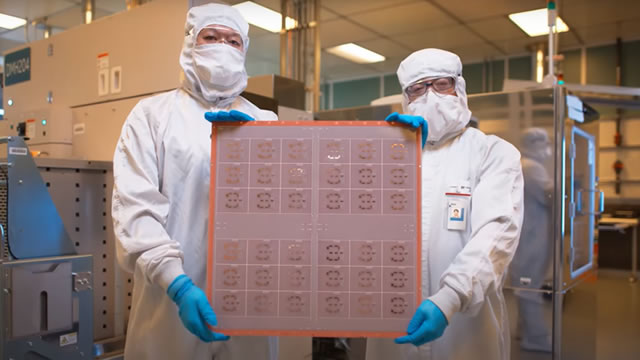
Intel completed a $20B share issuance to fund capex and working capital, aiming to strengthen its balance sheet and support “calculated bets.” Management frames the stronger equity base as important for funding emerging semiconductor opportunities driven by AI, though the deal introduces dilution for shareholders. Net impact is credit/balance-sheet supportive but carries modest near-term shareholder overhang risk.
Analysis
This is less a positive catalyst than a capitalization event: Intel is extending runway, not proving that incremental dollars will clear the cost of capital. Equity funding removes near-term liquidity overhang and can tighten credit perception, but it also confirms that operating cash flow is not yet sufficient to self-fund the ambition set, which keeps per-share value creation under pressure until the spend converts into visible margin/FCF inflection. In semis, that usually means the market rewards the suppliers of the capex first, not the issuer.
The second-order winners are the picks-and-shovels names tied to fab buildouts and process upgrades, especially equipment/consumables exposure (AMAT, LRCX, KLAC, ASML), because their revenue lands before Intel's payoff does. The loser is not only INTC equity holders via dilution; it is also any short-vol/liquidity narrative that assumed Intel would remain a constrained spender. If this capital raise funds a credible AI/foundry roadmap, the payoff is 6-18 months out; if not, it simply lengthens the runway for subscale investment and preserves a structural valuation discount versus asset-light peers (NVDA, AVGO, AMD).
Contrarian view: the market may be underestimating how much balance-sheet repair can stabilize sentiment into the next earnings cycle, so the stock may not break down immediately. But the thesis breaks if Intel shows faster-than-expected gross margin recovery, stronger foundry bookings, or a clear capex-to-revenue conversion within the next 1-2 quarters; absent that, any relief rally should be sold into.
AllMind Terminal
AI-powered research, real-time alerts, and portfolio analytics for institutional investors.
Request TrialMarket Sentiment
Overall Sentiment
mildly negative
Sentiment Score
-0.15
Ticker Sentiment
Key Decisions for Investors
- Prefer relative value over outright direction: short INTC vs long SOXX for 1-3 months. Thesis is that capex spend benefits the equipment basket faster than it benefits Intel equity; invalidate if Intel prints a clear FCF inflection or raises medium-term margin targets.
- If carrying single-name risk, fade strength in INTC rather than chase the de-risking narrative. Best entry is after the first post-deal bounce; target is a reversion to skepticism once dilution math is absorbed. Stop if the stock holds gains through the next earnings update and management backs them with order flow.
- Long AMAT or LRCX on any Intel-related weakness in the semiconductor complex. The trade captures the upstream capex multiplier with less execution risk than INTC; risk/reward is better over 3-6 months because revenue recognition is much faster than Intel's payoff horizon.
- Use AMD or AVGO as quality-long hedges against an INTC turnaround story. If Intel's balance sheet repair is the only improvement, competitive pressure on share and pricing remains intact; this pair works unless Intel demonstrates a genuine product-cycle win within 2 quarters.
More News
- New data shows Starbucks turnaround is working, but Chipotle takeover report slams shares
- Nasdaq 100: Tech Stocks Find Buyers as Dow Holds Firm Premarket
- TSMC taps GlobalFoundries to bolster US silicon interposer production in $2B deal
- S&P 500 futures are little changed after OpenAI's revenue report prompts tech sector turmoil: Live updates
- Trump gives top US science awards to Elon Musk and other tech executives
- Pilot killed in attacks by Iran-backed Houthis on Riyadh airport; Saudi-led coalition vows 'firm' response