
Trump Bans Canada Firms From US Government Contracts; Stock Prices Fall
Source: Bloomberg
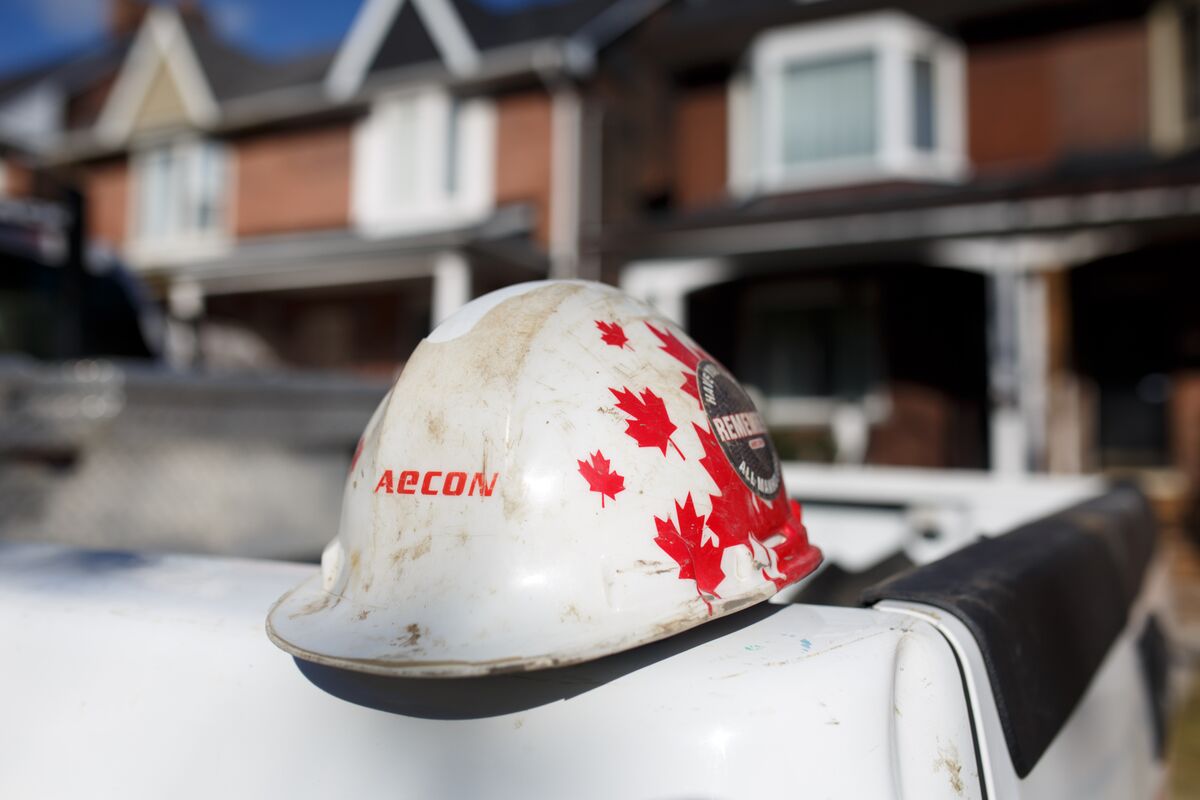
Canadian companies with US government contracts declined as Donald Trump planned a procurement ban, intensifying cross-border trade tensions. The proposed restriction creates a direct risk to Canadian exporters dependent on US public-sector purchasing, pressuring affected stocks and worsening investor sentiment.
Analysis
The transmission channel is less the lost revenue itself than a higher bid-cost and valuation discount for Canadian vendors reliant on U.S. public-sector frameworks. Procurement eligibility is often embedded in multi-year contract vehicles; exclusion risk can reduce win rates immediately while revenue deterioration appears only over subsequent renewal cycles. The most exposed businesses are likely defense, infrastructure engineering, IT services and specialty manufacturers with concentrated U.S. federal customers, where replacing demand through Canadian or provincial procurement would require lower-margin pricing.
Near-term, this is primarily a positioning and headline-risk event for Canada-sensitive equities rather than a broad earnings reset. A 1-3 month escalation path—formal agency guidance, country-of-origin certification requirements, or retaliatory Canadian measures—would create a more investable dispersion trade, particularly against firms with disclosed U.S. government revenue concentration. Over 6-18 months, a sustained procurement barrier would incentivize U.S. subsidiaries, local assembly and supply-chain relocation, favoring firms that already have U.S. operations while penalizing smaller exporters without balance-sheet capacity to duplicate production.
PLUS is not a clean expression of this thesis without confirmation of its Canadian sourcing, U.S. federal-contract exposure, and contract-country-of-origin requirements; the provided ticker may reflect newsletter metadata rather than an affected issuer. The contrarian case is that procurement restrictions become a negotiating instrument with broad waivers, leaving an initial Canadian-risk discount overdone. The thesis is falsified by explicit exemptions, lack of implementing guidance within 30-60 days, or disclosure that affected contract revenue is immaterial.
AllMind Terminal
AI-powered research, real-time alerts, and portfolio analytics for institutional investors.
Request TrialMarket Sentiment
Overall Sentiment
mildly negative
Sentiment Score
-0.35
Ticker Sentiment
Key Decisions for Investors
- Do not initiate a directional position in PLUS on this signal alone; require disclosure of U.S. public-sector revenue, Canadian content exposure and contract renewal timing before treating it as a procurement-ban proxy.
- Establish a 30-60 day watchlist of TSX-listed defense, engineering, IT-services and industrial suppliers with material U.S. federal revenue; short candidates require verified revenue concentration above 10% and limited U.S. manufacturing/subsidiary capacity.
- If formal implementation arrives without broad waivers, consider a tactical long SPY / short EWC pair for 1-3 months rather than indiscriminately shorting Canadian equities; use a 3-5% relative-performance stop because a negotiated exemption would rapidly unwind the country-risk premium.
- For existing Canadian industrial exposure, reduce names facing near-term U.S. government contract rebids and favor companies able to certify U.S. origin or shift final assembly domestically; reassess after agency guidance or first affected earnings call.
More News
- Here’s the ‘core economic flaw’ in the AI bull case as stock and bond trades unravel, according to a top economist
- Israelis hold final rally against Netanyahu ahead of what may be the most consequential election in the country’s history
- Lula, Bolsonaro rally supporters on final day before Brazil presidential runoff
- 5 big analyst AI moves: ’Uniquely catalyst-rich’ months ahead for SpaceX
- First Russian diesel tanker heads to New York after Trump's deal with Putin to lower fuel prices
- Qatar official calls for peace and security to boost trade, investment
From AllMind Research
- Anthropic IPO Preview: Valuation, Timing, and What to Watch
- Shein After the IPO: Venue, Valuation, and What Must Be Proved
- What AI Research Tools Should a Small Hedge Fund Buy First?
- Weekly Update: AI-Powered Report Editing, Investor Relations, and Enhanced Search
- Automating Financial Model Updates: A Source-Controlled Workflow