
GigU Makes Its Driver-Profit Tools Free across the U.S. and Launches on iPhone for the First Time
Source: PRWeb
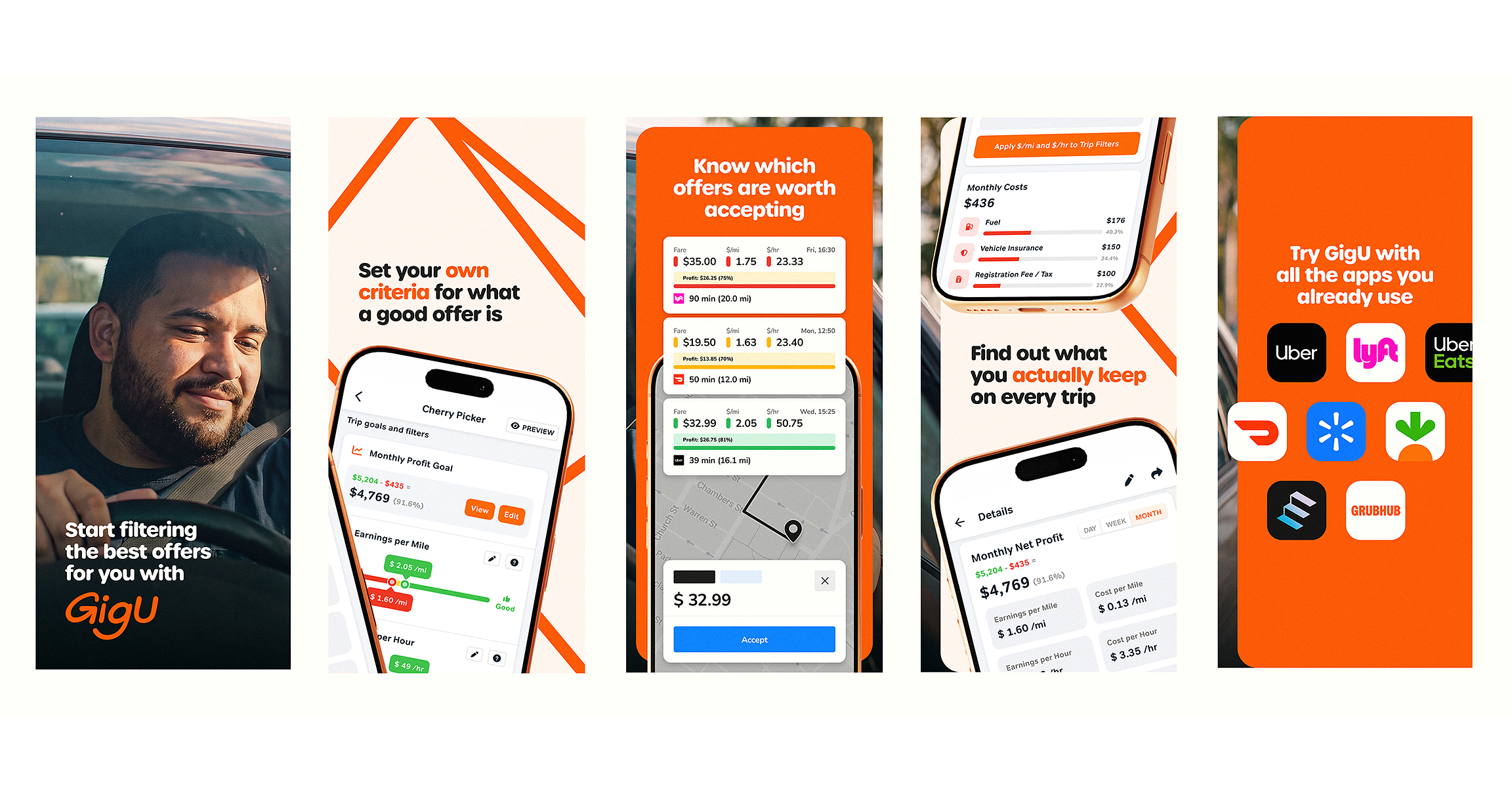
GigU made its full iOS and Android app free to all U.S. rideshare and delivery drivers through December 31, 2026, expanding access to its trip-profitability tools for a potential market of nearly 8 million workers. The company, which has more than 185,000 global subscribers and has raised nearly $4 million in seed funding, says users report earnings improvements of up to 30% from screening offers against operating costs. The launch comes as gig-driver unionization advances in California and Massachusetts, while Columbia research cited by GigU finds Uber's take rate has risen to more than 50% and many unregulated-city offers pay under $0.90 per mile.
Analysis
The relevant risk is not the app's claimed driver-income uplift, which is self-reported and unlikely to be material alone, but its potential to raise driver offer selectivity precisely as collective bargaining creates a coordination channel. If adoption reaches meaningful density in low-pay markets, more rejected marginal trips would force UBER and LYFT to clear supply through higher upfront driver incentives, longer rider ETAs, or reduced service coverage. The first-order exposure is gross-bookings growth and incentive intensity; the second-order exposure is lower algorithmic pricing flexibility, which has supported take-rate expansion.
LYFT is more vulnerable on a relative basis over the next 1-3 months: its smaller network has less ability to absorb localized driver rejection without visible ETA and reliability degradation, while its rider base is more price-sensitive. UBER's diversified delivery and international earnings base dilute U.S. mobility exposure, but its larger U.S. driver pool makes it the principal target of regulatory and labor narratives. November mediation eligibility in Massachusetts is the nearest discrete catalyst; California bargaining milestones can sustain a valuation-overhang through 2027 if wage floors or portable-benefit structures become templates for other states.
Consensus may overstate the near-term impact. Independent drivers are heterogeneous, and systematic cherry-picking can worsen driver utilization, offsetting higher trip-level economics; platforms can also rebalance dispatch, surge pricing, and rider fees quickly. This becomes investable only if third-party indicators show worsening U.S. marketplace health—rising incentives as a percent of gross bookings, deteriorating pickup times, or explicit commentary that driver acceptance/fulfillment is falling—rather than app-download headlines.
Over 6-18 months, the strategic risk is that external earnings data makes opaque pricing easier to challenge politically and enables de facto collective action without formal union density. That shifts the sector from an asset-light network-effect multiple toward a regulated local-utility framework, particularly in coastal states. The countervailing catalyst is a demand slowdown: weaker rider demand would reduce surge and make drivers less selective, temporarily restoring platform economics even without policy relief.
AllMind Terminal
AI-powered research, real-time alerts, and portfolio analytics for institutional investors.
Request TrialMarket Sentiment
Overall Sentiment
mildly positive
Sentiment Score
0.28
Ticker Sentiment
Key Decisions for Investors
- Maintain a modest LYFT underweight versus UBER through the Massachusetts November mediation window; express as short LYFT / long UBER dollar-neutral rather than an outright UBER short. Target a 5-10% relative move over 1-3 months; exit if LYFT reports stable or improving U.S. driver incentive intensity and pickup-time metrics.
- Do not initiate a directional UBER short on this release. Set an alert ahead of next earnings for U.S. Mobility driver incentives, fulfillment/ETA commentary, and take-rate guidance; a guidance cut or 100bp-plus incentive-rate increase would justify buying 3-6 month UBER put spreads.
- For broad regulatory exposure, consider a small long CARS or consumer-discretionary transport basket only as a hedge against ride-hail price pass-through; avoid treating GigU adoption claims as a standalone catalyst until independent iOS/Android download and active-user data demonstrate sustained U.S. scale.
- Monitor Massachusetts mediation and California bargaining for precedent-setting minimum-compensation, benefits, or data-transparency terms. If either includes mandatory trip-level pay disclosure or enforceable floors, increase the LYFT-underweight/UBER-underweight beta hedge, as those provisions are more economically significant than union recognition alone.
More News
- California Gov. Gavin Newsom bans AI 'robo bosses' in landmark state law, reversing his earlier veto
- Palo Alto Networks’ Nikesh Arora is building a defense against the dark side of AI
- DoorDash launches an AI agent you can text to order food
- In photos: China's Xi hardens Taiwan warning as country celebrates week-long National Day holiday
- Tencent leases 100,000 chips from Oracle for $7 bln- FT
- RAM supply set to worsen, says Micron, as CEO celebrates ‘much higher’ prices