
Love & Honey Fried Chicken Targets Massachusetts for Franchise Expansion, Building on East Coast Momentum
Source: PR Newswire
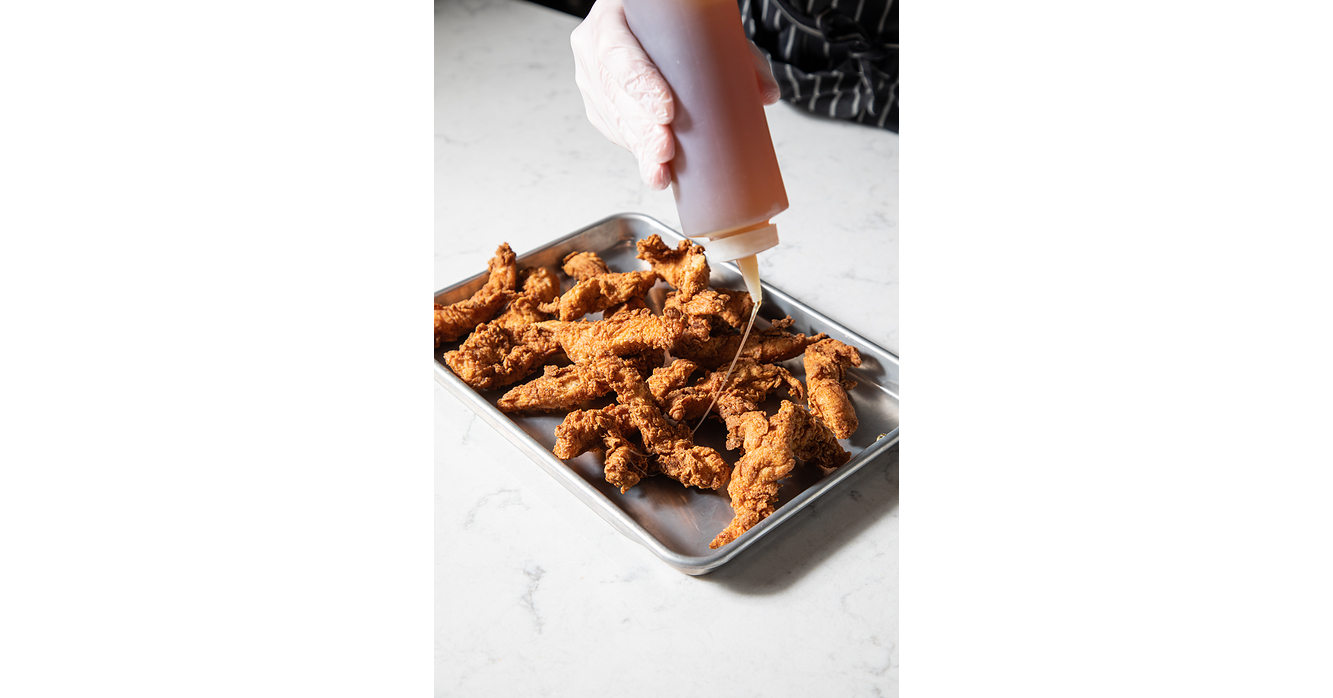
Love & Honey Fried Chicken is seeking experienced multi-unit franchisees to enter Massachusetts, targeting Greater Boston, Cambridge, Somerville, Worcester, Springfield, and the South and North Shores. The Philadelphia-founded fast-casual chain is building on a recent Cranston, Rhode Island opening and supports expansion through a national Sysco supply agreement, a $5,000 veteran franchise-fee discount, and multi-unit incentives. The announcement signals incremental Northeast growth but provides no unit-opening targets, sales figures, or financial projections.
Analysis
This is immaterial to Sysco's near-term earnings, but directionally reinforces the value of national-distribution agreements with emerging regional chains: customer growth can add route density and improve warehouse/last-mile utilization before it becomes visible as meaningful revenue. The relevant read-through is not a single franchise concept, but whether independent and franchised fast-casual openings continue to offset traffic pressure among existing restaurant accounts.
For SYY, incremental volume from small concepts is generally lower-margin than large national-chain contracts, while a broader mix of multi-unit franchisees can reduce customer concentration and support pricing realization. The greater risk is execution: premium chicken concepts face labor intensity, volatile poultry costs, and high Northeast occupancy costs; weak unit economics would limit rollout and leave distributor volume expectations unsupported. There is no independently verifiable unit pipeline, opening schedule, or purchasing-volume commitment here.
Over the next 1-3 months, this is not a standalone catalyst. The investable signal is in SYY's quarterly local-case-volume growth, restaurant customer retention, and gross-margin trajectory; sustained positive independent-restaurant volume alongside stable margins would support the thesis that new-unit formation is improving distribution leverage. Over 6-18 months, an acceleration in franchise development would be modestly supportive for broadline distributors, but it is too small to alter SYY valuation absent corroboration across its customer base.
Contrarian view: investors may over-credit restaurant expansion announcements as foodservice demand indicators. New restaurant supply can cannibalize incumbent operators, and high-density Massachusetts markets are especially susceptible to discounting and closures if consumer traffic weakens. Until confirmed openings and sales volumes emerge, the more likely market impact is zero rather than a meaningful positive revision to SYY estimates.
AllMind Terminal
AI-powered research, real-time alerts, and portfolio analytics for institutional investors.
Request TrialMarket Sentiment
Overall Sentiment
mildly positive
Sentiment Score
0.28
Ticker Sentiment
Key Decisions for Investors
- No incremental SYY position based on this release; retain any existing fundamental view and wait for reported local-case-volume growth and food-cost inflation commentary in the next earnings cycle.
- Set a SYY watch trigger: consider a tactical long only if quarterly case volumes accelerate while gross margin holds or expands; this would indicate route-density benefits are exceeding competitive pricing pressure. Falsifier: volume growth decelerates or margin contracts despite favorable food inflation.
- Monitor publicly disclosed franchise openings and distributor relationships over the next 6-12 months rather than treating stated market interest as a pipeline. A confirmed multi-unit rollout remains too small on its own to justify an earnings-model change.
- For a broader restaurant-demand expression, prefer waiting for corroborating same-store sales and distributor volume data before positioning long SYY versus short a restaurant ETF; the current evidence does not establish incremental consumer demand versus market-share redistribution.
More News
- Meta announces new lightweight virtual reality glasses to one-up Apple’s Vision Pro
- Here's what happens to the economy when Treasury yields soar like they are now
- Oil industry warns a diesel export ban will raise fuel prices as Trump weighs restrictions
- SoftBank shares jump over 7% after $11.1 billion bond issuance to fund OpenAI bet
- Meta's standoff with Amazon over Muse could be a sign of things to come
- Oil's losing streak, Trump at the UN, Royal Caribbean's Sandals stake and more in Morning Squawk
From AllMind Research
- Anthropic IPO Preview: Valuation, Timing, and What to Watch
- Shein After the IPO: Venue, Valuation, and What Must Be Proved
- What AI Research Tools Should a Small Hedge Fund Buy First?
- The Great Divergence: North American Banking at the Crossroads of Monetary Policy and Agentic AI (Q4 2025 Bank Earnings)
- AI for M&A Target Screening: From Universe to Deal File