
AI Supply Chain Indexes Launched by MSCI So Investors Can Hedge AI Bubble
Source: Bloomberg
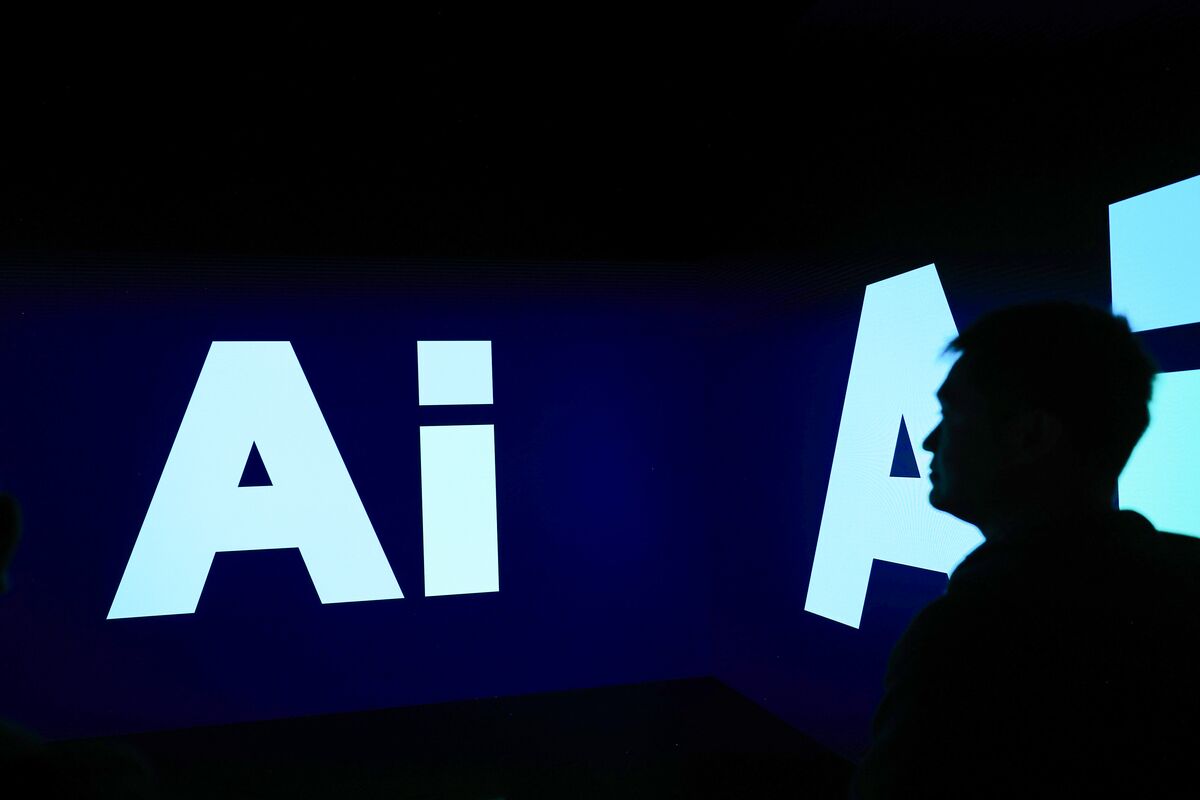
MSCI launched new indexes intended to let investors identify and hedge more targeted exposure across the AI supply chain. The products address demand for differentiated positioning in the AI boom, including for investors seeking to isolate segments they believe could withstand a broader AI-market correction.
Analysis
The investable implication is less a near-term earnings event for MSCI than a market-structure catalyst: standardized AI supply-chain classifications can channel passive and derivative flows toward a narrower set of semiconductor, power, networking, data-center and software exposures. That raises the probability of persistent valuation dispersion within broad technology benchmarks, particularly where companies currently receive an undifferentiated “AI beneficiary” premium despite radically different revenue conversion and capex burdens.
For MSCI, the upside is recurring index licensing and potential ETF/structured-product assets rather than a meaningful one-off product fee. The more valuable outcome is if asset managers adopt the taxonomy as a benchmark for mandates, which creates switching costs and supports the company’s premium multiple; this is a 6-18 month adoption question, not a next-quarter driver. S&P Global (SPGI), Nasdaq (NDAQ), and LSEG are likely competitive responses, limiting any claim that AI indexing alone changes MSCI’s earnings trajectory.
The second-order effect is that better hedging instruments could reduce the use of broad QQQ or SOXX hedges for AI-specific risk. That may lower correlations among AI-adjacent equities during earnings and capex shocks, favoring relative-value portfolios over directional beta. Contrarian view: if the resulting baskets simply repackage the same mega-cap and semiconductor concentration already embedded in existing ETFs, demand will be modest and the new products will amplify crowded-factor drawdowns rather than create clean hedges.
Near-term, monitor whether liquid ETFs, futures, or options are listed and whether AUM reaches a commercially relevant threshold; without that evidence, the announcement is not a standalone catalyst. The thesis is falsified if competing providers win flagship ETF mandates, MSCI reports no acceleration in index-asset-linked revenue, or AI-basket constituent overlap with QQQ/SOXX remains sufficiently high that hedge basis risk is unchanged.
AllMind Terminal
AI-powered research, real-time alerts, and portfolio analytics for institutional investors.
Request TrialMarket Sentiment
Overall Sentiment
neutral
Sentiment Score
0.10
Ticker Sentiment
Key Decisions for Investors
- No immediate directional trade in MSCI solely on the product launch; place a 1-3 month alert for ETF sponsor adoption, listed options/futures, and management disclosure of index-linked AUM or licensing wins.
- If a liquid AI-supply-chain ETF launches with meaningful creation activity, consider a market-neutral dispersion book: long higher-quality infrastructure beneficiaries with externally verifiable AI revenue or utilization growth and short capital-intensive, low-revenue-conversion constituents. Size only after constituent weights and borrow availability are known.
- Maintain MSCI versus SPGI as a watchlist pair rather than an active position: go long MSCI/short SPGI only if MSCI demonstrates benchmark-mandate wins or index-linked revenue acceleration over the next 2-4 quarters. Exit if SPGI or LSEG captures the principal product distribution channel.
- For existing concentrated AI exposure, test the eventual basket hedge against QQQ and SOXX through a 60-90 day beta and drawdown analysis before replacing broad hedges; use it only if it materially reduces basis risk during semiconductor earnings and hyperscaler capex revisions.
More News
- Asian stocks dip, bonds in focus after torrid September
- South Korea’s exports hit record high on AI boom
- September Ends on a Grim Market Note: Evening Briefing Americas
- RAM supply set to worsen, says Micron, as CEO celebrates ‘much higher’ prices
- Tencent leases 100,000 chips from Oracle for $7 bln- FT
- Asia stocks rise on chipmaker gains, soft U.S. inflation; Nikkei outperforms
From AllMind Research
- Anthropic IPO Preview: Valuation, Timing, and What to Watch
- Shein After the IPO: Venue, Valuation, and What Must Be Proved
- What AI Research Tools Should a Small Hedge Fund Buy First?
- Alternative Data Due Diligence for Institutional Investors
- Introducing AllMind: A New Data & AI Workspace for Institutional Investors