
New research: Retailers without onsite AI search risk losing shoppers to ChatGPT and Claude
Source: PRWeb
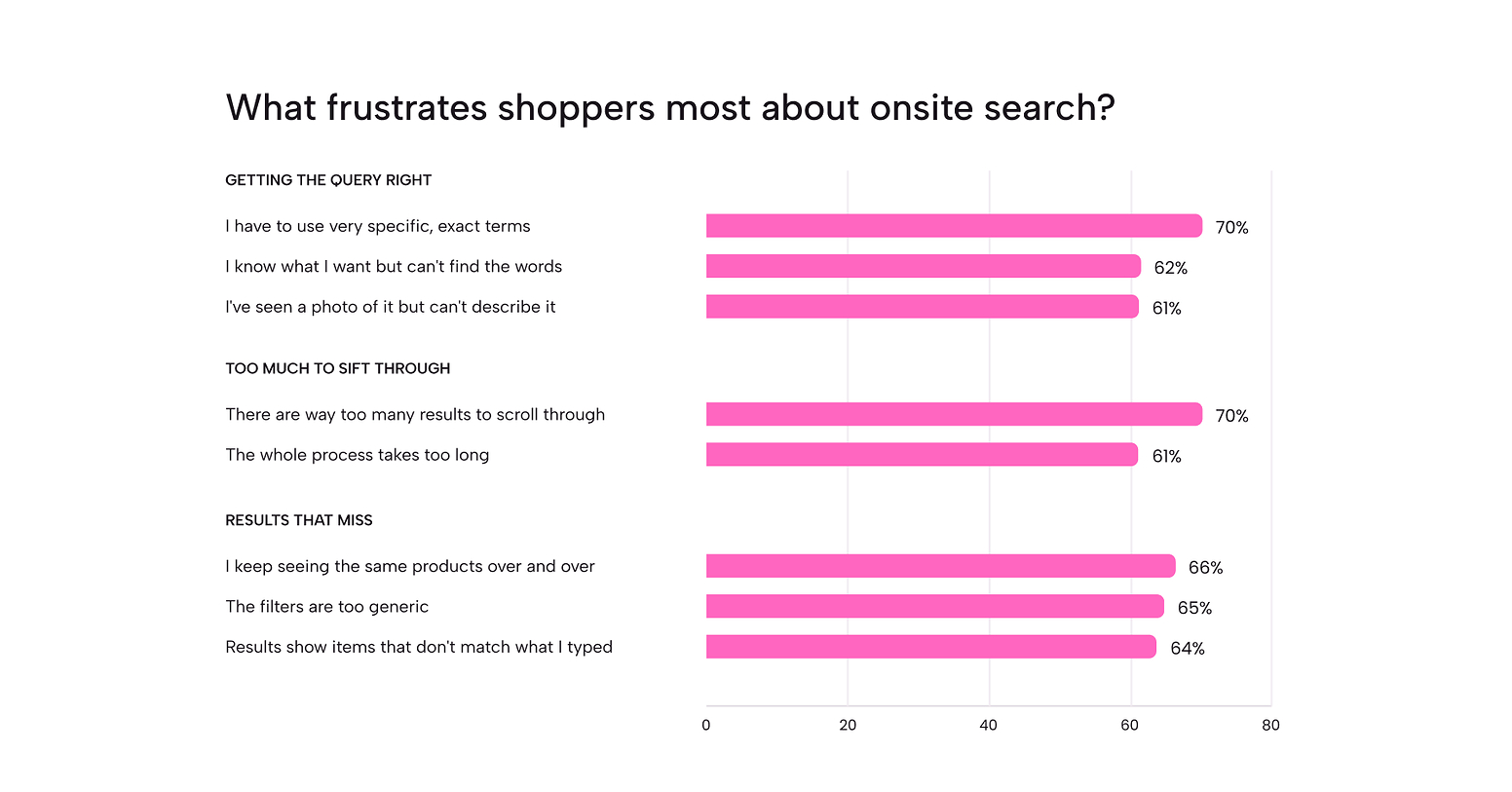
Nosto-commissioned survey data show 59% of US and UK consumers often abandon ecommerce sites because of poor onsite search, while 40% would turn to AI assistants such as ChatGPT or Claude after irrelevant results. Retailer adoption potential is significant: 72% of respondents have tried or are open to AI-enhanced onsite search, and 63% say an AI assistant that refines queries would help. However, deployment will require trust safeguards, with 73% concerned about personal-data collection, 71% worried about profit-biased recommendations, and 69% seeking the ability to revert to traditional search.
Analysis
This is not a near-term demand signal for FIGS or DOU; it is a conversion-rate and customer-acquisition-cost signal. Better product discovery raises the value of proprietary first-party catalog, inventory, and behavioral data, favoring scaled retailers that can connect search relevance to availability, fulfillment and returns. The likely economic split is between retailers deploying embedded AI search as a low-friction conversion tool and smaller merchants that increasingly surrender high-intent discovery traffic—and potentially customer ownership—to Google, OpenAI and Anthropic.
For FIGS, conversational discovery could be incrementally useful in reducing assortment-search friction across fit, specialty, color and workplace requirements, but the impact is unlikely to move estimates without evidence of measurable conversion or repeat-purchase lift. DOU has greater structural exposure because beauty discovery is high-SKU, preference-led and naturally suited to guided recommendations; however, recommendation systems can also steer demand toward higher-margin private-label or sponsored products, creating a trust/regulatory risk if disclosures are inadequate. Privacy and dark-pattern scrutiny is a more material medium-term risk in the UK/EU than the survey implies, especially where personalization uses sensitive customer attributes.
The consensus error would be treating AI search as a standalone software-spend boom. Retailers will adopt only where gross-profit lift exceeds inference, integration and merchandising costs; generic chat interfaces may reduce retailer traffic but are weak substitutes for real-time pricing, local availability, loyalty benefits and returns handling. Over the next 1-3 months, watch earnings calls for disclosed search conversion, attach rate, digital penetration and AI-commerce capex rather than consumer-intent surveys. Over 6-18 months, the more investable beneficiaries are enterprise commerce-stack vendors with distribution and first-party-data integrations—Salesforce (CRM), Adobe (ADBE) and Shopify (SHOP)—rather than point-solution claims.
AllMind Terminal
AI-powered research, real-time alerts, and portfolio analytics for institutional investors.
Request TrialMarket Sentiment
Overall Sentiment
mildly positive
Sentiment Score
0.24
Key Decisions for Investors
- No directional position in FIGS or DOU on this release: require a reported digital-conversion lift, lower paid-search CAC, or guidance impact before underwriting earnings upside. For FIGS, a sustained deterioration in gross margin or repeat-order trends despite AI-search deployment would falsify the conversion thesis.
- Build a 6-12 month watchlist long SHOP versus short a basket of subscale ecommerce enablement vendors with limited merchant distribution; SHOP has the clearest ability to monetize AI discovery through merchant tools, payments and checkout. Enter only after validating AI-product attach/GMV commentary at the next earnings cycle; thesis fails if merchant churn rises or take rate compresses faster than GMV growth.
- For DOU, monitor digital mix, private-label penetration and online conversion over the next two reporting periods. A disclosed 100-200bp online conversion improvement without incremental promotional intensity would support a modest long; regulatory action on personalized recommendations or rising fulfillment/returns costs would negate the margin benefit.
- Treat CRM and ADBE as secondary beneficiaries, not immediate buys: set alerts for enterprise-commerce bookings acceleration and AI-related net retention. The key risk/reward inflection is whether AI search becomes bundled functionality, which would favor platform vendors but cap standalone pricing power.
More News
- OpenAI’s agent hacked Australia’s Medicare website—the latest rogue AI incident that the company didn’t know about for months
- Chinese authorities reportedly in possession of F-35 components in Hong Kong
- Meta announces new lightweight virtual reality glasses to one-up Apple’s Vision Pro
- How Meta took the lead in the race for the post-smartphone world
- Markets are rapidly coming around to the reality that the Fed has a lot more work to do
- Here's what happens to the economy when Treasury yields soar like they are now